Originally Published as: Coil & Extrusion Coatings: Longevity, Sustainability, and the Future
The coatings world has never been more complex—or more promising—than it is today. With the rapidly expanding residential metal roofing market, evolving sustainability expectations, and tougher demands on aesthetics and performance, manufacturers are pushing the boundaries of what a coil or extrusion coating can do.
The industry’s largest innovators in the metal coatings space, like Sherwin-Williams Coil Coatings, say the mindset today is no longer “Can we make this color?” Instead, it’s “Can we make this color last for decades, perform under stress, fit modern trends, bend during forming, retain gloss, and do all of it sustainably?” And the answer, increasingly, is yes.
Innovating With Every Resin System Available
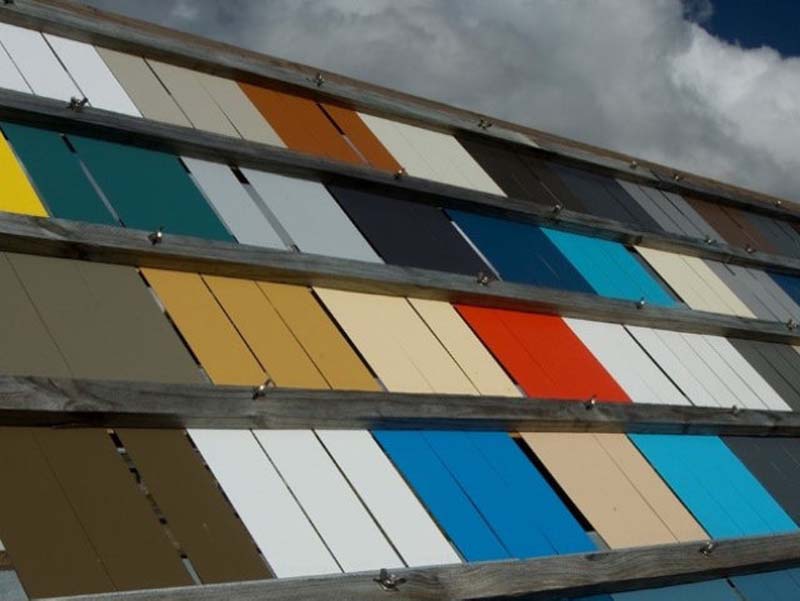
The major resin technologies – PVDF, SMP, polyester, electron-beam-cured, and more – are manufactured to meet the diverse needs of panel manufacturers, builders, and roof system designers. Every resin system brings its own balance of flexibility, corrosion resistance, UV durability, colorfastness, and cost, and each is engineered, not mixed like opaque house paint.
A finished coating is a composite of resin chemistry (which determines corrosion resistance, chalking, and physical durability) and pigment chemistry (which determines color, fading behavior, and brightness). Since every color is a different chemistry, each has to be tested, validated, and proven before it ever reaches a roof panel.
“Just because a color can be made that doesn’t guarantee it will perform the way you want it to,” said Todd Weiss of Sherwin-Williams, “resin and pigment interaction determine everything.”
Aesthetics And Metal Coatings
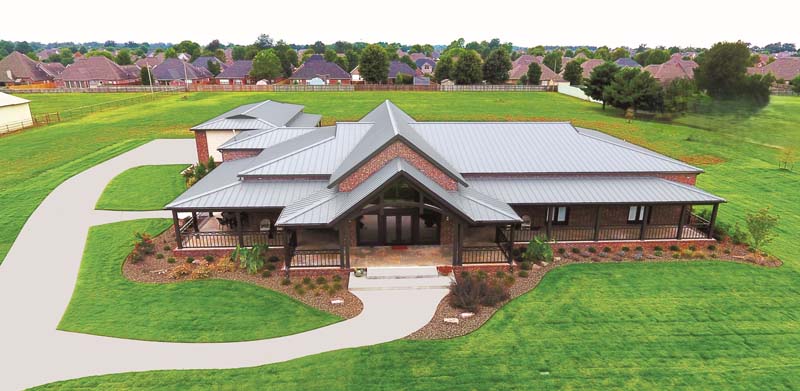
Longevity is important to all consumers, but in residential applications, appearance can be just as important to homeowners.
- More customers are selecting PVDF for maximum color stability and durability.
- Standing seam panels are now commonly offered in PVDF, blending architectural aesthetics with long-term performance.
Trend cycles are shifting:
- Metallic and mica-based pigments are growing in popularity in roofing applications.
- High-sheen effects are moving into mainstream building products.
- At the same time, ultra-low-gloss matte finishes have become a strong trend for modern residential design – and these matte systems can now achieve extremely low gloss without sacrificing UV resistance—something that was not possible just a decade ago.
Even coatings decades old can still surprise builders with their appearance and performance. Central States, a nationwide metal manufacturer, said builders sometimes encounter old metal structures and are concerned they may be fading. However, when they wipe the initial chalking away from the surface, the original color returns over top of an intact metal substrate, an indication of how deeply the pigment package and resin chemistry are integrated.
SMP vs. PVDF: Why Both Still Matter
While some markets are increasingly moving toward PVDF systems for longevity and color retention, SMP remains in high demand due to its:
- abrasion resistance
- strong performance for many climates
- ability to deliver bright, bold colors at accessible price points
PVDF stands out for:
- UV resistance
- Chemical resistance
- Gloss retention
- Weatherability under combined stressors
Chemists work to achieve the best balance between durability and flexibility, especially as bending tolerances tighten in all coating systems. Today, manufacturers continue to improve T-bend performance, coating softness (to resist cracking during forming), and abrasion resistance (particularly important during shipping and installation).
Choosing the right coating is ultimately about the application—not all systems are designed to perform equally in all environments.
Substrate and Pretreatment: The Hidden Side of Corrosion Resistance
Pretreatment systems and the metal substrates themselves do much of the heavy lifting for corrosion resistance. Beneath the coating itself, the combination of galvanized, Galvalume®, or other alloyed substrates provide the first layer of defense. Coatings add a secondary weathering shield and long-term color durability, creating a multi-layered system that protects metal in aggressive environments.
Thinner Film Builds, Same Performance
The industry is seeing growing demand for thinner film builds with equal longevity, a key driver of material use reduction and cost control.
Today’s average coil coating thickness is around 15-25 microns, roughly one-quarter the thickness of a human hair. Yet that unbelievably thin layer is expected to deliver decades of UV stability, corrosion resistance, and weather protection.
PVDF systems are the leaders in long-term performance of thin films, although pigment chemistry plays a significant role as well.
Where Solar-Reflective Coatings Are Heading
White remains the most reflective roof color overall, but pigment chemistry has advanced to the point where even black coatings can be engineered with an increased solar reflectance compared to non-solar reflective coatings in the infrared spectrum. These “cool” pigments work by reflecting IR energy while still appearing visually dark. Reflectivity is a spectrum, not a binary option.
Metal’s natural emissivity and ability to release heat quickly also provide inherent energy advantages, and these benefits remain even when coatings are applied.
According to Sherwin-Williams experts, one of the next steps in paint technology is exploring coating systems that can reflect heat when needed yet absorb it when advantageous, aiming for dynamic energy performance the industry has never seen before. CRRC ratings (https://coolroofs.org/directory/roof ) for dark colors continue to improve, with some products reaching 25-30% reflectivity, an impressive leap forward from a decade ago.
Where Research Is Going Next
The next wave of coatings innovation will be focusing on:
- High-performance matte finishes with no UV penalties
- Dynamic solar coatings that can reflect or absorb energy based on conditions
- Even thinner film builds with longer life
- Improved flexibility for increasingly complex forming demands
- More durable waterborne systems that approach PVDF longevity
- Enhanced effect pigments (mica, metallics, and hybrid technologies) moving into mainstream building envelopes
The industry’s central challenge remains balancing durability, flexibility, and sustainability while delivering the aesthetic variety people demand.
The Bottom Line
Coil and extrusion coatings today are the result of extraordinary scientific investment. They must maintain color, protect against corrosion, flex during forming, resist abrasion, reflect heat, meet environmental regulations, and satisfy aesthetic preferences – all in a layer thinner than a quarter of a human hair.
As the demand for metal continues to rise, these technologies will only accelerate. For roofers, builders, and architects, understanding a coating’s performance is key to guiding clients toward systems that will deliver the longevity and performance they expect.
ZAM® Metal Coating
ZAM is a zinc-aluminum-magnesium metallic coating applied to steel through a hot-dip process and is suitable for use in roofing and agricultural construction. Understanding how this coating performs will help contractors match the product to the correct project, adding a helpful new option to their paint box.
In corrosion testing, ZAM showed strong resistance in certain demanding conditions, which will allow some manufacturers to use lower coating weights while still meeting performance requirements according to Paul Zimmerman of Hixwood, a ZAM® user. The coating is a strong contender for projects where corrosion loads are unusually high. The durable surface helps minimize minor handling damage, providing added confidence during installation—even though the overall experience remains familiar to contractors accustomed to working with other coated steels.
Agricultural buildings are one environment where this coating has shown particular durability. Ammonia from livestock operations and fertilizer storage can be aggressive toward traditional zinc coatings, so it can be a good option in these locations. Likewise, in coastal or high-rainfall regions, this coating has demonstrated slower, more controlled sacrificial corrosion rates and good performance at cut edges.
Service life is influenced by factors such as coating weight, panel design, local weather patterns, and installation details. When specified appropriately, ZAM® has performed well in high-salt and industrial settings.
In the field, its slower, more controlled sacrificial corrosion behavior – combined with a reduced coating mass delivering equal or better performance – results in reduced run-off in any environment.
Recyclability at end of life is similar to other coated steels. Current information indicates that this coating moves through scrap and electric-arc furnace systems in much the same way as traditional galvanized products.
For designers and builders, this coating may offer added flexibility when selecting base-metal thickness for certain applications. ZAM® is a highly durable and useful addition to the range of coatings available to the roofing industry.
Resources
- Central States Manufacturing, https://centralstatesco.com/
- Sherwin-Williams Coil Coatings, https://industrial.sherwin-williams.com/na/us/en/coil-extrusion.html
- U.S. Environmental Protection Agency (EPA). Transfer Efficiency and Coating Application Methods. EPA Air Pollution Control and MACT guidance documents addressing coating operations and material utilization efficiency.
- U.S. Environmental Protection Agency (EPA). Pollution Prevention in the Coatings and Finishing Industry. EPA Office of Air Quality Planning and Standards (OAQPS) case studies and technical background documents.
- National Coil Coating Association (NCCA). Technical Primer on Coil Coating Processes. NCCA educational and training materials describing roll-coating application, material recovery, and process efficiency.
- National Coil Coating Association (NCCA). Sustainability and Process Efficiency in Coil Coating. NCCA technical literature addressing closed-loop coating application and minimized material loss.
- ASTM International. Terminology and Test Methods for Coating Application and Transfer Efficiency. ASTM standards referenced by EPA for defining and evaluating coating transfer efficiency.