Originally Published as: Local SEO for Roofers and Builders: Being Found When It Matters Most
James Charles is the co-owner and COO of E-Impact Marketing, an internet marketing company based in Lancaster, PA that specializes in serving small- to medium-sized businesses. A former Pennsylvania-based roofer, he transitioned into web design and digital marketing in 2019 and has since helped trades-focused companies grow through effective online strategies.
Your website is perfect. The design is flawless. Pictures of your most recent projects cycle across your home page, and your contact form is set up and ready. Your crew is well-seasoned, your materials expertly vetted, and everything seems set for the leads to start rolling in.

But then you wait.
And wait.
And wait some more.
You’ve forgotten one key ingredient to your website’s online success: Local SEO. You’ve told the internet what you do, but not where you do it. If you want your website to show up where it matters most, then it’s time to invest in some Local SEO.
What is Local SEO?
Local SEO is a subset of SEO, or search engine optimization. Both refer to the work of optimizing website content to make it more understandable to search engines. Local SEO specifically addresses topics, searches, queries, and service types that are inherently local.

Most construction services are performed in a local area. If you need a new roof or a new deck, then you need someone to come to you with building materials to build. For roofers, builders, and any other service-based business, Local SEO is the lifeblood of your website’s traffic.
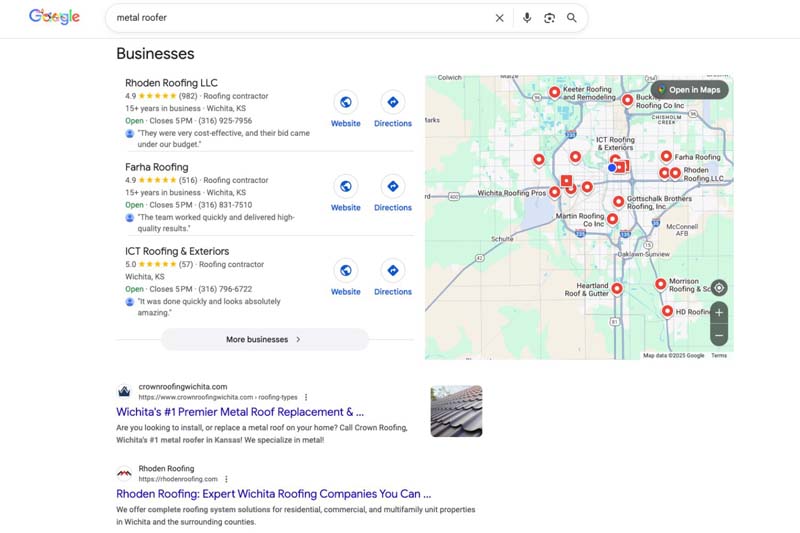
To think about it from a user perspective, if you’re a customer searching for “metal roofer” in Kansas and your search engine shows you a metal roofer in Washington, another roofer in Alabama, and a third in North Carolina, then those results are practically useless to you. However, search engines are smart enough to know that if you’re searching “metal roofer” in Wichita, Kansas, you’re looking only for or primarily for metal roofers in or serving Wichita. Search engines have ways of finding out which searches are likely to have local intent and will favor local results in those searches in order to best serve a searcher’s intent.
Local SEO Ranking Factors
There are different types of Local SEO. To keep it simple, we’ll discuss two main types: the Local SEO work that happens on your website, and the Local SEO work that happens beyond your website, on places like your Google Business Profile (GBP).
According to Whitespark’s 2026 Local Search Ranking Factors study [https://whitespark.ca/local-search-ranking-factors/], there are 187 distinct elements that influence local search performance.
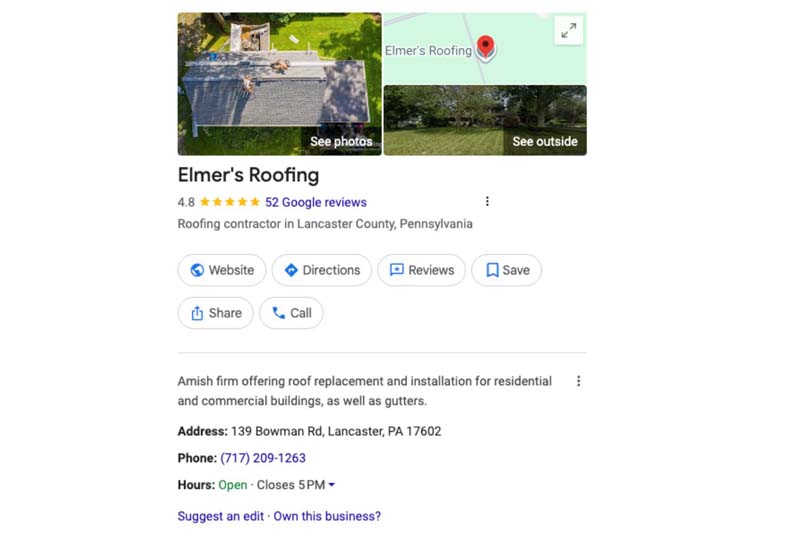
The most influential factors involve your business’s GBP. To optimize your GBP’s Local SEO, the most important thing you’ll want to do is ensure your primary business category reflects the work that you do. If you’re a roofer but your category is listed as “general contractor,” then every roofing business in your area whose primary category on their GBP is “roofing” is going to beat you out for local roofing searches.
The factor that Whitespark found to have the second most impact on local search results is the proximity of a business to its searcher. Having a physical address in the city or area where a person is searching plays a huge role in your visibility.
The third most important factor is keywords in the business name. This is where it gets tricky. You can’t keyword-stuff your business name in your GBP; Google will penalize or suspend you for that. I would recommend that if you are in the early stages of establishing your business, to naturally include what it is you do in the name. So, instead of “Steve and Sons,” go for “Steve and Sons Roofing.” For my team and me, we are E-Impact Marketing, and we do marketing. If we were just “E-Impact,” we would lose some visibility for searchers looking for marketing services.
Those are the main factors that influence your Local SEO on your GBP. On the flip side, there are factors on your own website that you can control to improve your Local SEO.
It’s important to have a dedicated page for every service you offer. You should think about all the categories and subcategories of the products or services you offer and work to have them clearly listed on your site. For example, if you do commercial roofing, you’ll want to have a page about commercial offerings, and then subcategory pages for offerings like commercial metal roofing, commercial EPDM roofing, and so on. Think logically about how to sort and group the different services you offer and set up your page structure accordingly.
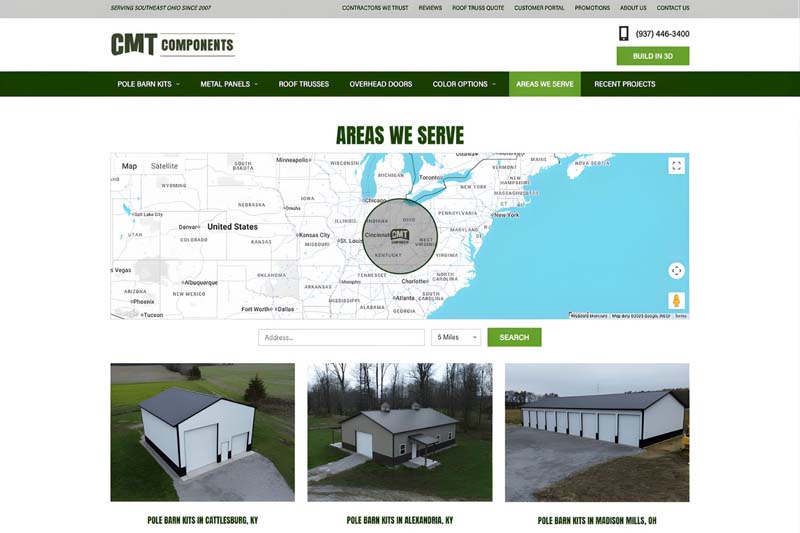
Next, geographic keywords have a big impact on your local visibility. You want your website to clearly address and list the areas you serve. If you’re a really large company, maybe you can target an entire state or section of a state, but for most companies, that’s wishful thinking. If you’re serving a county or a couple of counties, list those clearly along with specific cities or metro areas you serve.
The third most influential factor on your site is the quality and authority of links that point back to your website. It’s well known that having other websites link to yours is an indication that your website is trustworthy. Links from high-quality websites are more valuable than links from low-quality sites. Similarly, links that are from websites of a similar industry are worth more than links that are from generic or unrelated sites.
Next, having keywords in the landing page that your GBP links to affects your local visibility as well. If you only have one business location, your GBP will likely link to your home page. In that case, your homepage should clearly state exactly what it is you do and where you do it. For example, if you do commercial metal roofing in Southern Georgia, then list that word-for-word on the page. The more specific you can be on each page while still accurately reflecting the scope of work that you do, the better.
Finally, the quantity of inbound links to your site, especially from industry-relevant domains, affects your local visibility as well. Similar to the quality factor, you’re going to want the links that are coming to you to be highly relevant to the work you do.
There are other factors to consider, of course, but this is what the most recent data shows, and these GBP and owned website factors are the ones I encourage you to look at and address first.
Quick Wins: Where to Start With Local SEO
I know this is a lot to consider, so here’s a quick list of the fastest, most impactful wins to focus on:
- Optimize Your Google Business Profile (GBP)
Your GBP is one of the strongest signals that Google uses for local rankings. Make sure that your business is listed with the correct primary category, that every available field, including business description, services, hours, and service areas, is filled out, that you regularly upload high-quality photos, and that your name, address, and phone number are 100% consistent with what appears on your website.
If Google can clearly understand who you are, what you do, and where you do it, you’re likely already ahead of a lot of your competitors.
- Reviews: Aim for Volume and Quality
Reviews are one of the few ranking signals that you can influence quickly.
You want a 4 to 5-star rating. Google will not show businesses with fewer than four stars for “best” or “top” searches. To get good reviews, give customers an easy way to write reviews. Set up an automated email or text with bullet points or question prompts to encourage customers to respond with relevant keywords or the specific service they receive. Have your team take photos of the project on-site and share those with your customer to increase your number of reviews with photos.
- Local Citations
Local citations are mentions of your business across online directories. Make sure your name, address, and phone number (or NAP) match exactly across your site, business profiles, and citations. Target quality directories to help Google confirm your business’s legitimacy and to reinforce your local presence.
- Local Keywords
Ensure your website reflects the reality of what you do and where you do it. Use location-specific keywords naturally, keep the homepage broad, and then build supporting pages for specific services and specific locations or service areas. Accuracy matters; don’t claim a location or services that you don’t actually work in.
This will help you match “near me” searches, city-based queries, and general searches that return local results.
- Local SEO and Ads
Slightly separate from the two types of Local SEO we’ve discussed thus far are paid channels. While not technically “Local SEO,” they still can help support a strong local presence. Google Ads can target specific towns, zip codes, and service areas. Settings should be set up very specifically to stay geographically focused.
To dominate local search, your organic and paid efforts should support each other.
How to Measure Local SEO
Before you do any of that, you’ll want to set up a way to measure your work. After all, you can’t fix what you don’t measure.
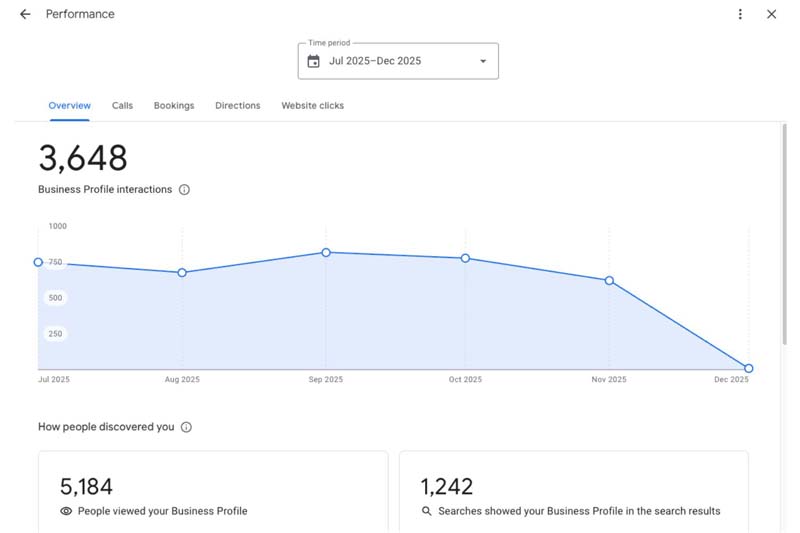
The simplest way to measure Local SEO is directly through Google. Your GBP will have analytics tied to it, so that when you’re logged in, you can see how many calls, website clicks, and direction requests that your GBP generated. If you pay attention to that over time, you’ll know what you need to address.
On the website side, you’ll want to pay attention to the keywords that are driving traffic to your website. You can do this through Google Search Console. You’ll want to see that you are appearing for “near me” searches and for searches with a location in them, as well as any other searches that Google treats as local. As you work on and improve your Local SEO, you’re going to want to start to see an increase in performance for those searches and keywords.
In order to measure your work most accurately, get those tools set up early on so you can see how your rankings are affected over time.
From the Roof to the Search Results
As a former roofer myself, I know that the last thing you want to do after climbing off a roof is to log on to your website and make edits. I work with small brands every day that have a million irons in the fire. It’s really easy to let things like Local SEO slip if you’re not intentionally thinking about them.
However, Local SEO has to be one of those things that you’re thinking about if you want to run a local service business long-term. It can make or break a business. If people in your service area can’t find you online, then as far as they’re concerned, you don’t exist. As a roofer or builder, your potential customers are searching right where you work. If they go to Google with a problem you can solve and your business doesn’t show up, you lose the opportunity long before you ever get the chance to bid on a job.
Having worked on both sides of the business, I know just how much hard work goes into every build, but I also know that in today’s world, quality craftsmanship alone isn’t enough to keep your business growing. You need to make sure the people who need you can find you.
By focusing on Local SEO fundamentals, you can improve your visibility in local search. These are practical steps that any roofer or builder can take, and they compound over time.
When your Local SEO is working, that’s when the waiting ends, and the leads start coming in.