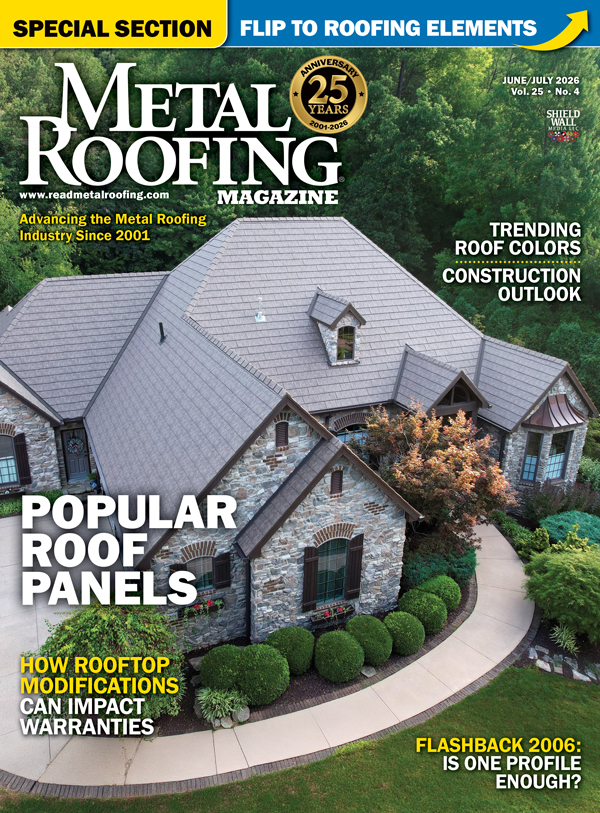
Originally Published as: How Rooftop Modifications & Accessories Impact Metal Roof Warranties
Rob Haddock is the CEO and founder of S-5! and the inventor of metal roof attachment solutions. A former contractor turned building-envelope scientist, Haddock has dedicated more than five decades to advancing the metal roofing industry. He is an award-winning roof-forensics expert, author, lecturer and educator, as well as the director of the Metal Roof Advisory Group, Ltd., a consulting firm specializing in metal roof design, installation and performance.
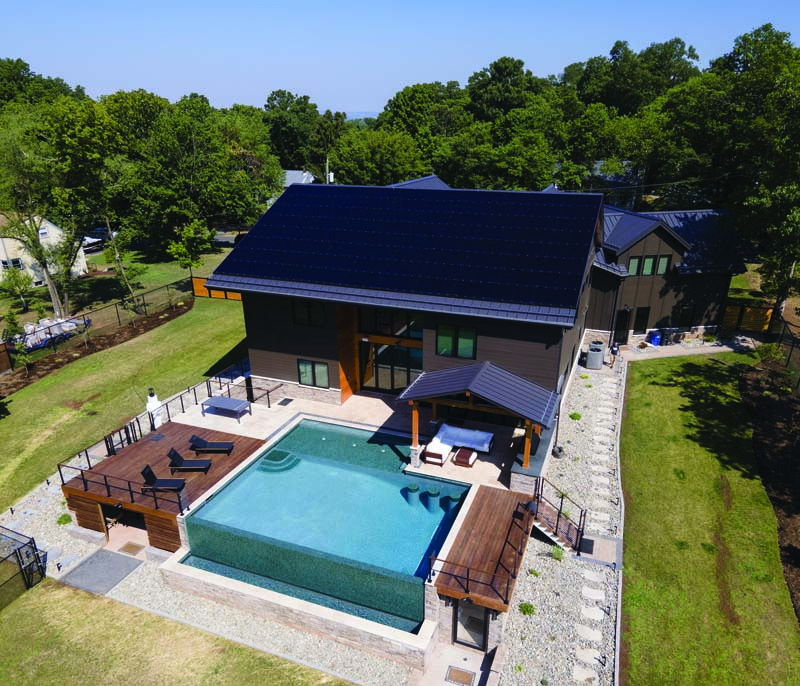
Once considered a specialty option, metal roofing has become mainstream, with contractors, designers and manufacturers all seeing demand climb as owners prioritize long service life, resilience to extreme weather conditions, and lower lifecycle maintenance.
A building’s roof has become an active mounting platform for rooftop solar, snow retention, mechanical equipment, fall protection, communication equipment and other accessories.
The increase in use makes roof warranty preservation a shared responsibility across the project team. The accessory itself is rarely the problem. The attachment method, material compatibility and coordination—or lack of it—are what determine whether a warranted roof remains warranted.
Warranties Are Performance Agreements, Not Formalities
A manufacturer’s warranty is a performance agreement tied to the roof being installed and used within defined parameters. It’s not simply a backstop for panel defects; it’s the manufacturer’s statement that the roof will behave as tested and approved for a given service life. That behavior can include finish durability, structural performance and weathertightness—provided the system remains within the basis of design, product data and warranty language.
What often gets overlooked in the field is that warranties are conditional. They assume the roof will not be altered in ways that change drainage paths, thermal movement, protective coatings or in short—panel integrity. When rooftop modifications introduce conditions outside those terms, manufacturers can classify resulting issues as field-created conditions rather than product failures. From a risk standpoint, that is where accessory work intersects directly with future claim viability.
For roofing contractors and general contractors, warranty conditionality translates to downstream liability if attachment decisions weren’t defensible. For architects and specifiers, it means that accessory criteria must be embedded in design and not treated as a separate afterthought. For manufacturers, it reinforces why clear, enforceable guidance on allowable attachments is essential—not just for product performance, but for protecting the integrity of the roof’s warranty itself.
Two Mounting Paths, Two Very Different Risk Profiles
Most rooftop accessories interact with metal roofing through one of two attachment strategies. Standing seam systems typically rely on non-penetrating clamps that engage the seam mechanically. Exposed-fastened systems often secure accessories with brackets that penetrate the panel surface and fasten into the structure or substrate below. Both approaches can be appropriate, but their risk profiles differ sharply depending on roof type, efficacy of the attachment and warranty terms.
Standing seam roofs are engineered to move under thermal cycling, and that movement is fundamental to performance. Attachments that restrain or interrupt the freedom of roof panel movement can create stress concentrations and violate roof integrity. Even a well-intentioned penetration detail can be treated as a functional alteration from a warranty perspective if it violates roof integrity.
Exposed-fastened roofs are different by design, since they already incorporate sealed fasteners through the panel into the substrate. That doesn’t make additional penetrations automatically acceptable, but it does mean they can be compatible with warranty intent when they are engineered, sealed and executed prudently. The risk escalates when the project team assumes any rooftop hardware is “just another attachment,” rather than a modification to a warranted assembly.
Where Warranty Breakdowns Usually Start
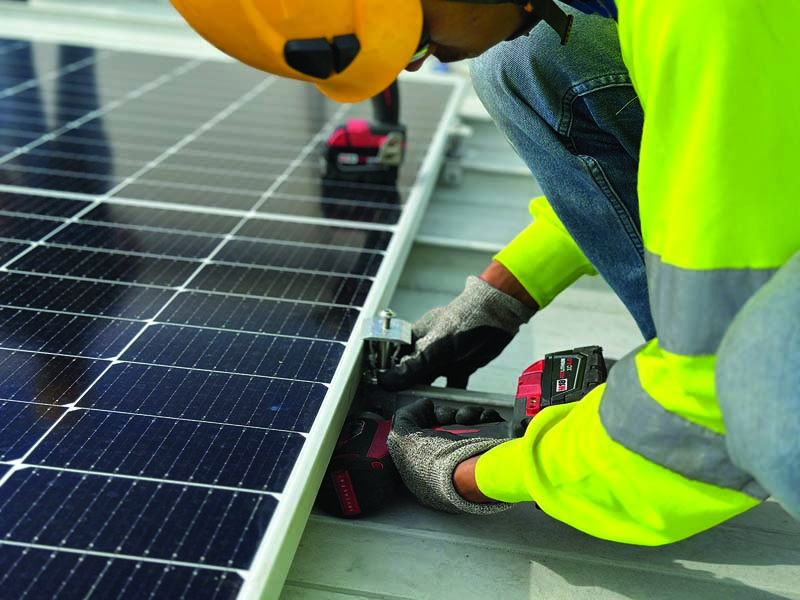
Warranty failures tied to rooftop accessories typically show up in three familiar ways. The first is unapproved penetration—holes placed through panels, seams or critical drainage areas without a roof manufacturer-recognized detail. These are easy for manufacturers to trace, and their presence alone can be enough to shift responsibility away from the roof product.
The second breakdown point is compromised weathertightness. Poor seal design, incorrect fastener selection, or geometry that doesn’t align with the panel profile can fail under thermal cycling and environmental loads. Once movement works a penetration or bracket loose, a relatively small detail issue becomes a repeated leak event that can spread into insulation, decking and interiors.
The third common failure is corrosion, often driven by incompatible attachment materials or by hardware that damages protective coatings. Setscrews that cut coatings, fasteners that expose raw metal or mixed-metal assemblies that accelerate galvanic action can all lead to corrosion that is excluded from coverage. Corrosion is especially problematic because it may take years to manifest—long after the accessory installation is out of mind, but not out of warranty scope or term.
Standing Seam: Non-Penetrating Is the Default for a Reason
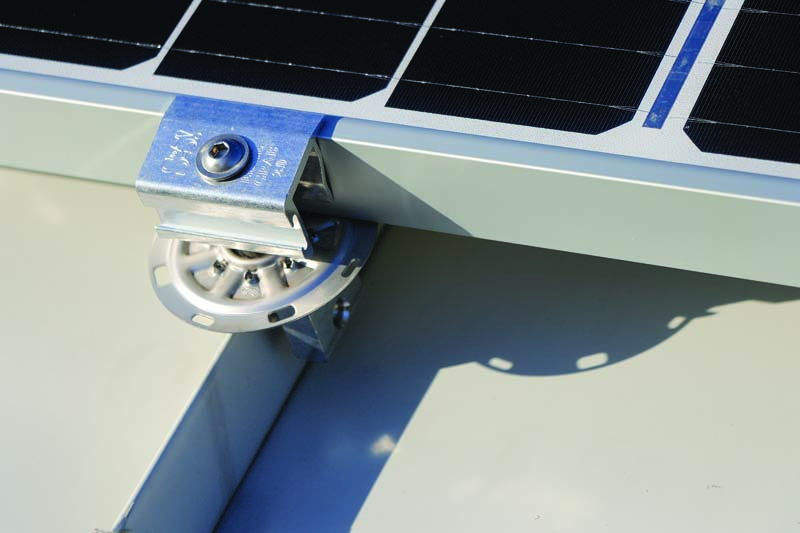
On standing seam roofs, non-penetrating seam clamps remain the most reliable way to preserve system behavior and warranty intent. A properly engineered clamp creates a mechanical interlock between the clamp body, the seam geometry and the setscrew. That interlock provides holding strength without breaching the panel, preserving watertightness as well as warranty compliance.
Hardware selection matters more than many teams realize. Round-point setscrews are designed to grip the seam without cutting through protective coatings. Cup-point setscrews, by contrast, can pierce finishes and expose bare metal, which introduces a corrosion risk and raises immediate warranty concerns. This is a small component decision that can have long-term consequences.
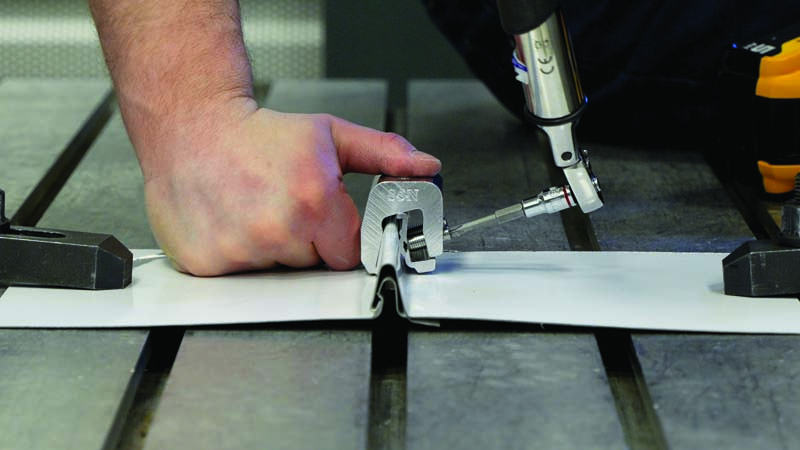
Beyond screw type, seam clamps should be seam-specific and load-tested for the application. Clamp performance depends on seam geometry, material thickness and the loads expected from the accessory. When clamps are tested, documented and installed to verified torque requirements, the attachment becomes a predictable, warranty-friendly component of the roof system.
Exposed-Fastened Systems: Penetrate Only With Disciplined Detailing
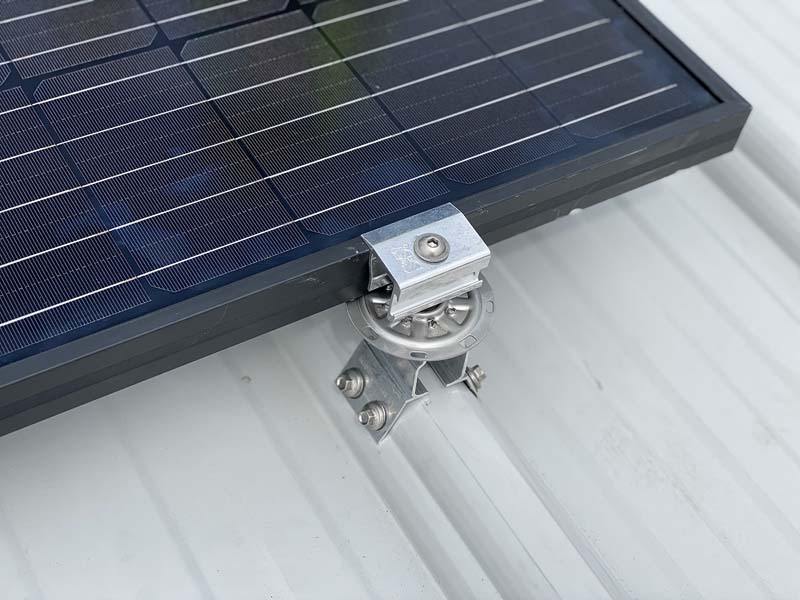
Exposed-fastened roofs can accommodate penetrations, but only when detailed with the same rigor as the roof itself. Brackets should be purpose-built for the specific metal roof profile, include chemist-formulated, factory-applied butyl or EPDM sealing at the interface, and fasten in a way that distributes load without dimpling flats or stressing ribs.
The types of fasteners and sealing washers used may change how the assembly holds up over time against the elements. Best practices mandate that materials and sealing methods are equal to or better than those used by the roof itself.
From a warranty standpoint, the accessory detail should behave like a roofing component: profile-matched, sealed by design and installed by a method that the panel manufacturer approves. The better the attachment is engineered and documented, the more defensible it is if questions arise years later.
Material Compatibility: A Small Spec With Big Consequences
Material compatibility is one of the most underestimated warranty variables. Even where attachment geometry is correct, mixed-metal interactions are a common cause of breakdown and accelerated corrosion, especially in wet or coastal environments. Many warranty exclusions explicitly reference corrosion caused by third-party attachments, so compatibility is not optional.
Aluminum clamps paired with stainless steel fasteners are broadly compatible with most common roofing metals. Copper roofs require special consideration, where brass attachments are typically used to avoid galvanic reactions. Similar logic applies to fasteners, brackets and any isolator components in the assembly1.
For architects and specifiers, this belongs in the accessory and roofing sections of the documents and not left to field substitution. For contractors, compatibility should be a submittal checkpoint. For manufacturers, publishing clear compatibility charts reduces the chance of avoidable failures that end up mislabeled as product issues.
Coordination Is the Real Control Point
The strongest predictor of warranty preservation isn’t the accessory brand—it’s the coordination process around approved attachment. Roofing contractors and manufacturers need alignment early on regarding what is compliant for that specific roof type and profile. Without that alignment, accessory layouts get value-engineered in the field, and warranty boundaries blur fast.
General contractors must ensure the rooftop trades don’t proceed with mounting practices of their choice that conflict with metal roof requirements. If they proceed with penetrations or hardware that compromises the roof warranty, the general contractor and roofing contractor may be left defending a construction detail they didn’t design or approve.
Architects and specifiers play a vital role by integrating compliant attachment criteria into the project documents. Clear, coordinated requirements across all relevant scopes give specialty contractors a defined process and eliminate the need to improvise on the fly.
Roof manufacturers, for their part, can reduce downstream failures by publishing accessory-ready guidance, seam-clamp approvals, penetration limitations and compatibility charts in language that is easy to enforce in the field.
Protecting Warranties Protects Everyone
Rooftop accessories are now a permanent feature of modern buildings, and metal roofs are excellent platforms for mounting them when attachments respect the total system design. Protecting warranties isn’t about limiting rooftop use; it’s about enabling it without compromising the performance promise the owner purchased. That requires consistent decisions across design and construction, not just careful work by one or numerous trades.
When modifications are seam-specific, non-penetrating where appropriate, sealed and detailed as roof-grade assemblies where penetrations are allowed, and built from compatible materials, the roof remains watertight and durable for its expected service life. Those choices keep manufacturer coverage intact and reduce the likelihood of costly disputes over responsibility later.
Ultimately, every stakeholder benefits when warranty intent stays aligned with real-world rooftop use. Contractors avoid surprise liability, architects and specifiers deliver on lifecycle expectations, and manufacturers protect the integrity of their systems. Done right, rooftop accessories become part of a high-performing metal roof story—not the reason that story gets rewritten.