Originally Published as: When it’s time to run your own panels
[2006] Geoff Stone, president of MetalForming in Peachtree, Ga., was the first to bring European folding technology to bear on the U.S. roofing market. His commitment to innovation has led to the continuous introduction of products that provide competitive advantages. MetalForming staff members are available for consultation to help determine ROI and payoff to fit the contractors’ individual business plan.
At what point should I start rolling my own panels? Capital purchasing of equipment in the business world today typically involves the calculations for establishing the return on investment (ROI) for the monies spent. These purchases ultimately are to improve the productivity, quality, efficiency, and return more to the bottom line for the company at the end of the day.
In the roofing community, many contractors have exercised these same analyses to decide whether to continue to rent a boom truck/crane vs. purchasing their own, buy their own shop equipment to brake their own trim items vs. outsourcing these parts, as well as bring operations in-house that they previously handled through a subcontractor. One area often overlooked in the ROI analysis is the decision to invest in the needed computers and software to handle accounting needs and estimating needs vs. keeping books, determining their taxes, computing payroll, and even completing estimates by hand.
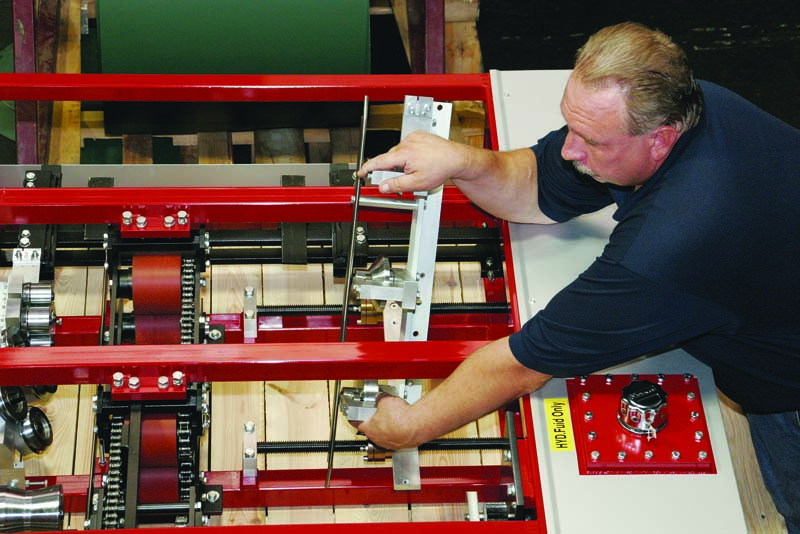
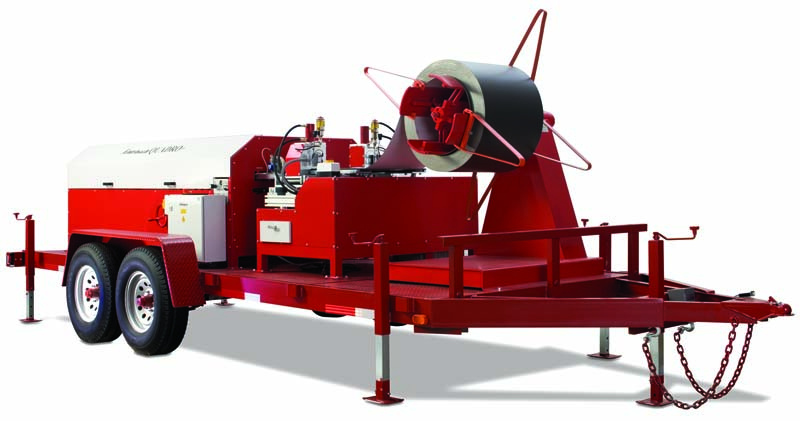
This brings us to the current subject to consider, “At what point do I begin to make my own roofing panels vs. purchasing factory rolled panels?” The technology available today along with the diverse equipment to both shop roll and site form panels now allows the roofing contractor to better control his destiny. With the capability to produce panels directly from a cut-list the contractor controls, the pendulum now has swung in the favor of the contractor that has the initiative and business savvy to produce his own panels. The contractor now can avoid the many pitfalls that exist when ordering panels through a distributor and manufacturer and having to wait on shipments and many times a second shipment in the case of an incorrect order or damaged panel(s). The last hurdle removed from the equation is the acceptance of portable roll-forming equipment by the architectural community, specifiers, and building owners. Many portable roll forming manufacturers, through extensive testing with Underwriters Laboratories and American Society of Testing Materials for wind uplift, missile impact testing, hail testing, wind, and water infiltration have provided the contractor an even playing field with factory-formed panels.
The sources for coil stock and flat sheet in both Kynar 500 and siliconized polyester painted galvanized, Galvalume, and aluminum are many. Their ability to slit coil to the needed widths and supply through their many outlets eliminate delays, and minimizes freight and packaging fees inherent in finish rolled panel shipments as well as damage.
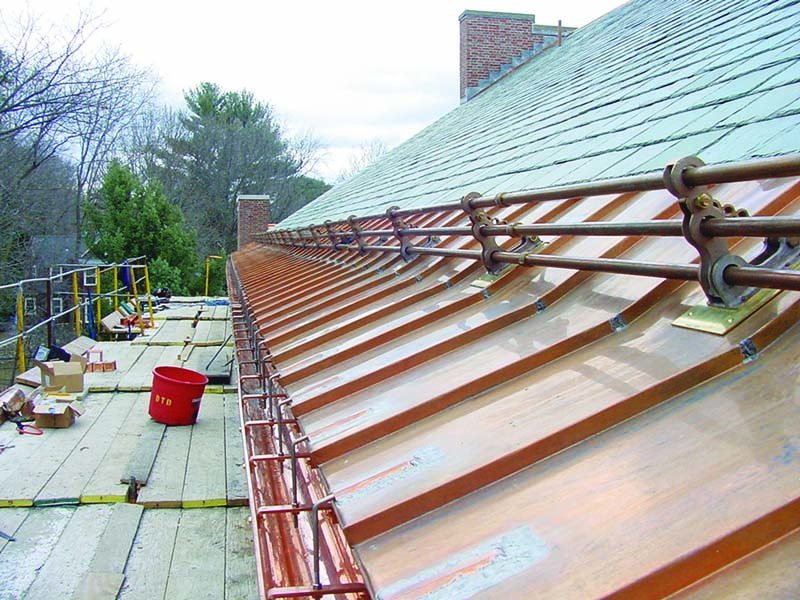
There are more clients now that have an interest in metal roofs composed of zinc, anodized aluminum, or copper and these products are readily available for the roofing contractor and can be pan-formed on most of the roll forming machines available. The continuing decline in the shingle market for residential roofing as well as the lack of available tile roofing materials continue to shift the emphasis and increase the total square footage of metal roof panel projects available to both the residential and commercial roofing contractor.
Most of the savings in today’s contracting business can be realized when the number of variables are minimized or eliminated. Variables that can’t be controlled typically cause the final installation to be delayed, labor costs to be well above budget, which drives up the cost of the project. Consider the following areas where improvements can be made and savings realized when controlling the metal roof panel project from start to finish, from pan forming to installation:
- Control of the product, which includes the availability and delivery of the panels to the jobsite
- Elimination of associated costs for shipment and packaging of panels from the manufacturer
- Cost to manufacture panels from purchased coil
- Choice of supplier(s) of coil, color of coil, paint choices, i.e. Kynar, siliconized polyester, high gloss, low gloss, and substrate of coil (i.e. copper, zinc, aluminum, galvanized, or Galvalume.)
Savings not often considered when the purchase process is being evaluated include tax incentives available for capital purchases under Internal Revenue Code Section 179 allowing first-year depreciation of $105,000, which can mean as much as a $37,500 tax savings in the first year, which effectively reduces the capital outlay to only $67,500. Additional bonus depreciation is available from the recent hurricane affected areas, which include many counties in Florida, Alabama, Mississippi, Louisiana, and Texas. Lease-to-own purchases also allow the machines to be paid for as projects are being completed without depleting savings or requiring additional collateral to secure payment for these machines.
Now, the final factor that will determine how quickly the addition of a panel forming machine will return dividends to the contractor are predicated on the following:
- What price is currently paid for panels purchased from the manufacturer including packaging and freight?
- What is the purchase price for coil stock to form panels?
- What is the purchase price for the panel forming machine to fit the contractors needs?
- How many square feet of installed metal roof panels are rolled and installed monthly and yearly?
A rule of thumb used by many contractors based on manufactured panel costs vs. cost of coil stock show the cost of the raw material to roll the panels is typically less than 60 percent of the cost of the purchased panels and can be as little as 50 percent of the cost. The associated cost for producing the panels in the contractor’s shop or site forming the panels usually range between 12 cents and 20 cents per square foot for the contractor. These numbers used conservatively show the savings can easily compute to 30 to 35 percent in overall savings. Do the math on 10,000 square feet of installed metal roof panels monthly and without factoring in the tax incentives, the ROI and payoff for a panel machine should be realized after rolling and installing 200,000 square feet of metal panels. Factor in tax incentives and a more aggressive monthly installation rate and payoff on a panel machine and an increase in bottom line profits can easily be realized in 15 months or less.