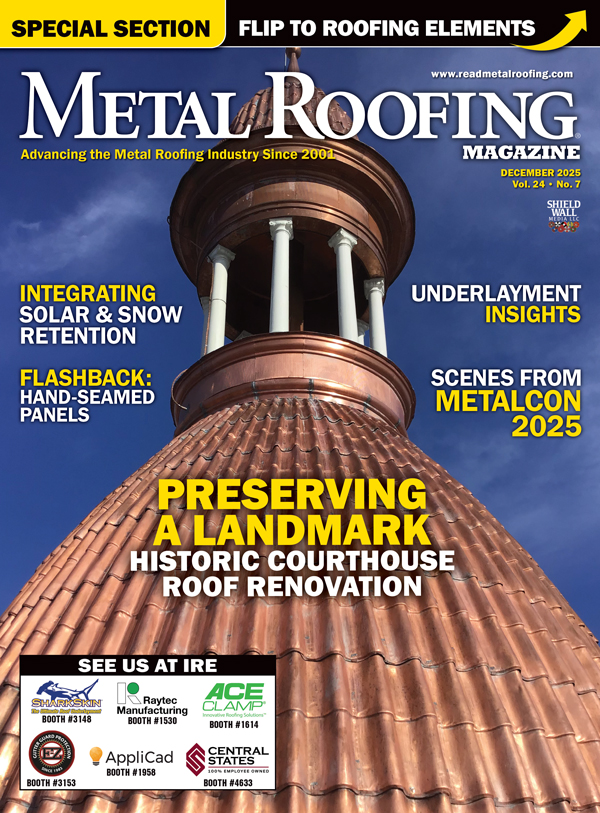
Originally Published as: Preserving a Landmark: Intensive Renovations Revitalize the Historic Hillsdale County Courthouse
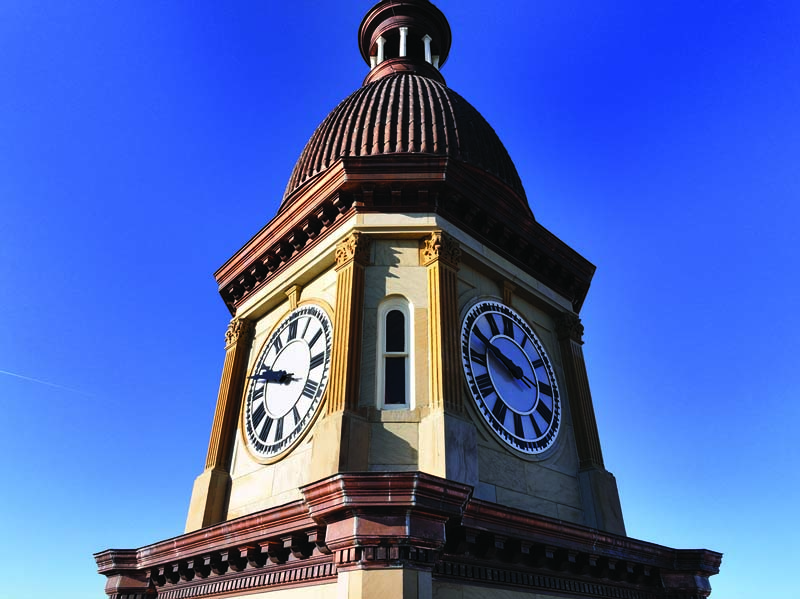
Southern Michigan’s Hillsdale County Courthouse has stood as a symbol of community and justice for more than 125 years. But like many historic structures, decades of weathering, piecemeal repairs, and material deterioration have taken their toll. What recently began as a roofing project ultimately became a comprehensive exterior restoration effort.
Robert Raleigh III, whose team at Renaissance Historic Exteriors led the restoration, recalls that the scope expanded quickly once their bid was accepted.
“We were selected to do the roof work, but we had cautioned the county that there were a lot of other issues invisible to us but not included in the bid package and probably significant unforeseen damages,” says Raleigh. “This project was paid for by American Rescue Plan Act (ARPA) monies, which allowed governments the flexibility to use funds for infrastructure improvements.
Fixing More Than A Century of Wear
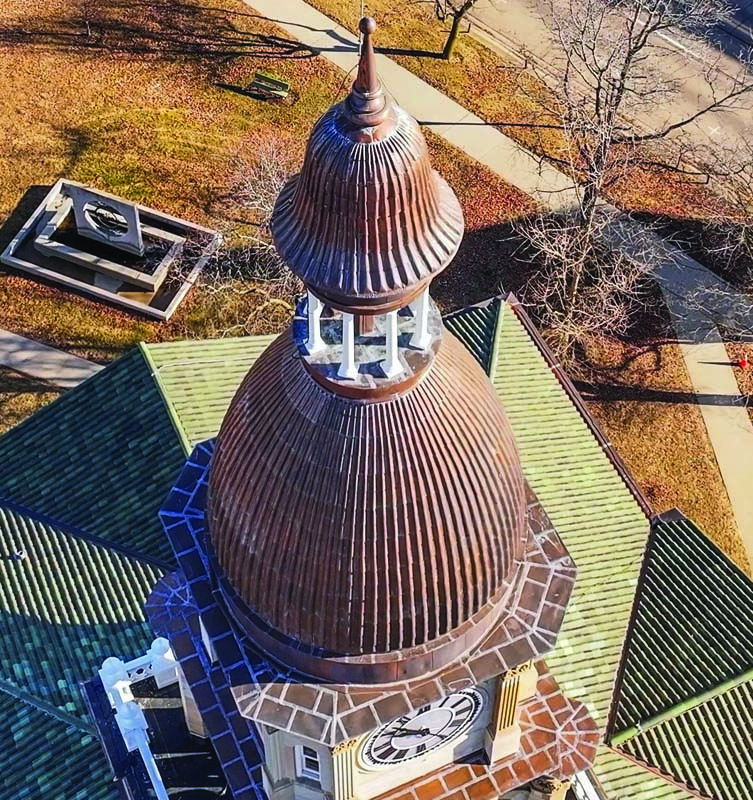
The county recognized that the clay tile roof and its integrated metal gutter system were failing. As the gutter system’s apron lies underneath the tile, both roof and gutter lining had to be redone simultaneously.
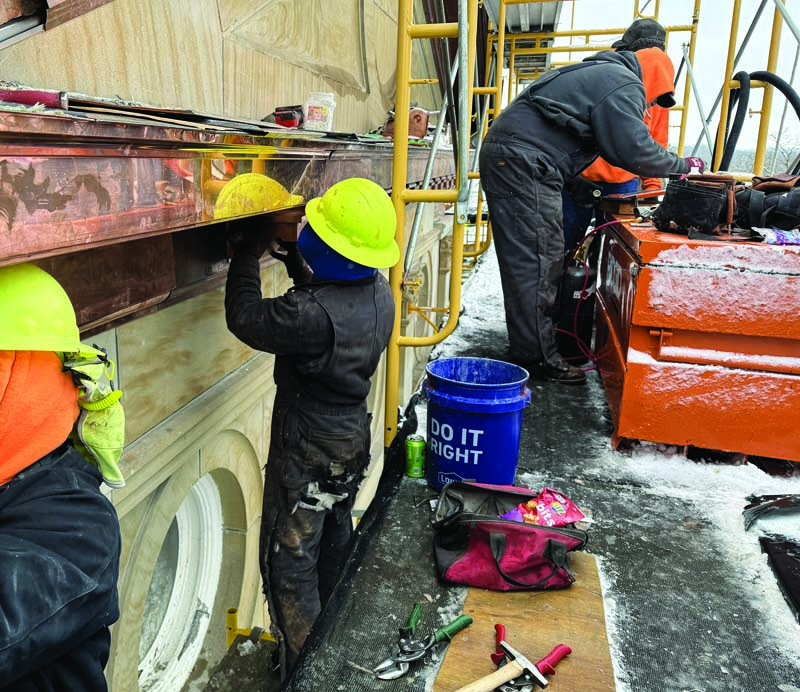
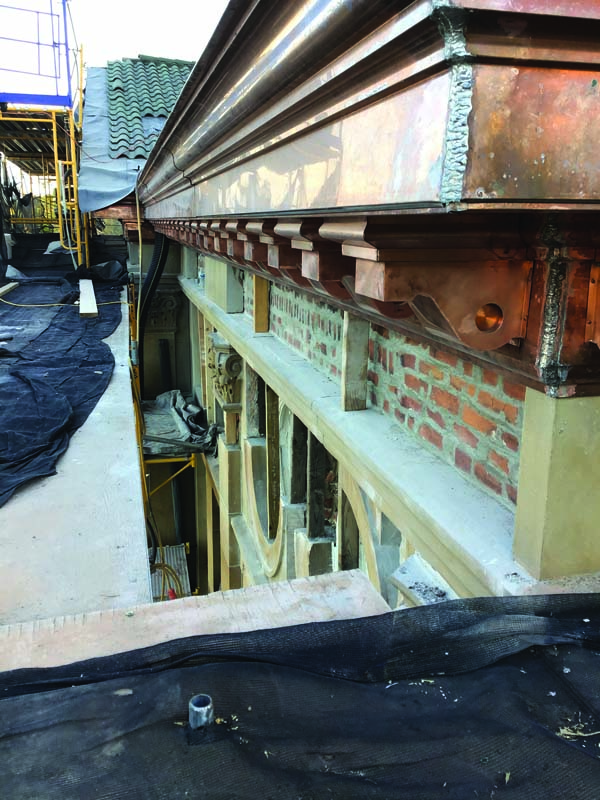
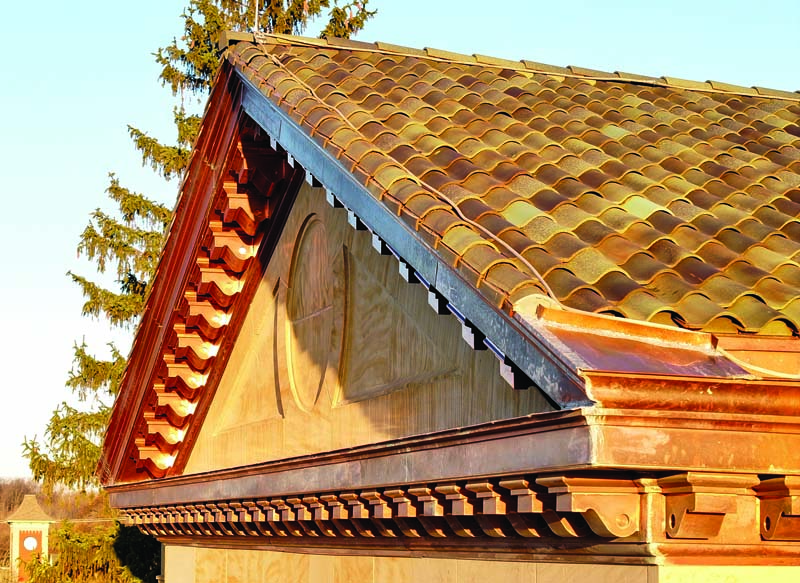
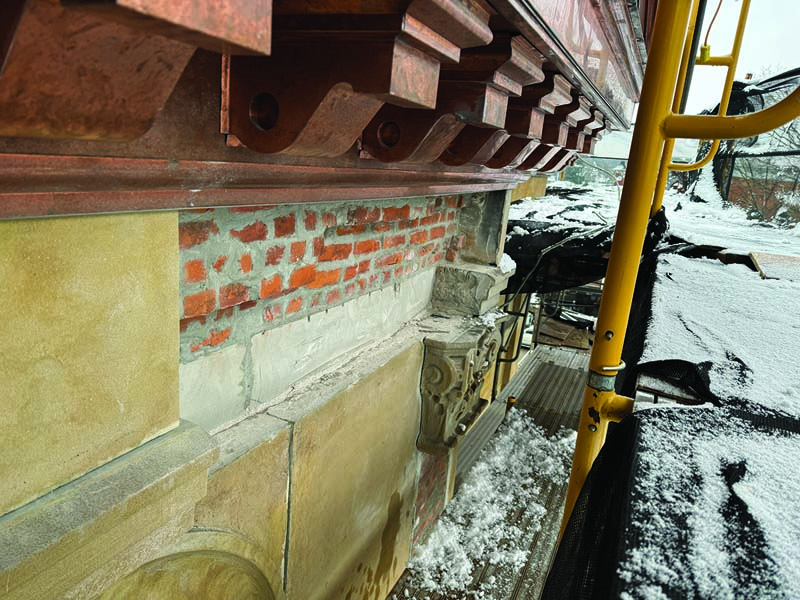
In turn, the installation of a new copper gutter system precipitated the replacement of the copper cornice system on the building, which was also deteriorated.
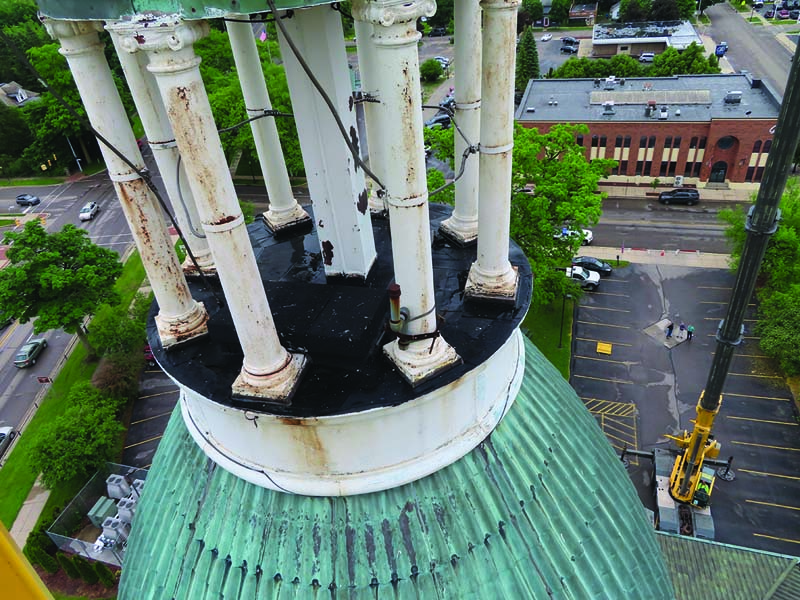
“A lot of the exterior architectural sheet metal installed at the turn of the last century is now at the end of its life span,[LP1]” says Raleigh. “It needed to be replaced almost in its entirety because of the corrosion that happens with that type of material.”
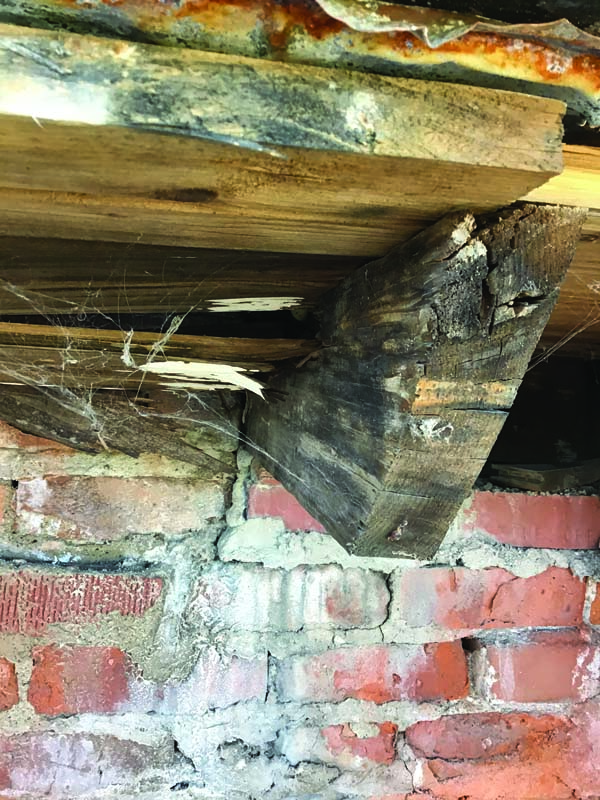
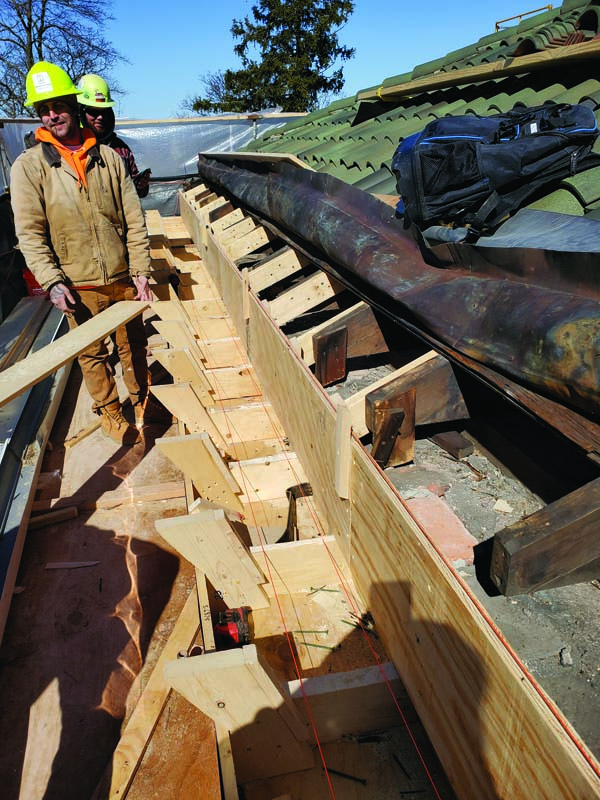
Traditional wood framing on the building supports the sheet metal components. The framing was often exposed — either directly or indirectly — to moisture, causing the wood to weaken. In most cases, replacing underlying structure also necessitates replacing the overlying architectural metalwork. This beautiful but deteriorating exterior, both inside and out, was where the team focused its efforts.
Digging Into the Challenge
With more than 30 years of experience in the industry, Renaissance Historic Exteriors knew from the outset that this project would be challenging. The team not only had to work on scaffolding high up a clock tower, but also discovered issues with the underlying structure the further they got into the project. In addition, the replacements needed to be historically accurate, with the final result emulating the original.
“The goal was not to change the appearance of the exterior while improving the function and longevity of the new system and work to comply with current code requirements,” says Raleigh.
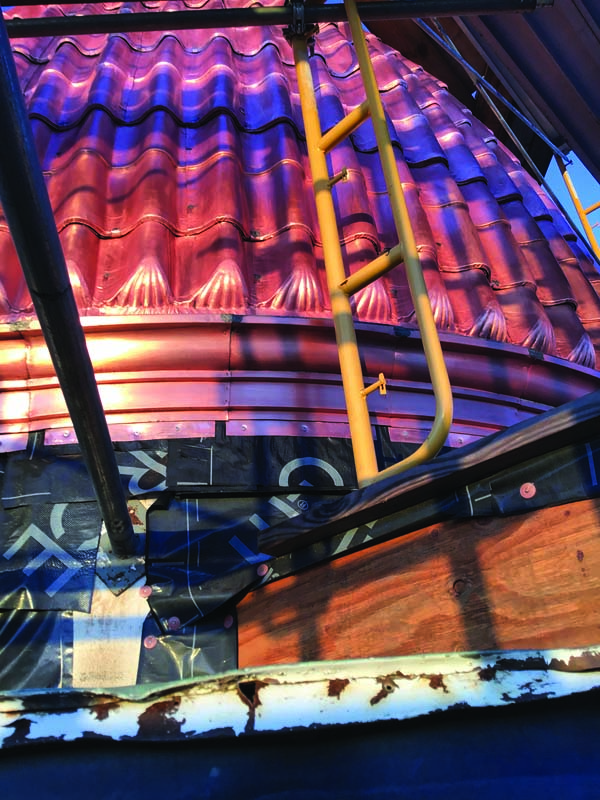
The project included installing a high-performance underlayment beneath the new clay tile roof and copper systems, ensuring greater durability and protection compared to the traditional materials previously used. Most of the new metalwork was copper, chosen for its superior corrosion resistance and long service life. Unlike the tin and terne-coated metals it replaced — which required periodic repainting — copper provides a maintenance-free solution that will perform reliably for decades.
A significant amount of structural and reshoring work was done to support the new exterior, the roofing, and the gutters. Some framing in the attic and within the tower had to be upgraded because of deterioration.
“Until you start to dig in or disassemble the facade, you don’t know how bad it is,” says Raleigh.
Materials To Last Another Century (and More)
When the existing clay tile roof was removed, the team saved and reinstalled the tiles on the main body while supplementing with new tile purchased from Lexington, Ohio-based Ludowici Roof Tile. The courthouse had also built an addition several years ago with an asphalt shingle roof, so this was updated to new roof tile, also from Ludowici.
“Getting suppliers to turn those essential materials around in a timely fashion and have them fabricated to match and fit is tricky,” says Raleigh, adding that the project took about two years to complete. “You need suppliers willing to work with you to get those things turned around quickly.”
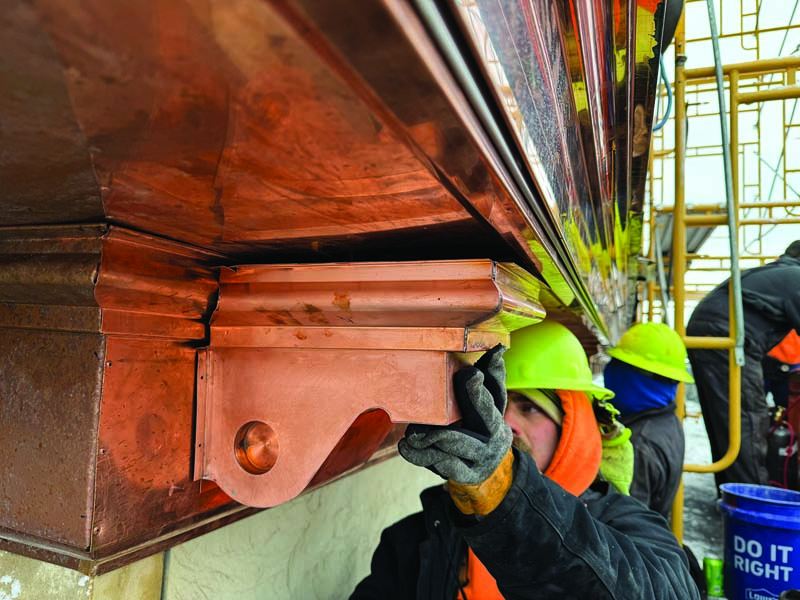
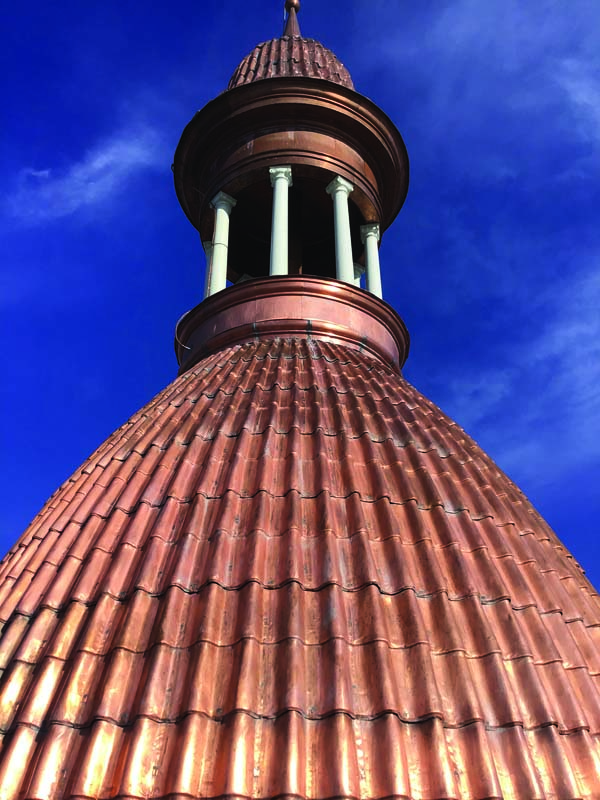
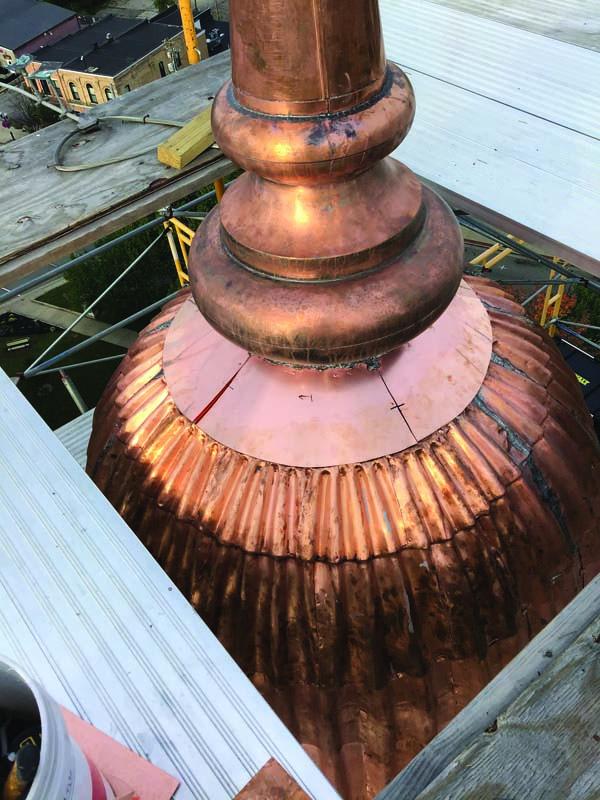
One of the main materials used to fortify the courthouse is copper. Designed to last more than 100 years and be virtually maintenance-free, copper forms the cornice system’s detailed brackets and modillions. Assemblies were custom-manufactured in-house in Belvedere, Illinois — the raw copper was attained from Revere Copper (Rome, New York). New copper shingles were created to match the original copper dome’s Spanish-style appearance. At the gutters, soldered seams ensured their durability, weather tightness and corrosion resistance, while expansion seams were positioned to allow the metal to expand and contract safely with temperature changes.
“Copper is definitely a lifetime material,” says Raleigh. “It is very serviceable and malleable and [LP2] you can solder it.”
“The joints are also lifetime joints, unlike a pre-painted metal, whether galvanized or aluminum,” he continues. “Once it’s been painted, your only choice is to utilize a caulk or sealant, which has a limited life cycle and needs to be maintained.
“Soldering these joints in copper eliminates that maintenance.”
Standing the Test of Time
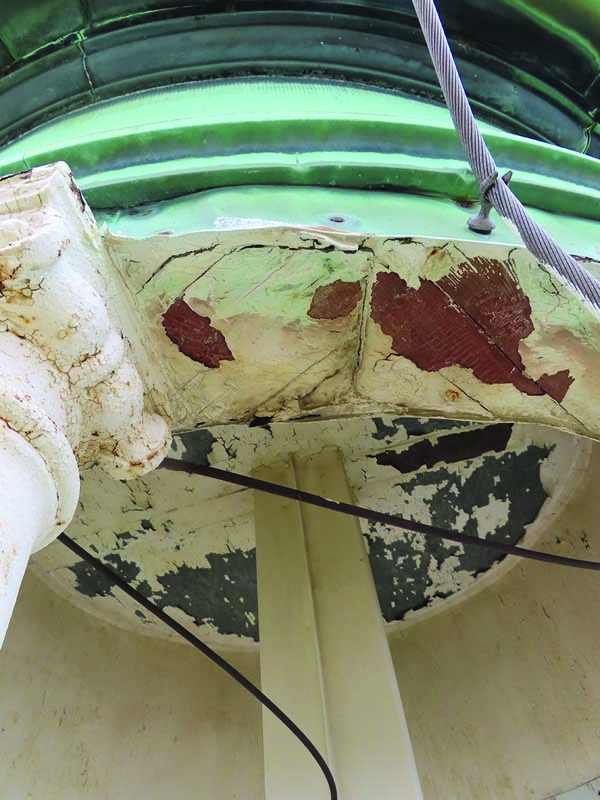
The team removed, refurbished, powder-coated, and reinstalled a cast-iron balustrade system on the iconic clock tower. The previously dysfunctional clockworks were updated to modern or electronic clock systems. The tower’s ornamental stone was carved to match the original components, restoring the courthouse and tower to their original beauty and granting them enduring resilience.
“When an old structure starts to show its age, restoring it with these new components that are true and keep the building water-tight is really satisfying,” says Raleigh. “It’s a great accomplishment to be able to return this structure to the community to enjoy for another century.”
The restoration’s craftsmanship and historical sensitivity earned the Hillsdale County Courthouse a 2025 North American Copper in Architecture Award, honoring the project among the continent’s most distinguished copper applications.