Originally Published as: Recreating a Historic Roof: National Historic Landmark Receives New Copper & Slate Roof
As fire threatened the properties of early American settlers, Benjamin Franklin and fellow firefighters founded the nation’s oldest successful property insurance company: the Philadelphia Contributionship. The organization has played an important role in advancing fire-resistant construction and preserving Philadelphia’s architectural heritage, and it remains an active insurance company today.
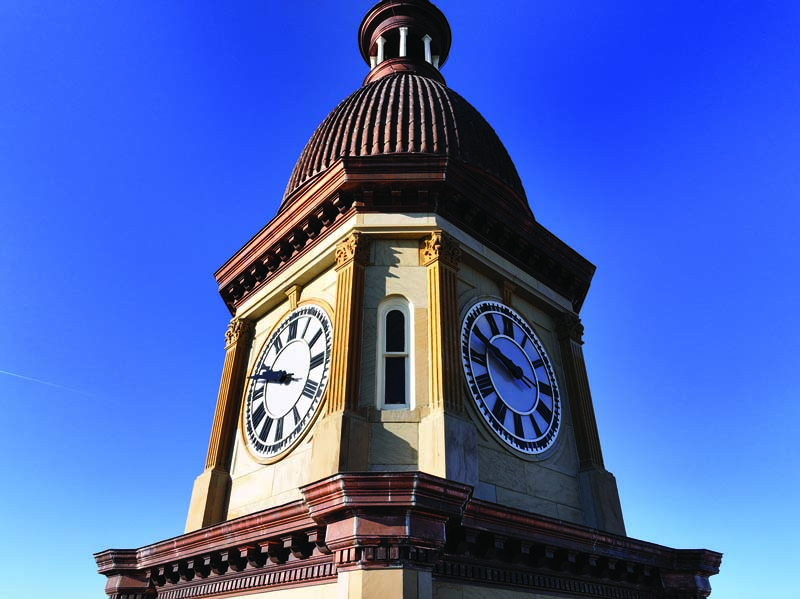
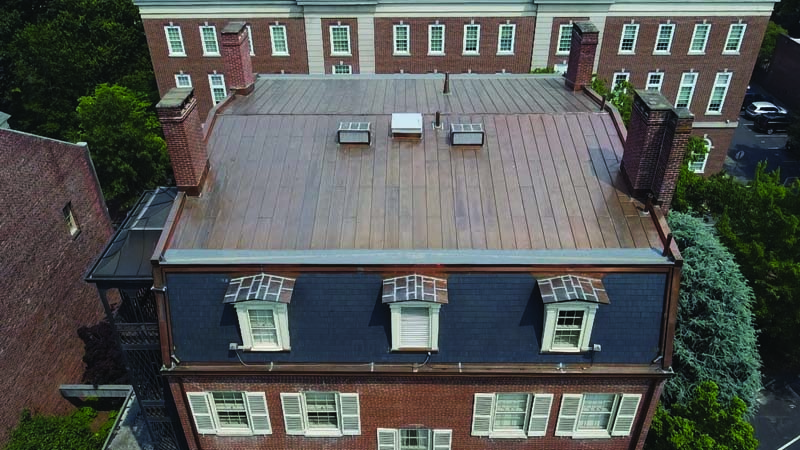
The company’s headquarters were designed by one of Philadelphia’s leading architects at the time, Thomas U. Walter. His Greek Revival-style building is now a National Historic Landmark, with a brick exterior and slate and copper roofing.
The original roofs were replaced in the early twentieth century. More recently, those replacements had reached the end of their service lives as well. Replacing them while preserving the historical accuracy of the prominent Philadelphia building required significant planning and meticulous attention to detail by the parties involved.
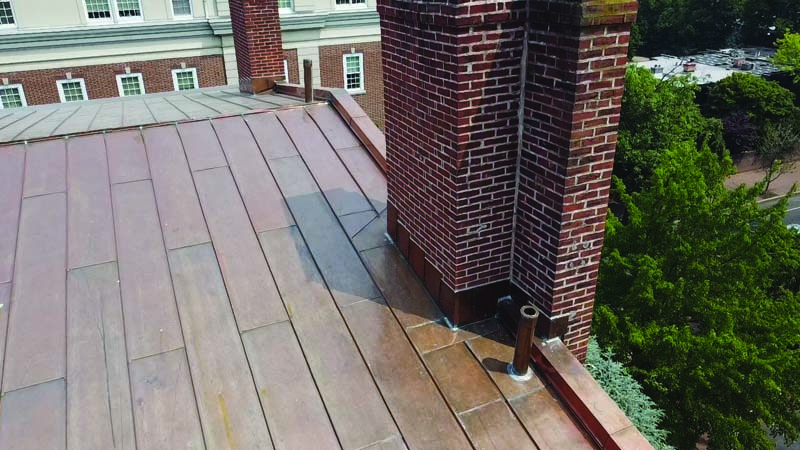
From the outset, the project team was certain that copper was still the best material for restoring the building’s roof. Among the reasons was the fact that copper naturally develops a protective patina, gradually changing from shiny to dark brown to patina green. Simulated copper-tone finishes cannot achieve an authentic appearance, especially as they develop.
“Copper is an absolutely excellent material,” says Akul Modi, Vice President of Estimating & Business Development at EDA Contractors Inc., which served as the general contractor on the project. “When copper changes color, it has a significantly unique look that is different than any standard metal.”
Pre-Construction Planning
The old roof was plagued by several persistent leaks, which was the primary driver behind the decision to replace rather than repair. EDA, copper and slate roofing installer BBCI, an EDA company, and roof consultants Wiss, Janney, Elstner Associates, Inc. (WJE) needed to retain the original look of the copper and slate roof as closely as possible. Any aesthetic changes would have to be approved by the Philadelphia Historical Commission.
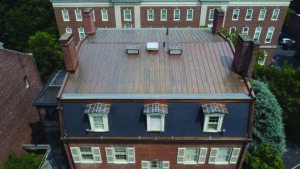
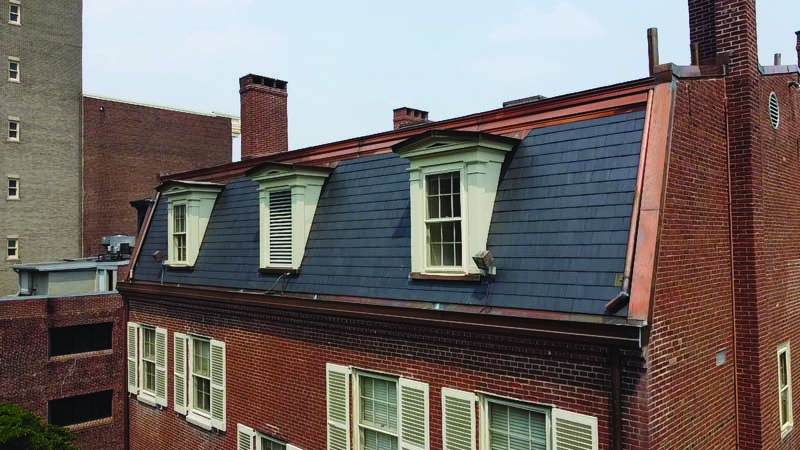
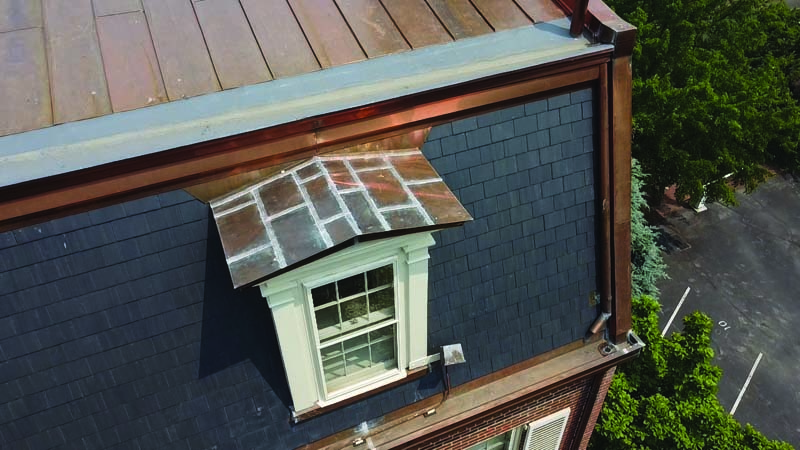
The Philadelphia Contributionship’s roof actually incorporates several historic roofing systems, including standing seam and flat seam copper alongside slate-clad mansard roofs. Besides the new copper flashings where the slate and copper meet, deteriorated copper fascia and crown molding along the west mansard were also replaced.
The roof’s drainage system proved especially challenging. Because downspouts serving the standing seam copper roofs had to be routed over the steep-slope mansard slate roofs below, the team developed custom attachment details that maintained the slate’s water-shedding integrity while ensuring water flowed efficiently from the upper roof areas to the drainage system below.
As Modi notes, while the project team was familiar with this scope of work and had certain expectations, the unknown is always a challenge. The project team understood the necessity to maintain the same appearance, but they were unsure of what they would find beneath the existing roof once construction commenced.
Fortunately, consultant WJE’s preliminary attic survey determined that the roof’s underlying wood framing and masonry were largely intact. That meant the team could focus on accurately recreating the historic roof rather than undertaking major structural repairs.
“We drafted all the details, all the transitions, where the slate meets copper, the flashings, expansion joints, and interfaces. Every detail was drafted on paper first as part of the shop drawing process,” says Modi, who, as Lead Estimator and Project Manager, was significantly involved through all phases of the restoration’s execution.
“The shop drawings were then submitted to the roof consultant [WJE] for what turned out to be several rounds of review and updating to help ensure the design intent was met,” he continues. “All parties were on the same page right from the start of construction on site.”
Turning Drawings into Reality
Before installation began, the project team carefully reviewed shop drawings and 3D visuals of the building to ensure the design intent correctly met the technical necessities, especially at the critical transitions from slate to copper. Some in-situ test panels were also later reviewed by WJE to clarify appearance (what the copper roof panels would look like), functionality, and potential alterations where needed.
“We made certain that the mechanics developing those test panels were the only ones working on the actual project, because it’s a handcrafted material,” says Modi. “Each individual has a different skill set for soldering. We used the skills of three or four sheet metal mechanics, all experts in soldering, to prepare the required soldering test panels. Once the panels were approved by the roof consultant and internally in our system, we ensured that only those workers would be soldering on site for quality assurance.”
WJE ensured every aspect of the work was tested, reviewed, and approved before installation could take place on site — from standing seam roof pan installation, to base flashings and ridge flashings, to the roof’s interface with the gutters.
Impressive Outcome
The Philadelphia Contributionship restoration project was distinguished by its technical complexity, extensive coordination across multiple trades and stakeholders, and meticulous planning and execution required to achieve a successful outcome. Through close collaboration between WJE, BBCI, and EDA, the project team addressed these challenges and delivered an impressive outcome.
“What made this project special,” says Modi, “was not only the collaborations between the various teams, but also how the teams made all components of the roof and drainage system work together successfully.”
In recognition of this historical and meticulous restoration work in copper, the Philadelphia Contributionship was honored with a 2026 NACIA Award [https://copper.org/architecture-awards/].