Originally Published as: Retrofitting Flat Roofs with Metal: A successful retrofit is about structure, slope, and systems
Retrofitting a flat or low-slope roof with a metal roofing system is often presented as a straightforward upgrade: long service life, minimal tear-off, improved drainage, and reduced maintenance. In practice, it is one of the most technically demanding applications an installer will encounter. Unlike membrane re-covers, metal retrofits fundamentally change how loads move through the building, how water drains, and how moisture behaves within the roof assembly. Done correctly, they can extend a building’s service life by decades. Done poorly, they can cause structural stress, chronic condensation, and expensive callbacks that surface years later.
For metal roofing installers, the key is understanding that a flat-to-slope metal retrofit is not a product swap. It is a system conversion. The Metal Construction Association’s retrofit design guidance makes this clear, and reinforces a consistent message: performance is determined long before the first panel is installed.
Start With Structural Reality, Not Roof Covering Condition
One of the most common mistakes in retrofit projects is treating the existing roof as the primary decision point. While the condition of the membrane or BUR system matters, the structure beneath it matters more. A metal retrofit adds dead load through sub-framing, panels, fasteners, and accessories, and it alters load paths that were never part of the original design.
Design professionals need to understand what the existing structure can support and how loads will transfer from the new metal roof system into that structure. This includes the deck type, joist spacing, framing orientation, and any signs of long-term deflection or ponding. If a roof has a history of ponded water, that is a structural warning sign, not just a drainage issue. Adding a metal system over a roof that already deflects can amplify the problem rather than correct it.
Metal roofing retrofit projects should undergo engineering review and structural verification. From an installer’s standpoint, this is less about paperwork and more about minimizing risk. The engineering analysis will determine if the structure can safely accept the additional retrofit system loads.
Slope Is a Requirement, Not a Recommendation
Metal roofing systems demand slope. While membranes tolerate near-flat conditions, metal does not. Retrofitting a flat roof with metal means creating slope, an intentional, consistent slope that is compatible with the drainage strategy. How much slope depends upon the system being used; manufacturers generally provide guidance for minimum slope for a given system.
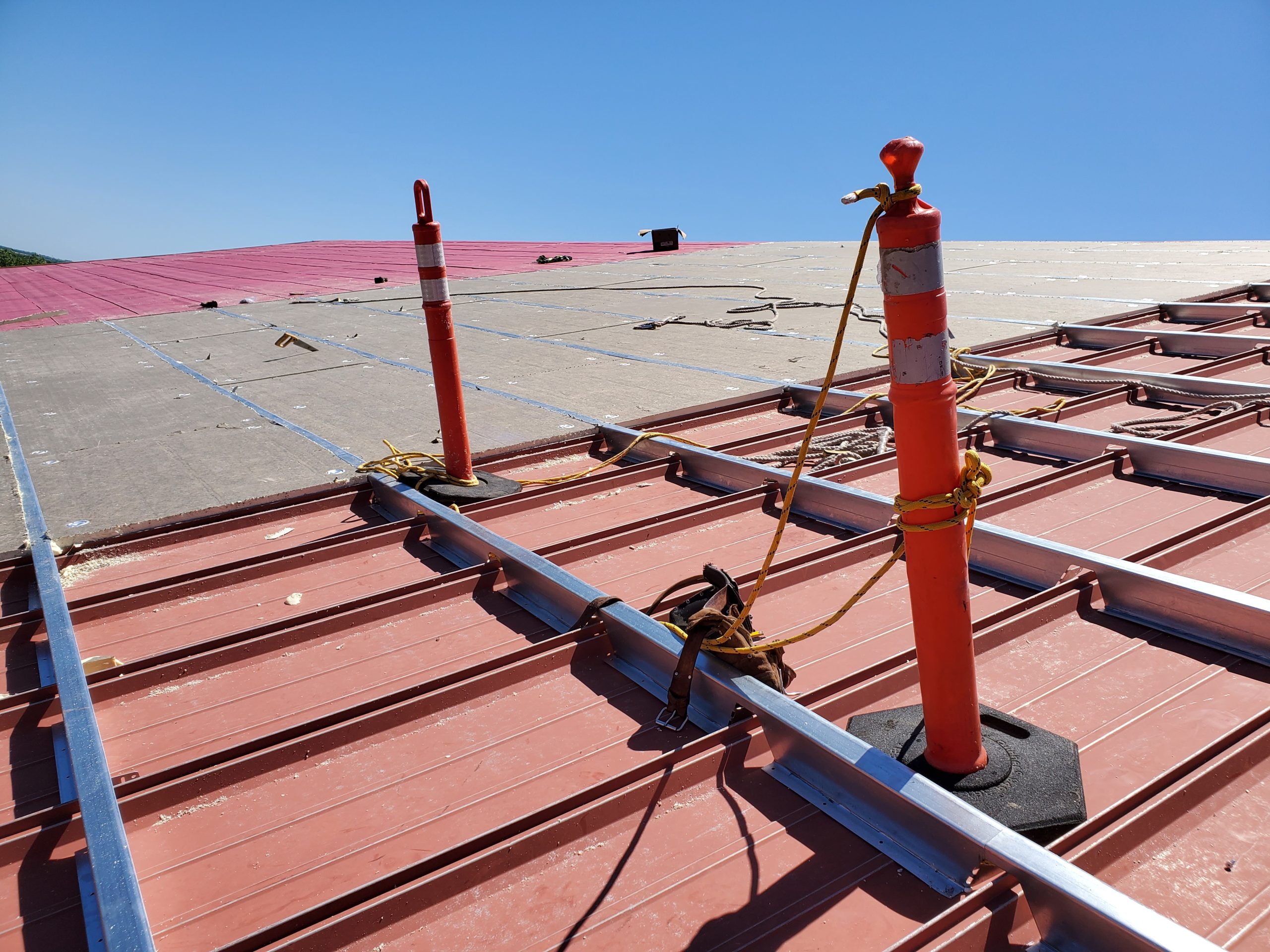
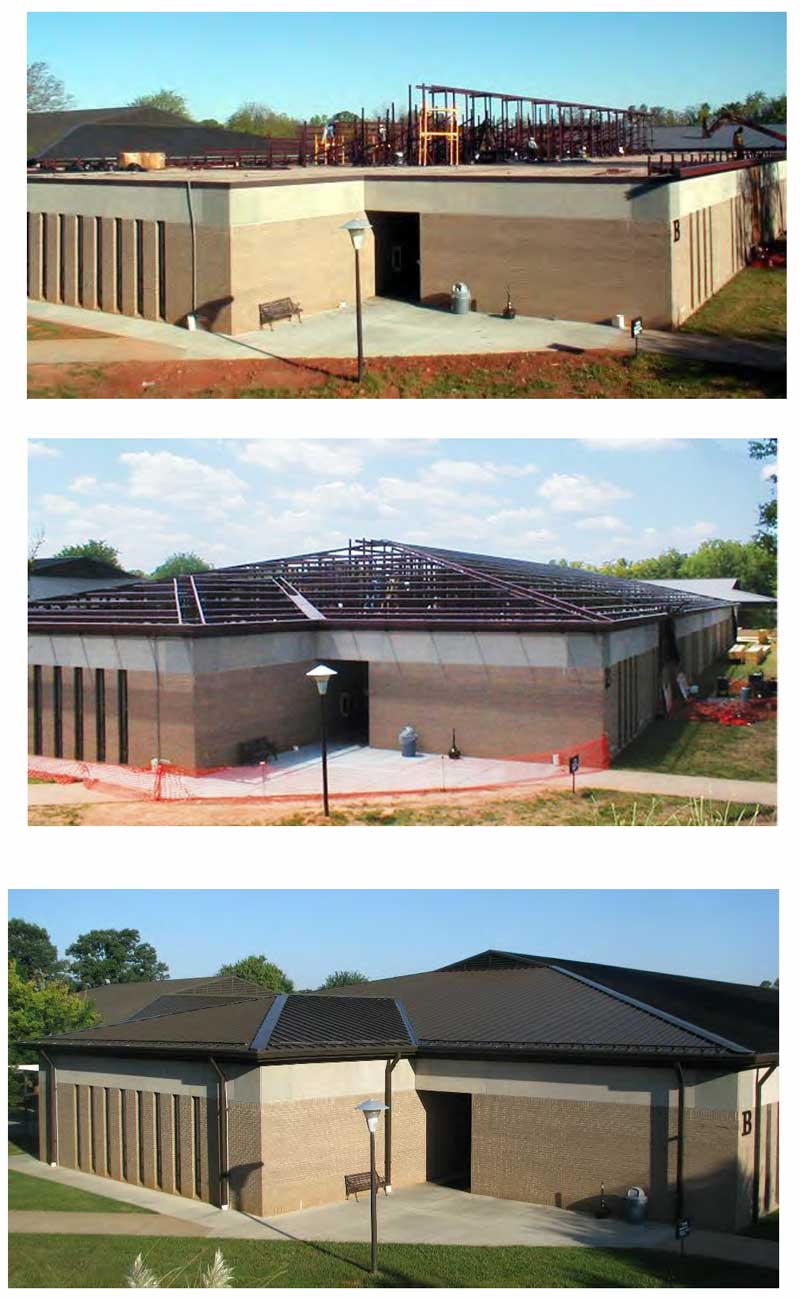
Most retrofit systems create slope using hat channels, Z-purlins, truss systems, or a combination of sub-framing components. Installers need to understand that slope is not just about meeting a minimum pitch requirement; it dictates how water exits the roof, how penetrations are detailed, and how edge conditions perform under wind load.
Equally important is where the water goes. Existing interior drains may need to be converted to scuppers, abandoned, or reworked to align with the new slope direction. In some cases, parapets that once contained water must now accommodate outward drainage. A retrofit that slopes but directs water to trapped or poorly detailed areas is still a failure. Drainage means getting water to the storm sewer or the on-site detention, not just off the roof.
Sub-Framing Is Key
In retrofit applications, as in new construction applications, the metal panels are supported by structural members. The sub-framing in retrofit applications is installed over the existing primary framing system. This shared framing design governs load transfer, wind uplift resistance, panel attachment, and long-term performance. The difference when doing a retrofit job is that the sub-framing must perform the role of transferring those loads to the existing structure in a way that it was not designed to do. This leaves small room for error.
Installers need to pay close attention to sub-framing spacing, attachment methods, and material compatibility. Fastener performance is especially critical in retrofit scenarios, where pull-out values depend on the existing deck rather than new construction substrates. Corrosion compatibility between framing members, fasteners, and the existing roof deck also matters, particularly in coastal or industrial environments.
Thermal movement must be addressed at this level as well. The retrofit assembly combines materials that expand and contract at different rates. Without accommodation for movement, stresses can concentrate at fasteners, panel seams, and transitions, leading to oil canning, fastener back-out, or flashing failure.
Condensation Risk Changes with a Metal Retrofit
One of the least visible — and most misunderstood — aspects of metal retrofits is condensation behavior. Flat roof membrane systems and metal roof assemblies manage moisture very differently. Adding a ventilated air space and a metal skin above an existing roof can create conditions where condensation forms regularly, even if the building never experienced moisture issues before.
Metal panels cool rapidly at night and during temperature swings, increasing the likelihood of condensation forming on their underside. If that moisture cannot dry or drain, it can accumulate within the retrofit cavity. The existing roof may or may not function effectively as an air or water barrier or vapor retarder, and its original insulation placement may no longer be appropriate or helpful. Further, design professionals should evaluate the existing insulation for moisture damage and effectiveness before installing the new roof. Compromised insulation can contribute to long-term moisture and corrosion problems if sealed in the metal retrofit system.
Design professionals need to evaluate interior humidity levels, climate zone, and ventilation strategy as part of the retrofit plan. In some cases, passive ventilation at the ridge and eave is sufficient. In others, mechanical ventilation or additional condensation-control measures may be required. The key is recognizing that condensation problems often develop slowly and remain hidden until damage is advanced.
Penetrations Multiply Complexity
Every penetration through a flat roof becomes more complicated after a metal retrofit. Existing curbs must be extended above the new slope or replaced, flashing geometry changes with slope, and panel seams introduce new constraints on placement.
From a practical standpoint, retrofit projects benefit from penetration reduction whenever possible. Installers should work with owners and mechanical contractors early to eliminate abandoned equipment, consolidate vents, or relocate penetrations away from critical seams and drainage paths. Clear responsibility for penetration modifications must be established before installation begins, not after conflicts arise on the roof.
Parapets and Edges Demand Special Attention
Flat roofs often rely on parapets for water containment and aesthetics. Metal roofs do not. When a metal system is introduced, parapets can become problem areas if their role in the original roof is not fully reconsidered.
As slope is added, parapet heights effectively change. Drainage patterns shift. Wind pressures increase at edges and corners. Installers must understand how the retrofit system terminates at parapets, whether the parapets remain functional, and how movement and uplift are managed at these transitions.
Many retrofit failures trace back to edge conditions that looked acceptable from the ground but did not properly account for movement, water flow, or code-required uplift resistance. It is never acceptable to allow water to accumulate on a metal roof.
Current Codes Still Apply
A retrofit does not freeze a building in time. Once a new metal roof system is installed, it is typically expected to comply with current wind uplift and structural performance requirements. Flat-to-slope retrofit systems are engineered assemblies with specific testing and documentation requirements, and installers should never deviate from the engineered drawings and specifications without approval from the design professional.
From a risk-management perspective, documentation matters. Load calculations, fastening patterns, and manufacturer approvals should be considered part of the installation instructions, not unimportant paperwork.
Installation Sequencing Affects Building Operations
One of the major selling points of metal retrofit systems is reduced disruption. In many cases, the existing roof remains in place, allowing the building to stay operational during installation. This advantage only holds if sequencing is planned correctly.
Installers should understand how materials will be staged, how the existing roof will remain watertight during construction, and how daily work impacts occupants. Poor sequencing can negate the very benefits that made the retrofit attractive to the owner in the first place.
Warranties Must Match Reality
Metal retrofit projects often involve multiple manufacturers and system components. Installers need clarity on what is warranted, by whom, and under what conditions. This includes understanding whether the existing roof is excluded, incorporated, or treated as a sacrificial layer within the new system.
Clear communication and documentation protect everyone involved and help manage owner expectations over the long term.
A System Mindset Prevents Failure
The most important takeaway for installers is that a flat-to-slope metal retrofit is an engineered system. It does not bypass structural evaluation, drainage design, or moisture control. It requires more up-front planning than many membrane re-covers, not less.
When treated as a complete system conversion accounting for structural, thermal, and moisture-control concerns, metal roofing can deliver improved aesthetics, lower energy costs, low lifetime roofing costs, and great testimonials for installers.
Bid-Stage Checklist
Flat-to-Metal Roof Retrofit Projects
Use this checklist before pricing or committing to a flat-to-metal retrofit.
If any item cannot be answered with confidence, additional evaluation is required before proceeding.
- Structural Capacity Verified
- Existing deck and supporting structure reviewed for added dead load from sub-framing, metal panels, and accessories. Signs of existing deflection or chronic ponding identified and addressed.
- Existing deck and supporting structure reviewed for added dead load from sub-framing, metal panels, and accessories. Signs of existing deflection or chronic ponding identified and addressed.
- Slope Strategy Defined
- Method of slope creation identified (sub-framing, trusses, tapered framing). Minimum slope requirements confirmed for the selected metal roof system, including valleys and perimeter areas.
- Method of slope creation identified (sub-framing, trusses, tapered framing). Minimum slope requirements confirmed for the selected metal roof system, including valleys and perimeter areas.
- Drainage Path Confirmed
- Direction of water flow after retrofit system established. Existing drains, scuppers, and parapets evaluated for compatibility with new slope. Site drainage conditions checked for new drainage path.
- Direction of water flow after retrofit system established. Existing drains, scuppers, and parapets evaluated for compatibility with new slope. Site drainage conditions checked for new drainage path.
- Existing Roof’s New Role Understood
- Existing roof defined as air barrier, water barrier, vapor retarder, both, or none of these. Implications for moisture control acknowledged.
- Existing roof defined as air barrier, water barrier, vapor retarder, both, or none of these. Implications for moisture control acknowledged.
- Condensation Risk Evaluated
- Climate zone and interior humidity levels considered. Ventilation or condensation-control strategy identified where required.
- Climate zone and interior humidity levels considered. Ventilation or condensation-control strategy identified where required.
- Sub-Framing System Selected and Justified
- Sub-framing type, spacing, and attachment method identified. Load transfer path from panels to existing structure understood.
- Sub-framing type, spacing, and attachment method identified. Load transfer path from panels to existing structure understood.
- Fastener and Material Compatibility Confirmed.
- Fastener pull-out values appropriate for existing deck. Corrosion compatibility between framing, fasteners, panels, and deck verified.
- Fastener pull-out values appropriate for existing deck. Corrosion compatibility between framing, fasteners, panels, and deck verified.
- Penetration Plan Established
- Existing penetrations reviewed. Penetrations to be removed, raised, relocated, or re-flashed identified.Responsibility for penetration modifications clarified.
- Existing penetrations reviewed. Penetrations to be removed, raised, relocated, or re-flashed identified.Responsibility for penetration modifications clarified.
- Parapet and Edge Conditions Resolved
- Parapet height changes due to added slope accounted for. Edge and termination details reviewed for movement, drainage, and uplift.
- Parapet height changes due to added slope accounted for. Edge and termination details reviewed for movement, drainage, and uplift.
- Code and Uplift Compliance Verified
- Applicable wind uplift and structural code requirements identified. Retrofit system testing and approvals confirmed.
- Applicable wind uplift and structural code requirements identified. Retrofit system testing and approvals confirmed.
- Installation Sequencing Planned
- Strategy for maintaining watertight conditions during installation established. Material staging and building-use impacts considered.
- Strategy for maintaining watertight conditions during installation established. Material staging and building-use impacts considered.
- New Roof Panels Selected
- Panel type: Through-Fastened, Standing Seam, Insulated Metal Panels decided. Factory formed or rolled-on-site and implications considered. Appropriate fasteners identified.
- Panel type: Through-Fastened, Standing Seam, Insulated Metal Panels decided. Factory formed or rolled-on-site and implications considered. Appropriate fasteners identified.
- Warranty Responsibilities Clarified
- Manufacturer and installer warranty boundaries understood. Treatment of existing roof within warranty language confirmed.
Resources
- Cornerstone Building Brands, www.cornerstonebuildingbrands.com
- MBCI, www.mbci.com
- MCA, www.metalconstruction.org
- McElroy Metal, www.mcelroymetal.com
- Roof Hugger, www.roofhugger.com