Originally Published as: Understanding Underlayment: How Underlayment Behaves Under Metal’s Unique Conditions
Resources
- David Delcoma, MFM Building Products • www.mfmbp.com
- Mike O’Hara, Levi’s Building Components www.levisbuildingcomponents.com
- Jasmine Williams, MWI Components www.mwicomponents.com
- Mike Lookenott, Titanium® • www.owenscorning.com
Underlayment isn’t the flashiest part of a roofing system, but professionals know it’s the quiet workhorse that protects everything underneath. Whether the finished roof is standing seam, exposed fastener, or another profile, the right underlayment makes the difference between decades of watertight performance and premature failure. Understanding how these products behave under metal’s unique conditions – heat, movement, condensation, and long service life – is essential.
Material Science & Performance
The first question when choosing an underlayment is: what’s going on top of it? A granulated ice-and-water membrane around perimeters and penetrations may suffice for asphalt shingles. But for metal panels – especially standing seam – the stakes are higher. Due to the daily expansion and contraction of steel or aluminum panels, granulated surfaces can abrade the panels scratching away protective coatings. That’s why manufacturers caution against pairing granular products with metal roofs.
For metal systems, high-temperature synthetics, such as Roloshield™, or some self-adhered underlayments rated for 220°F are advised. Below that threshold, mastics can bleed out, staining walls or losing adhesion. Premium products reach 240-260°F ratings without slumping or softening, ensuring stable adhesion even under dark panels and southern exposures. High-temperature rated underlayments usually also boast high tensile strength and elongation allowing them to stretch over 250%. However, you will have to check the particular underlayment that you are considering for those features.
Regional climate should also guide selection. In coastal or hurricane-prone areas, a robust, code-approved self-adhered membrane with ICC or Miami-Dade approvals resists wind-driven rain and pressure differentials. Desert environments demand high-temperature tolerance and UV resistance. In northern climates, self-adhered ice and water shields are essential at eaves, valleys, and ridges to prevent ice dams; synthetic underlayments can cover the rest of the field for economy. Wildlife-Urban Interface (WUI) codes require Class A fire rated products including underlayment such as Titanium® FR, a single-layer, self-adhered membrane.
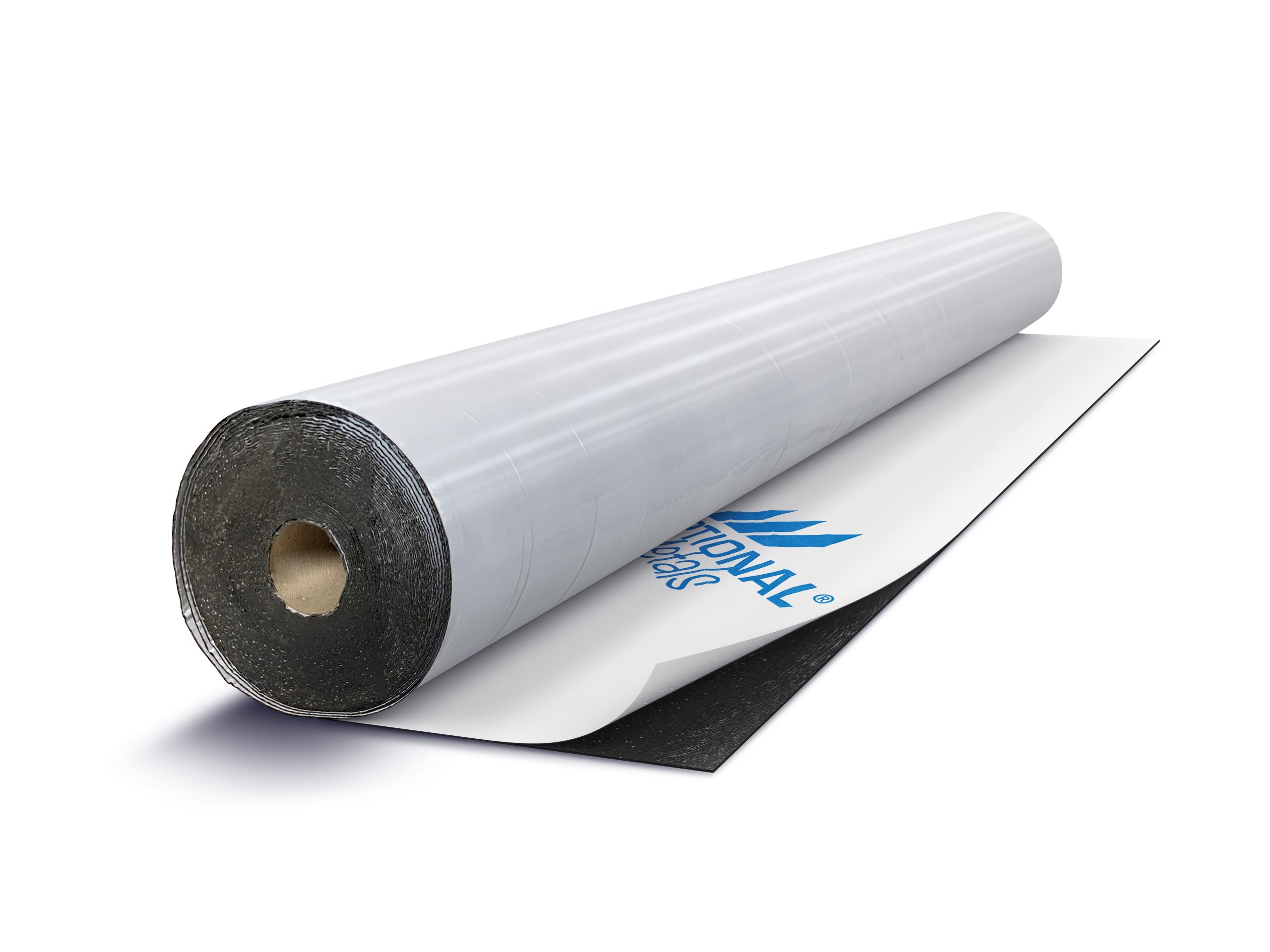
For top-notch performance, a self-adhered underlayment can be the best choice as they generally have self-sealing properties. MetShield underlayments, for example, soften around roofing nails, screws and roofing clips, preventing water intrusion in even the smallest points of penetration. They serve as a secondary barrier against water, condensation and vapor.
Service life varies by type of underlayment: asphalt underlayments can last 15-30 years, basic synthetics 25-30 years, higher-end versions can reach 40, and peel-and-stick membranes average warranties of 20-30 years in extreme climates. Most synthetics carry warranties around 25 years or more, while self-adhered products may list 10-40 – but both typically outlast those numbers when properly installed and protected from prolonged sunlight.
Even if the top films weather over time, the mastics beneath should not dry out or crack. Failures are rare if you have picked the right underlayment for the conditions it will face, and with correct installation, the underlayment should last the life of the roof.
Slip Resistance & Safety
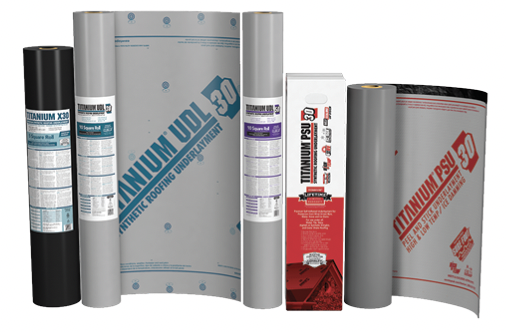
Walk-ability is not an afterthought – it’s a safety feature. Roofing crews routinely work on steep slopes, and underlayment performance underfoot can determine how confidently and safely they move. Many synthetics feature embossed or skid-resistant surfaces tested in both wet and dry conditions, with coefficients of friction published on their technical data sheets. Titanium® UDL30, UDL50, and PSU30’s Sure-Foot™ Technology are examples of highly slip-and-tear-resistant underlayments.
Manufacturers test walk-ability using “grip walk” or traction trials. The goal is to strike a balance: a surface grippy enough to hold a boot on a hot, pitched roof but not so tacky that it interferes with panel placement or adhesion. Self-adhered membranes often provide excellent traction thanks to their tacky, rubberized surfaces that bond securely to the deck.
Underlayments like M Armor Core combine these features with high traction top layers and can reflect sunlight, keeping the surface cooler for crews working in hot climates.
For steep-slope work, contractors should verify that the underlayment’s pitch range matches the project, typically 2/12 to 5/12 for standard metal applications, and that it’s listed for slip resistance by UL or ICC. In fact, some recommend that roofers ask about slip/walk-ability test results.
It is best to ensure that the underlayment chosen has been tested for all of the elements it will encounter. And as always, personal fall-protection systems remain non-negotiable, but choosing the right underlayment can make the job both safer and faster.
Installation Best Practices
The best underlayment can fail if it’s installed incorrectly. Synthetics are usually rolled out and nailed or stapled, while self-adhered membranes require careful handling of split release liners to prevent wrinkles or bubbles. Many installers roll out about 20 feet at a time, hand-smoothing or brooming the sheet as they go for a tight bond. Overlaps should measure at least 3-4 inches horizontally and 6 inches at end laps to maintain watertight continuity.
Start at the lowest part of the roof, working upward and outward to ensure proper water shedding. In valleys and around chimneys or penetrations, codes nearly always call for self-adhered membranes rather than nailed synthetics. Along the eaves, install drip edge first, then apply self-adhered underlayment over it; at the rakes the drip edge goes on top. Flashing should follow standard shingle-lap principles.
Fastening also matters. For asphalt, felt, and synthetics, cap nails with a minimum of 1” diameter should be used to distribute pressure over a large area, minimizing the risk of tearing, and improving water resistance around fasteners. In high-wind or steep-slope zones, increase fastening frequency and consider blind-nailing along overlaps for added security.
Some installers add furring strips beneath metal panels to create a half-inch air gap for ventilation, especially under copper or dark steel roofs that experience high surface temperatures. Ventilation remains crucial when using self-adhered membranes; without ridge and soffit vents, trapped moisture can condense and lead to mold, as proven by more than one field case.
Wrapping rake edges and eaves with fascia board can lend the roof some extra protection.
UV exposure limits should also guide scheduling. Synthetics typically withstand 60-120 days of exposure, while high-end self-adhered membranes can often tolerate 180 days or more. If the metal installation will be delayed, contractors should confirm with the manufacturer before exceeding rated limits; photos and field inspections for discovery of the state of the underlayment will often allow the manufacturer to grant short extensions.
Retrofit Considerations
When a roof is being replaced, the condition of what lies beneath the new cladding matters as much as the materials going on top. Any unevenness in the substrate can show through, creating “oil canning” on metal panels. A clean, uniform deck helps ensure good adhesion of new self-adhered underlayments, and both building codes and product guidelines specify what kinds of substrates and how many layers are acceptable beneath the roof system.
If an older roof already has a full-deck self-adhered underlayment in place, it’s often best to add a slip sheet before applying a new layer—if permitted by code and the cladding manufacturer. The old surface may be dirty or degraded, and the slip sheet helps the new membrane bond properly.
Moisture trapped beneath an underlayment can cause major problems once temperatures rise. As liquid water turns to vapor, it expands roughly 3,000 times, creating pressure that can lead to bubbles or “mole runs.” For that reason, the deck must be completely dry before the new underlayment is installed.
Older homes with plank decking can pose special challenges. Knots in aged boards contain turpentine-like resins that can liquefy when heated, softening modified bitumen and producing dark drips between boards—especially when damaged planks are replaced with new wood. Careful inspection and surface preparation go a long way toward ensuring a clean, stable base for today’s high-performance roofing systems.
Field Experience & Contractor Feedback
Installers consistently praise modern synthetics for their light weight, easy handling, and fast coverage. Tear resistance during carrying and rolling out is high, and the products stay flat once installed. Self-adhered membranes earn top marks for adhesion, secondary waterproofing, and rugged walk-ability, particularly in valleys and perimeters where leaks are most likely to occur.
One recurring tip from the field: handle the wind. Large rolls can act like sails, so many crews cut them into manageable sections before unrolling. Once secured, both synthetics and self-adhered products can usually be safely walked on immediately.
Underlayments also ship better than they did at one time; most are now packed standing on end, which reduces “clumping” or telescoping when unrolled. Contractors report fewer issues with curling edges or uneven adhesion, especially with thicker, premium membranes.
Conclusion
A metal roof’s longevity is only as good as the layer beneath it. Underlayment may never be seen once panels are installed, but it endures every temperature swing, storm, and footstep during construction. For roofers, mastering the differences between synthetics and self-adhered membranes and understanding the code, climate, and installation details that govern them translate directly into fewer callbacks and longer-lasting roofs. As with most aspects of professional roofing, excellent underlayment installation is mainly down to knowing the materials, respecting the manufacturer’s data sheet, and taking the time to do the job right. The roof surface may get all the glory, but the underlayment also helps keep the home snug and dry.
Key Differences In Roof Underlayment Performance
By Mark Strait, President of Kirsch Building Systems, www.sharkskinroof.com
Roof Underlayment Categories: Mechanically Fastened (MA) and Self-Adhered (SA)
The performance requirements of the primary roof covering should dictate the roof underlayment selection, along with expected weather conditions. UV exposure rating, long-term accelerated weather cycling, and wind uplift resistance testing are the most important factors when evaluating MA and SA underlayments for metal roof systems.
MA asphalt-based roof underlayments perform poorly long term, with low resistance to wind and UV exposure.
SA asphalt-based roof underlayments are impacted negatively by long-term UV exposure, which dries out the asphalt and causes it to deteriorate more quickly, becoming brittle over time. Hot climates contribute to daily thermal cycling that also shortens asphalt’s lifespan. Asphalt primer must be used to increase wind uplift resistance in High Velocity Hurricane Zones (HVHZ).
MA Synthetic Roof Underlayments
Synthetic roof underlayment weight per roll or square should be a key focus. With synthetic roof underlayments (SRUs) on the market weighing between 22 lbs and 50 lbs per roll, there is considerable disparity in quality and performance. Performance-based SRUs provide a safe and durable walking surface in addition to the performance criteria mentioned previously.
SA High-Performance Synthetic Roof Underlayments
Higher-performance SA underlayments using synthetic-butyl adhesive offer improved installation characteristics, including better UV exposure tolerance, temperature performance, wind uplift resistance, and long-term durability under metal roof systems. Some products also carry UV exposure ratings up to 12 months and performance warranties up to 50 years.