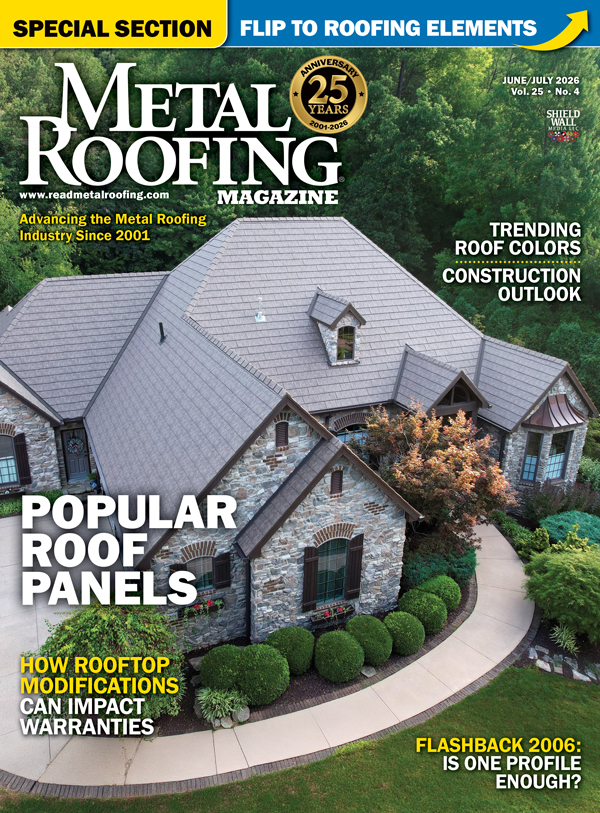
Originally Published as: Popular Metal Roof Panels: What’s Moving the Market
Ask five manufacturers what the “most popular” metal roof panel is, and you’ll get five slightly different answers. But look closer, and the industry tells a more unified story—one shaped by cost, labor realities, evolving homeowner expectations, and a steady shift toward higher-performance systems.
Across agricultural, residential, and light commercial markets, the same core dynamic continues to play out: exposed-fastener panels still dominate in volume, but concealed-fastener and standing seam systems are gaining ground—especially where aesthetics, longevity, and perceived value carry more weight.
Volume Still Favors Exposed-Fastener Panels
By most measures, exposed-fastener panels remain the industry’s volume leader. Whether labeled as 9-inch on-center panels, ag panels, or ribbed profiles, they continue to anchor the market.
“We define ‘most popular’ primarily by sales volume,” said Bonnie Beck, Everlast Roofing, Inc. “Our most-sold roof panel is typically a 9-inch on-center exposed-fastener panel. It leads because it offers versatility, ease of installation, and reliable performance across a wide range of applications.”
That same story repeats across manufacturers. “Ag panel” continues to lead in overall production.
“Our SuperRib panel, an ag panel, is the gold standard of post-frame construction,” said David Martin of Hixwood. “It’s cost-effective, easy to install, strong, and long lasting.”
What’s notable isn’t just that these panels remain popular—it’s where they’re being used. Originally tied closely to agricultural and post-frame buildings, exposed-fastener panels now appear across a broader range of projects, including residential applications where cost sensitivity and installer familiarity drive many decisions.
Standing Seam Continues Its Climb
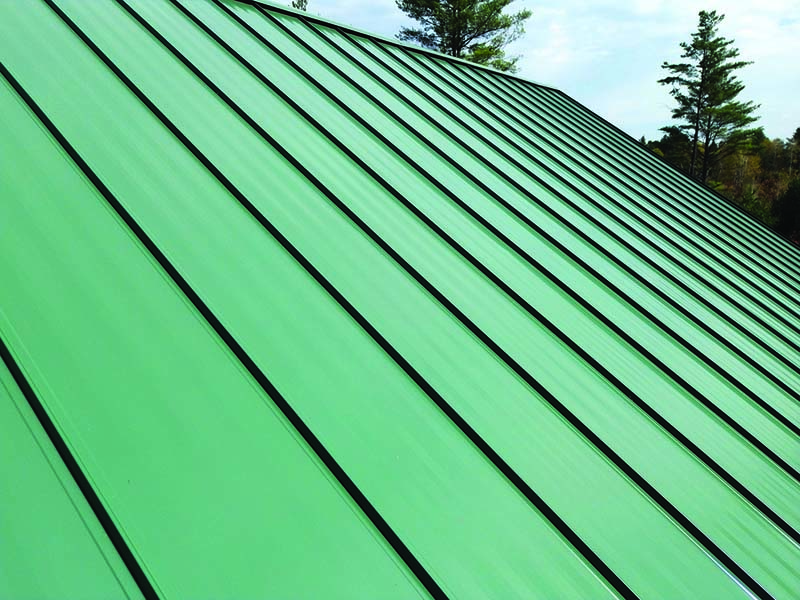
While exposed-fastener panels lead in sheer volume, nearly every manufacturer points to the same shift: standing seam is gaining ground—and doing so consistently.
“We’re definitely seeing the shift toward concealed fastener preference,” said Kari Chermack of Hixwood.
That shift is especially pronounced in residential construction, where homeowners are increasingly viewing roofing as a long-term investment rather than a short-term cost decision.
“There is a clear and growing preference for concealed-fastened systems compared to previous years,” said Shannon Clark of True Metal Supply.
The reasons are layered. Aesthetics play a role, but they’re not the whole story. Longevity, reduced maintenance, and performance all factor into the decision.
“Consumers are seeking high-performance roofing systems that require minimal maintenance, come with robust warranties, and increase the value of their home,” Clark said.
From a practical standpoint, installation efficiency is also part of the equation. Snap-lock standing seam profiles, in particular, are gaining traction because they strike a balance between performance and labor demands.
“One-inch Snaplock Panels lead in popularity because they offer ease of installation, expansion and contraction which minimizes oil canning, and a good balance of cost and performance,” noted Shad Eash of Snap-Z.
That balance is becoming increasingly important as labor availability and skill levels influence product selection as much as material cost.
A Split Market: Cost vs. Performance
The industry isn’t shifting uniformly. Instead, it’s dividing into clearer tiers.
Exposed-fastener panels continue to dominate cost-sensitive projects, particularly in agricultural and post-frame construction of sheds and other utilitarian projects. However, standing seam and higher-end profiles are gaining traction in residential and design-driven builds.
“Homeowners focused on the most cost-effective solution typically choose our exposed-fastener Tuff Rib panels,” Clark said. “Those focused on long-term performance prioritize concealed-fastened systems.”
That divide shows up in how panels are used as well. It’s increasingly common to see mixed applications—standing seam roofing paired with exposed-fastener siding—balancing cost and performance within the same project.
“Exposed fastener panels still dominate in agricultural and budget-driven builds,” Eash noted. “But many buildings benefit from both systems depending on the application.”
Regional Preferences Still Matter
Panel popularity isn’t universal. Regional factors—climate, building type, and even cultural preferences—continue to shape what gets specified.
In the Midwest and Northeast, practical, cost-sensitive systems tied to post-frame construction remain strong. In coastal regions, durability and code compliance carry more weight. In mountain and snow-load areas, structural performance becomes a primary concern.
“Popularity is tied to region,” Beck said. “Post-frame and agricultural markets drive exposed-fastener demand, while coastal or higher-end residential markets lean toward standing seam panels such as Everseam® and enhanced finishes.”
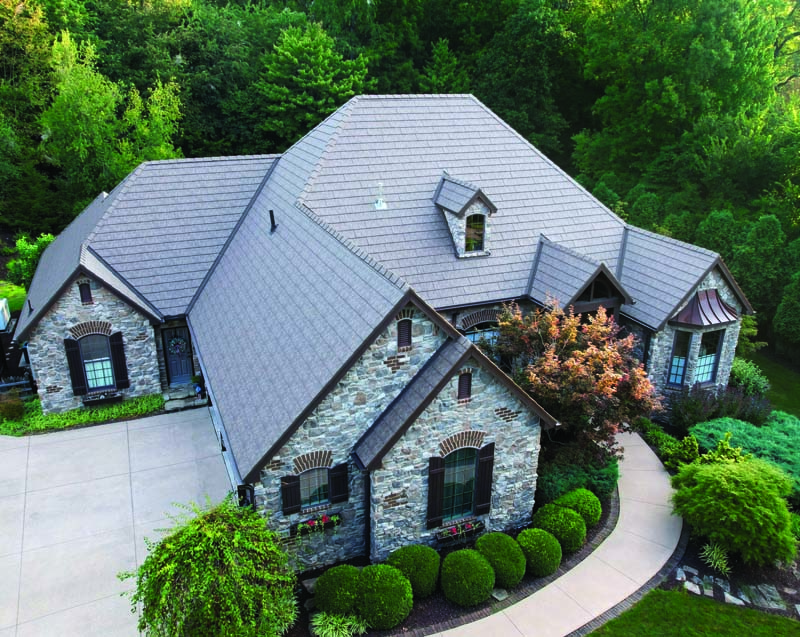
Even within residential markets, regional preferences can shift dramatically. For example, ProVia sees strong demand for specialty profiles that mimic traditional materials.
“ProVia shake and slate profiles are our top sellers because they replicate the look of natural materials,” said Gary Davel, Director of Sales, Roofing at ProVia. “In Florida, barrel tile profiles are especially popular.”
These profiles highlight a different segment of the market—one where aesthetics and architectural style weigh heavily. Davel said their market is mainly residential, but also covers commercial projects including car washes, churches, universities, and more.
What’s Driving Panel Choice Today
Across all segments, a consistent set of factors continues to influence panel selection:
• Cost (material and labor)
• Installation speed and complexity
• Aesthetics and curb appeal
• Performance and durability
• Code requirements and climate considerations.
Roofing choices are largely being driven by aesthetics and HOA requirements according to Davel. Customers are looking for roofing choices that blend in with the neighborhood.
Labor has also become a more visible factor in recent years. Simpler systems often win in high-volume applications, while more complex systems must justify themselves through performance or appearance.
“In many cases, labor drives the roofing decision more than material,” Eash noted. “For example, it is significantly faster to install metal panels rather than asphalt shingles on a simple roof without a lot of dormers and valleys.”
At the same time, homeowners and building owners are asking more from their roofs, pushing demand toward systems that offer longer life cycles and fewer maintenance concerns.
Panel Design Is Playing a Bigger Role
As the market evolves, panel characteristics themselves are becoming more influential in buying decisions. Rib height, seam type, and gauge all affect both performance and appearance. Taller ribs and mechanical seams tend to offer higher performance, particularly in demanding environments, but they are not as easily installed.
“Mechanically seamed panels offer higher performance but require more labor and skill,” Eash of Snap-Z noted.
Snap-lock systems, by contrast, continue to gain popularity because they simplify installation while still delivering a clean, concealed-fastener look.
“Snap-lock profiles remain particularly popular because they provide a fastener-free aesthetic with a more labor-efficient installation process,” Clark said.
Span capability is another factor, especially in commercial and large-scale buildings. Profiles like PBR panels are engineered for wider purlin spacing and heavier loads, making them well-suited for structural applications.
Color and Finish Trends Reinforce the Shift
Panel selection isn’t happening in isolation—color and finish trends are reinforcing the broader move toward higher-end systems.
Across manufacturers, darker colors dominate. Black, charcoal, and bronze consistently rank among top sellers, often paired with matte or textured finishes.
“Black and charcoal are far and away the most popular, especially with textured finishes,” Chermack of Hixwood said.
Beck at Everlast Roofing reports similar trends, noting strong demand for matte and low-gloss finishes alongside darker tones. These finishes help reduce glare and soften the appearance of metal, making it more appealing in residential settings—another factor driving the growth of standing seam.
At the same time, specialty finishes and colors are beginning to carve out niche demand.
What’s Changed—and What Hasn’t
Compared to even a year ago, the biggest shift isn’t a dramatic change in panel rankings; it’s the continued acceleration of an existing trend. Exposed-fastener panels still lead in volume.
“Exposed-fastener remains dominant, but concealed-fastener/standing seam demand is increasing, especially in residential and premium applications,” Beck said.
What has changed is the rate at which standing seam and other concealed-fastener systems are gaining acceptance, particularly in residential and light commercial markets. That shift isn’t replacing exposed-fastener systems, instead it’s expanding the markets around them. The result is a more segmented industry, where panel choice is less about a single “most popular” profile and more about matching the system to the application, budget, and long-term expectations of the building owner.