Originally Published as: Integrating Solar and Snow Retention : for Smarter Metal Roof Design
Rob Haddock,CEO and founder of S-5! and the inventor of metal roof attachment solutions, is a former contractor, award-winning roof-forensics expert, author, lecturer and building envelope scientist. He has worked in various aspects of metal roofing for five decades.
Often when the decision is made to install solar on a metal roof, the focus is on energy production, payback and aesthetics. But in regions that see heavy snowfall, another critical element deserves equal consideration: snow retention. Mounting solar without accounting for snow management can lead to roof damage, performance loss and safety hazards.

The good news? The ideal solution for both systems starts with the same foundation—a metal roof. Metal roofing not only provides unmatched durability and sustainability but also serves as the perfect platform for integrating solar PV and snow retention into one cohesive, long-lasting system.

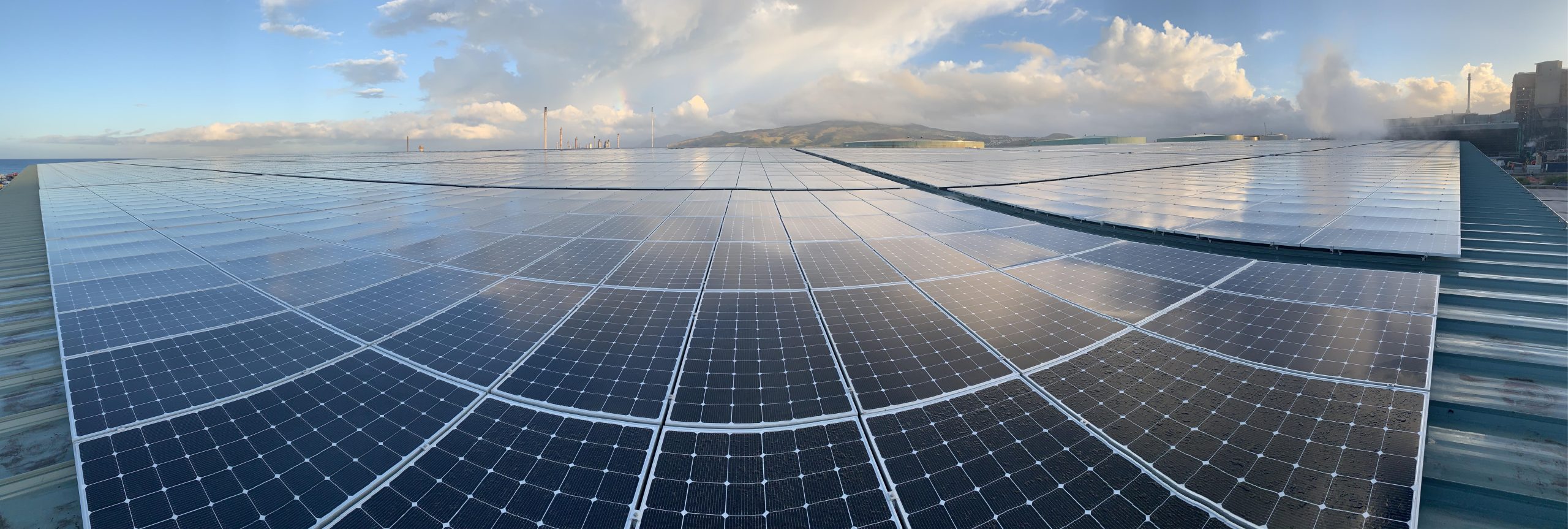
Metal Roofing: A Natural Platform for Solar PV
Metal roofing is the only roof type whose service life actually exceeds that of a solar photovoltaic (PV) system. A high-quality metal roof can easily last up to 70 years, while today’s solar arrays average more than 30 years of productive life. When compared to asphalt shingles or membranes that likely need replacement halfway through a solar system’s lifespan, the economic advantage of metal becomes clear.
On non-metal roofs, re-roofing means disassembling the solar array, replacing the roof and reinstalling the array—a process that can add extreme costs in labor and downtime. High-end tile roofing may offer comparable longevity, but it comes with a much higher price tag and mounting solar to tile is invasive and very tricky to do, so the cost is also much higher than mounting to metal.
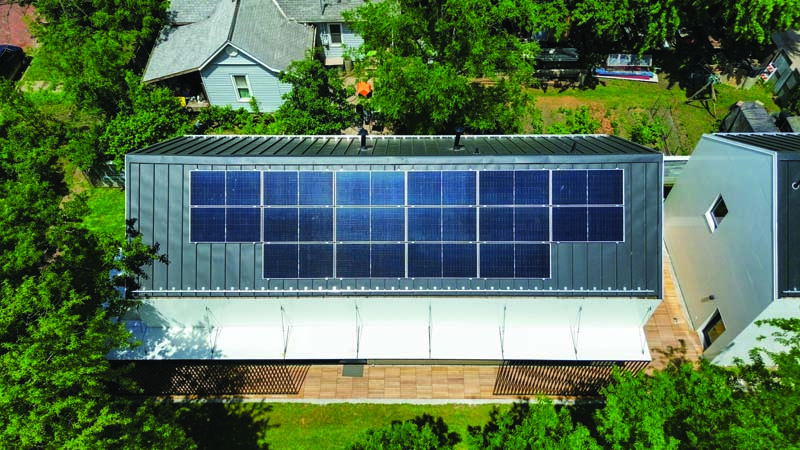
Standing seam metal roofs, by contrast, enable non-penetrating clamp-based attachment systems that allow solar panels to be mounted quickly, securely and without compromising the roof’s weathering integrity. The result is lower installation cost, higher durability and a future-proof foundation for rooftop solar.
This combination of longevity and versatility makes metal the only roofing material that truly aligns with the long-term economics of a solar investment. When the roof and solar array are viewed as a single integrated asset rather than two separate systems, the result is lower total cost of ownership and a much stronger return on investment (ROI).

The Snow Factor: Nature’s Hidden Design Challenge
In northern or mountainous regions, snow adds another layer of complexity to rooftop solar design. While a metal roof’s smooth surface can help shed snow efficiently, that same feature can create a serious hazard if unmanaged. A sudden “rooftop avalanche”—when a heavy blanket of snow releases all at once—can cause catastrophic damage to people, vehicles, landscaping, property and equipment below.
Snow accumulation on a metal roof is initially restrained by a temperature-dependent frictional bond between the snowpack and roof surface. Compressive forces from the weight of the snow increase its density, while downslope shear forces – often referred to as vector or drag loads – push the snowbank toward the eave. As temperatures rise or sunlight warms the metal surface, a thin layer of meltwater forms at the roof-snow interface, creating a slick surface that allows the snow to slide. Depending on roof slope and climate, snow loads can range from 20 to more than 300 pounds per square foot, producing thousands of pounds of downslope force.
That’s why engineered snow retention is essential. Snow guards hold snow in place until it can melt gradually. But when solar panels are present, this balance becomes more complicated. Panels can act as unintended snow guards—catching and holding snow unpredictably—or worse, they can be damaged by the force of compacted snow sliding against them.
How Snow Impacts Solar Panels
Solar modules and solar mounting structures are designed to handle vertical loads from above but not horizontal pressure pushing downslope (parallel to the roof). On a moderately pitched roof, a single column of five modules may experience 2,000 pounds of downslope forces from accumulated snow.
Although PV panels appear smooth, snow often clings to them more than to the surrounding metal roof. This means you need to know the load your PV modules and racking can handle. Be sure they have a design-load rating equal to or greater than the roof design snow load. And be certain the tested ultimate loads have the appropriate factor of safety applied. Typically, this information is published within the module producer’s installation manuals along with the module’s appropriate mounting zones.
It’s crucial to understand that the frames of solar panels are not designed for resistance to sliding snow forces. They should never be relied upon—or modified for that purpose. The module frame lips can trap snow at the lower edges, and that snow exerts enormous pressure on the frame, glass and racking components. This can lead to module damage or full detachment from the roof. Similarly, snow retention devices should never be attached to the module frames, as they are not designed to withstand those pressures. The need to design and install an engineered snow retention system in conjunction with the solar array is crucial.
When planning a solar installation in snow country, both solar and snow retention systems must be designed together to ensure they complement rather than conflict with each other. The goal is to create a roof that harvests sunlight efficiently while safely managing the forces of snow and ice throughout the winter months.
Designing for Integration
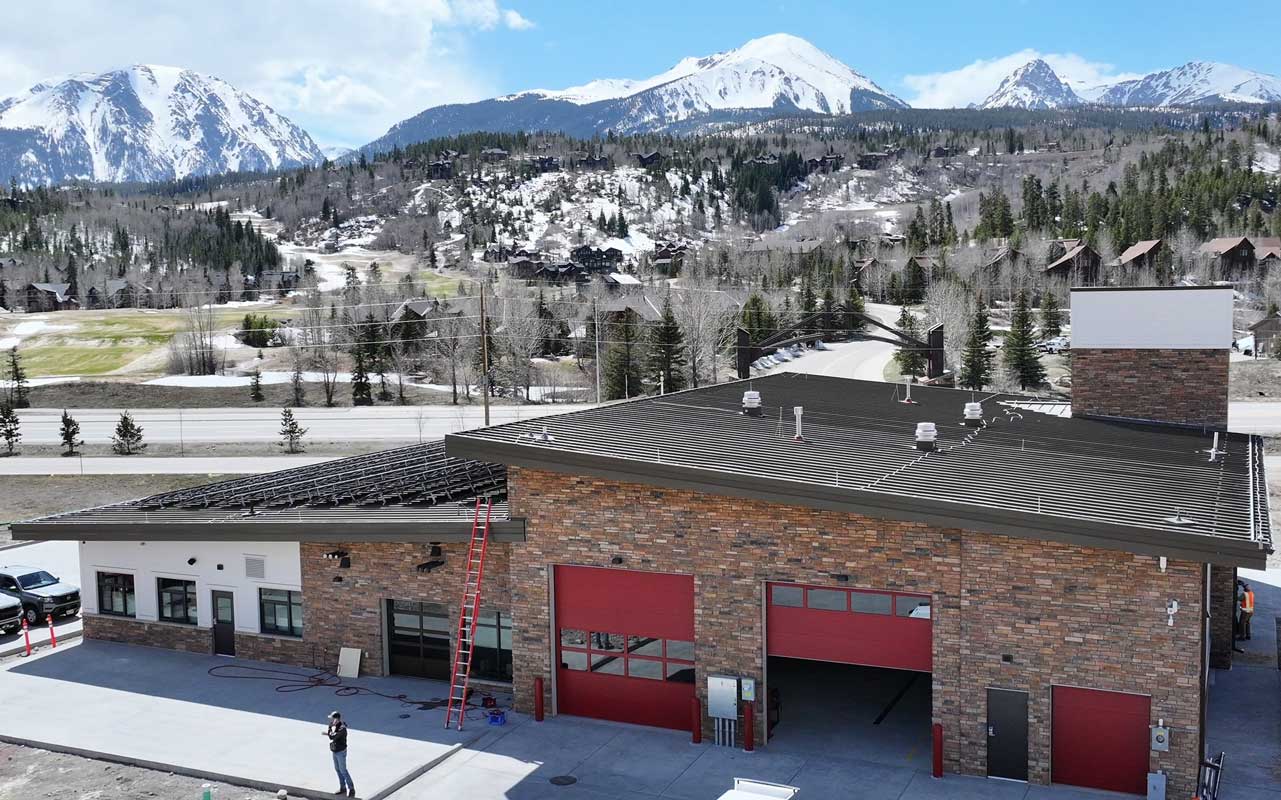
A successful solar and snow retention strategy begins with thoughtful layout. Snow guards are most effective when installed at the eave, where snow densifies and exerts the greatest compressive strength. This is where resistance to sliding snow is most effective.
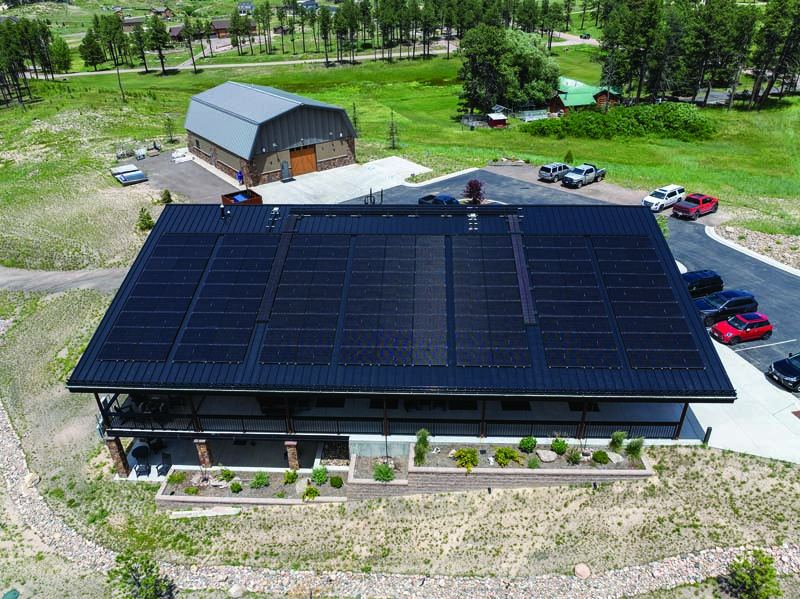
However, solar installers often maximize coverage by running modules from eave to ridge, leaving no room for snow retention. The best solution involves installing a snow retention assembly at the eave and terminating the array significantly upslope, leaving a planned area between the two for snow densification.
The densification area should be approximately 15% of the roof surface area from eave to ridge. That space allows snow to clear off the solar modules and compact naturally, providing snow retention systems with the space to function correctly. The tradeoff in solar coverage is minimal, and the payoff in safety and reliability is significant.
Designing for this 15% gap at the roof’s eave highlights the benefits of planning the solar and snow retention together as a single system. Too often, snow retention becomes an afterthought—addressed only when a problem occurs. Building owners may notice rooftop avalanches damaging property or blocking entrances and then realize a snow guard system is needed. But adding one after a solar array has been installed is rarely simple or cost-effective.
On low-slope commercial roofs, common tilted solar racking systems introduce another challenge. The spacing between rows prevents shading, which impacts the modules’ energy output but also creates traps for snow sliding from nearby solar panels, drifting snow and wind-driven snow. The added accumulation behind tilted panels can create heavier loads than the roof’s design snow load. These shaded areas stay colder and icier, prolonging the load even as the rest of the roof clears. The ASCE Snow Loads on Solar Paneled Roofs guide provides formulas and strategies for addressing these effects. The takeaway is straightforward: solar design in snowy regions is about managing snow as much as capturing sunlight.
The best approach is early collaboration among the entire team. When architects, solar engineers, roofing contractors and snow retention manufacturers work together from the beginning, both systems can be integrated seamlessly. Each professional brings valuable insight: the solar team optimizes energy yield, while the roofing and snow retention experts ensure structural integrity and safety.
Utilizing clamp-based metal roof attachments, for both solar and snow guards, makes this integration even more efficient as they attach directly to the standing seam roof without requiring roof penetrations. Roof integrity is preserved, the risk of leaks is eliminated, and future maintenance is simplified. And because both systems use the same attachment principles, they can be modeled, tested and engineered as one integral system.
Smarter Roofs, Smarter Returns
Planning solar and snow retention together isn’t just about preventing damage; it’s about maximizing performance and extending the life of the entire system. A standing seam metal roof offers the strength and long-term performance needed to support both technologies without compromise.
This unified approach also aligns with modern building design goals: sustainability, lifecycle efficiency and occupant safety. A metal roof paired with solar PV and snow retention becomes more than a weather barrier—it’s an integrated energy protection system designed to perform for the life of the solar and/or roof.
When designing the solar zone and snow management together, each supports the other, creating a building envelope that resists the elements, produces renewable energy and protects everything beneath it. It is not just building for today’s energy needs but building smarter for years to come.