Originally Published as: Sealant Performance: Butyl Sealants on Metal Roofs: Not All Are Created Equal
Rob Haddockis the CEO and founder of S-5! and the inventor of metal roof attachment solutions. A former contractor turned building-envelope scientist, Haddock has dedicated more than five decades to advancing the metal roofing industry. He is an award-winning roof-forensics expert, author, lecturer and educator, as well as the director of the Metal Roof Advisory Group, Ltd., a consulting firm specializing in metal roof design, installation and performance.
“Butyl” sealants were first introduced to the U.S. metal roofing industry more than 60 years ago. It wasn’t unique even at that time but became the standard practice within the entire metal roofing trade and has been utilized in more than a billion square feet of metal roofing each year since.
With the need to mount various rooftop accessories—snow retention, fall protection, HVAC and solar PV—understanding which “butyl” you’re getting matters more than ever.
But, What is Butyl?
Initially developed in 1937, “butyl” is a copolymer of isobutylene with isoprene. While the early compounds contained some butylene polymer, many products offered consisted largely of fillers. So, keep in mind, the term “butyl” is a very broad category of mixtures that include some portion of butylene. Products varied not only in the quantity of fillers but also in the chemistry of the copolymer but always sold as “butyl.”
Fast Forward
It gained traction as a lap sealant within the EPDM rubber roofing industry in the mid-80s and quickly became the standard practice in that trade segment as well. Butyl is now surging again, driven by rooftop accessories that rely on penetrative roof attachments. So, using butyl for waterproofing related to roofing is not a new idea.
I was in the metal construction contracting business back in those early days. I remember the evolution of these polymers from the mid-70s and have used them ever since on many thousands of roofs for five decades.
Background
Prior to 1975 or so, the longevity of most of these sealants was… let’s just say “questionable.” The “secret sauce” has always been proprietary. However, by the late ‘70s, additional research and development of two or three producers resulted in new formulations. A key refinement optimized the cross-linking of isoprene, resulting in a non-curing, non-hardening rubber polymer that maintains a chewy, gum-like consistency throughout its service life. I am grateful to at least one of those chemists who mentored me and developed these proprietary cross-linked polymers, still known by their shortened name, “butyl.” These selective polymers have continued to perform reliably for 45 years and are still on roofs and in the market.

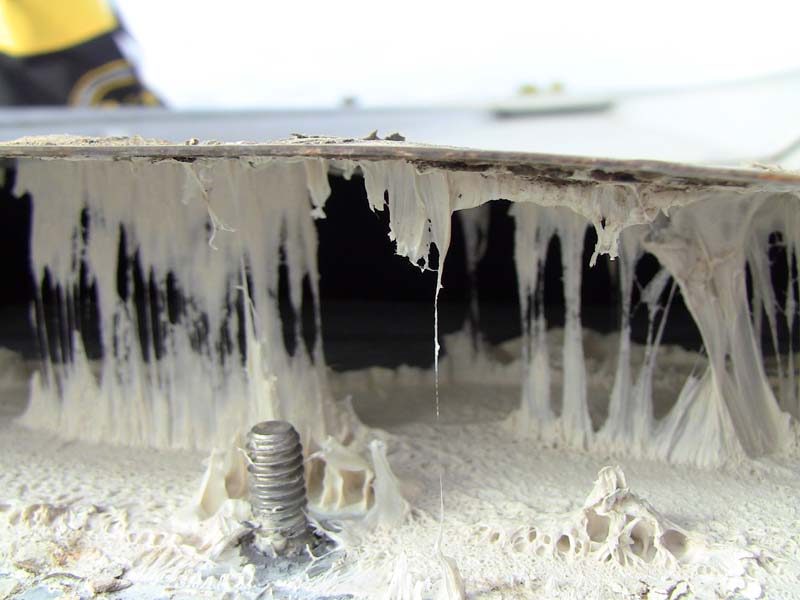
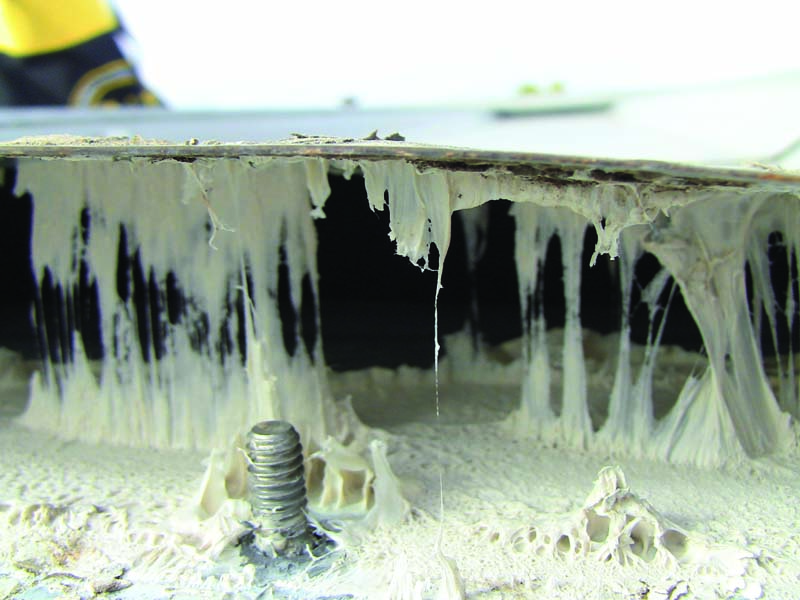
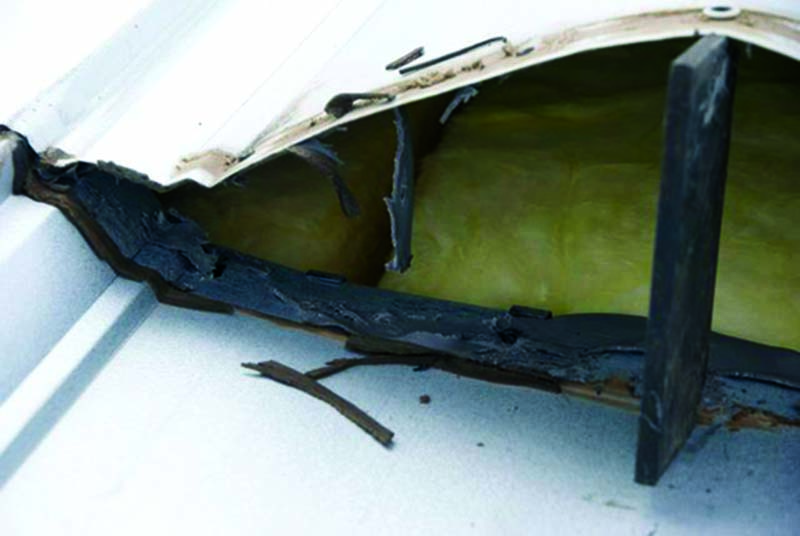
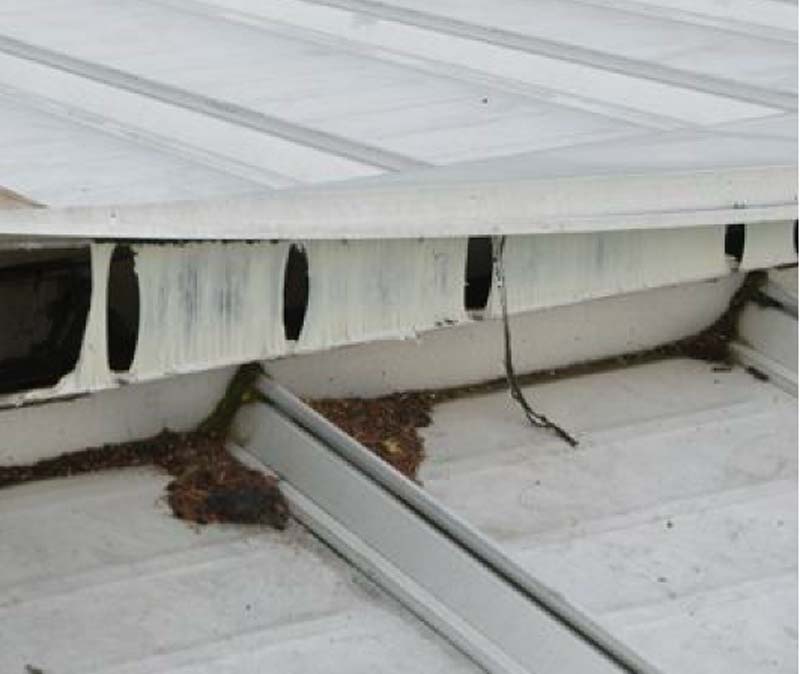
As an industry expert and director of the Metal Roof Advisory Group, Ltd., since 1984, I have forensically investigated numerous “butyl” sealant failures within as few as seven years of service, leading to costly lawsuits. Such products are also still in the marketplace—also called “butyl,” but clearly, they are not all the same. “Butyl” is not magic. (Figs 1, 2)
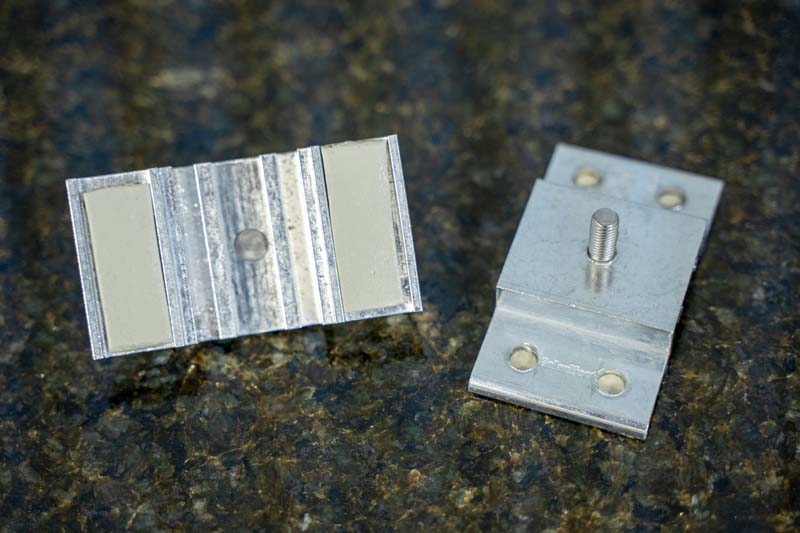
Meanwhile, when I started my company in 1991, I had all that history in my “back pocket” from decades in metal construction. I knew the difference in “butyl” sealants. In 1995, with the introduction of our first penetrative attachment solution, it was only fitting to pair them with nothing less than state-of-the-art sealants that had proven their reliability through previous decades of my personal experience. I didn’t leave the critical selection of proper sealant to chance in the field. Instead, I determined it should be integral to the part and factory applied so it would be the right stuff, done The Right Way!® (Fig 3)
Sealant Characteristics and Performance
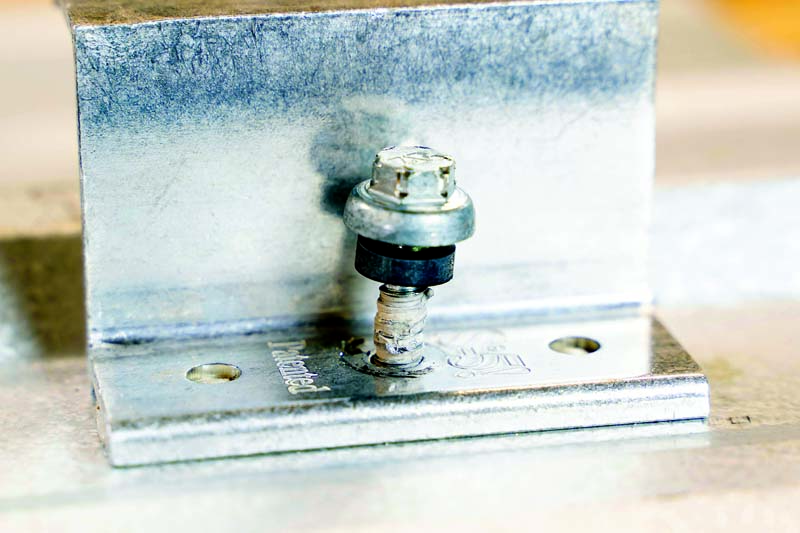
Non-curing butyl co-polymer sealants are popular because they are easy to apply in either cold or hot temperatures. The “right” formulations are sustainable, non-toxic and environmentally friendly. They require no maintenance and little, if any, surface preparation—just cleaning of any visible dirt and surface debris. The sealant “tacks” (clings/ bonds) to surfaces, including threaded fasteners, which provide secondary weather protection (Fig 4). That adhesion and elastic recovery are especially critical on metal roofs, where thermal cycling and panel movement can challenge lesser sealants.
Although pumpable grades (75%± solids) are available, extruded tapes (98%± solids) are strongly preferred, where practical, due to their dimensional consistency rather than the discretion of a guy squeezing a caulking gun and guessing the correct amount. Over or under-application can both be detrimental to performance. However, tapes and tube grades generally consist of the same chemistry. Tube grades simply contain evaporating solvents in them to make them “pumpable.”
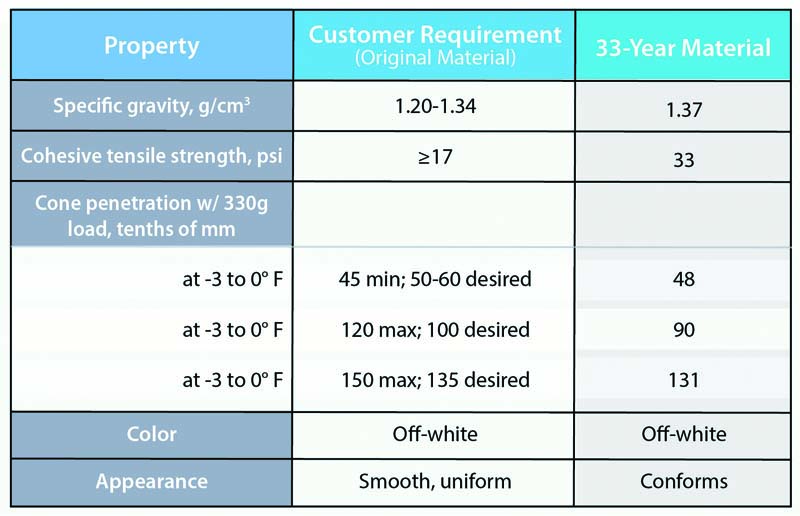
In 2010, I initiated and directed an industry-wide roof Service Life Study conducted by the Metal Construction Association, which shows that certain brand-specific butyls continue to demonstrate exceptional elasticity, adhesion, cohesive tensile strength and webbing properties (that’s the chewing gum thing) after 35 years of service (Figs 1, 5, 6). Based on lab studies of those specimens taken from 14 aged roofs across the U.S., these sealant chemistries are estimated to last more than 66 years.
Design Considerations and Testing
Butyl formulations have evolved, and many have improved over the years, but it is important to note that all butyl polymers are not created equal, and there are no standards governing their composition. Typically, butylene rubber content is lower than 20% of the formulation. Beyond a certain threshold ratio, higher butylene rubber content does not necessarily mean a better sealant polymer. Ultraviolet (UV) inhibitors and insect and fungal repellents are often additives, but exact formulations are all proprietary trade secrets and vary widely.
An experienced lab chemist who fully understands sealant types may conduct some tests for cone penetration, tensile strength, adhesion, accelerated weathering and ASTM E-2140 tests, but these tests are merely early life indicators. The only definitive measure of aged performance for butyl polymer sealants is its aged inspection, the same testing and the documented history of brand-specific long-term performance on actual roofs over decades. Formulations that cannot withstand the test of time can harden, lose adhesion or exhibit compound breakdown (de-polymerization) in a much shorter timeframe than their superior counterparts.
Application Trends and Industry Adoption
As more roof-attachment manufacturers recognize the advantages of butyl sealants, an increasing number are now incorporating pre-applied “butyl” sealants in production rather than leaving the choice to installers who might default to whatever is readily available. This is a big leap forward and a step in the right direction.
Caution Notes on Sourcing
It is critical to source attachment products that use only brand-specific sealants with a minimum track record of 40 years, with empirically proven chemistries. This is vital to ensure optimal performance of the highest quality and durability formulation. Developing the right product design to pre-apply the sealant is equally important as sourcing a proven butyl product. Applying the correct amount with the appropriate part and mating sealant geometries while preventing over-compression and exposure to harmful UV, are all critical design elements. Direct exposure to the elements of these co-polymers is their greatest weakness. Exposed material that is “squeezed out” may diminish the integrity of the remaining material beneath the part.
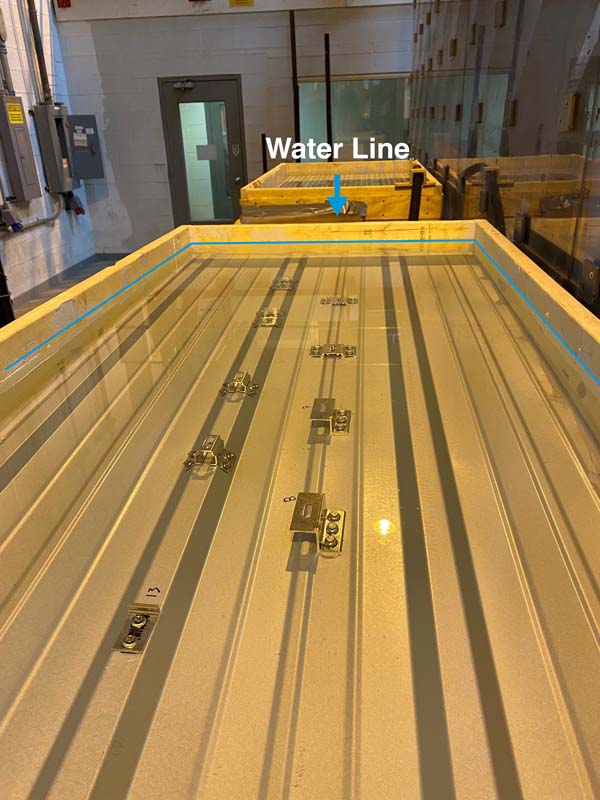
Next, to substantiate a proper design and product selection, it is also necessary to leak-test attachment products with pre-applied sealants in their specific application. The most demanding, yet the most relevant for roof attachments, is ASTM E2140, Penetration…by Static Water Pressure, the submersion water test that I initiated with ASTM 40 years ago. (Fig 7)
Best Practices for Application
In addition to selecting a butyl sealant with a proven track record of reliable performance and designing attachments properly to pre-apply butyl tape, here are some best practices for using butyl sealants to leak-proof roof attachments (including PV):
Avoid using sealant as a surface-applied fix. Surface applications are prone to degradation from UV, ozone, mechanical abrasion, dirt and other contaminants. Butyl polymers are especially susceptible to UV exposure. If sealants lack proper protection, multiple factors can break down their chemical bonds (especially at laps, endlaps and fastener penetrations on metal roofs).
Application of butyl in a gasket fashion will aid in shielding the sealant from these threats. However, even when applied as a gasket, the best sealants still have vulnerabilities. Look for installations where the sealant is concealed from exposure and is minimally extruded at the outward edges of the part when installed.
Do not assume that there is any significant difference among the terms “sealant,” “flashing” and “gasket” despite what you may read. There is no magic associated with any of those terms.
Avoid over-compression.When driving the screw(s), ensure the assembly is well seated, but don’t over-tighten. Otherwise, you could thin and displace the sealing material, reducing its life and effectiveness. The best practice is to utilize a part design featuring a built-in recess to encapsulate the material and inhibit over-compression.
The Bottom Line: Don’t Fall for All the Sales “Hype”
Often dismissed as mere “puffery” in advertising, these claims can sometimes border on misinformation or disinformation. Using superlatives like “best,” “original” or “first” is surprisingly legally permissible even when factually erroneous. So, it is important to rely on your own experience or consult a trusted expert whose proven track record speaks for itself—beyond simple “puffery.” Claims must be substantiated with proven data.
Remember: The nickname “Butyl” alone is not magical and does not ensure quality or longevity of a sealant!
For metal roof professionals, the takeaway is simple: specify proven, brand-specific butyls and attachment designs that keep them protected for the life of the roof.