Originally Published as: Mansion: Copper Development Assn. St. Louis, Missouri
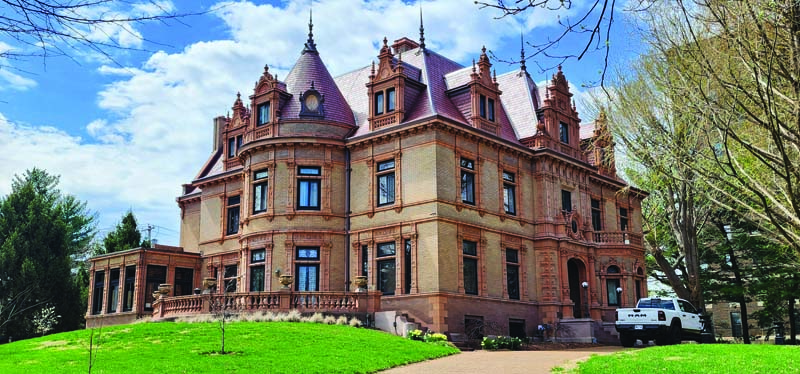
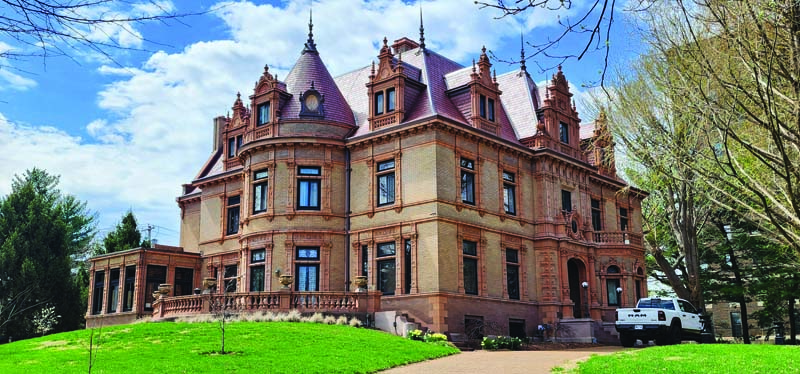
Listed on the National Register of Historic Places, the ca. 1908 Magic Chef Mansion is a beautiful example of early 20th-century residential architecture. The 12,000-sq. ft. mansion was constructed for Charles Stockstrom, the founder of the Magic Chef Stove Company.
When the current homeowner, Shelley Donahoe, purchased the mansion in the early 1990s, much of the structure had fallen into disrepair. The exterior was smothered in coal soot, one of the ceilings had caved in, and the home still had knob and tube wiring with an original electrical panel.
Restoring this mansion to its original beauty would take decades; the most recent update was integral: the roof.
Monumental Preservation Effort
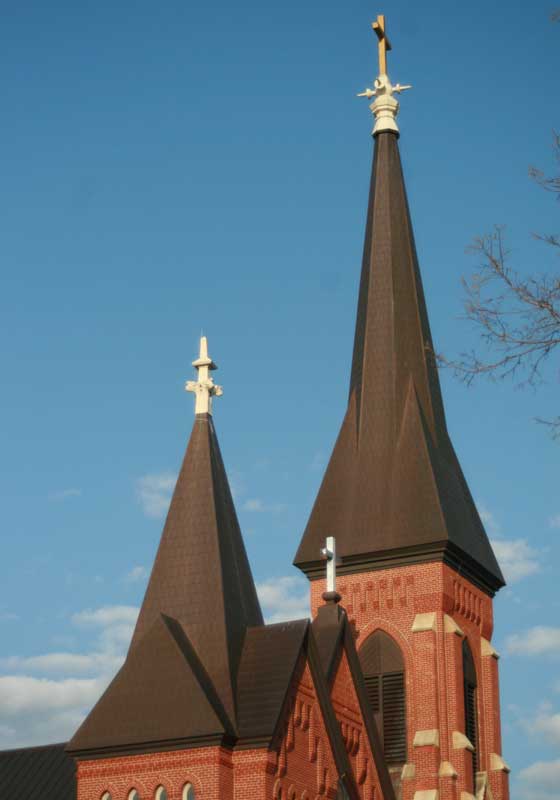
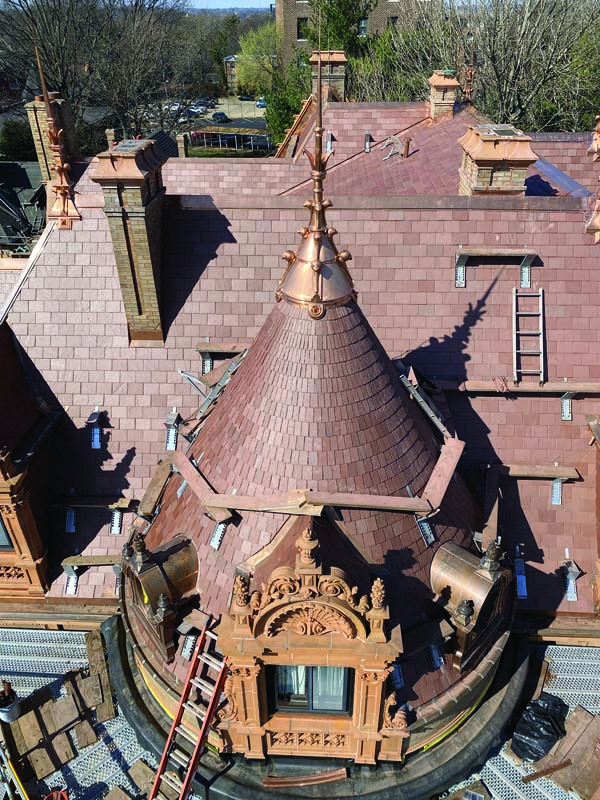
While working closely with Vince Graye Slate and Tile Roofing throughout the years to maintain the roof, Donahoe first inquired about a small leak repair. Her insurance company determined that the damage warranted not just a minor fix, but a full roof replacement that evolved into a comprehensive restoration effort — replicating every copper detail, from rain goods and edge flashings to ornate finials and a towering weathervane.
“While we do this type of work every day, the scope and magnitude of this project were monumental,” says Mike Walter, president of Vince Graye Slate and Tile Roofing.
“It took about fourteen months, start to finish, to complete the work, and during that time, we needed to maintain the house in a water-tight manner.”
Made primarily of New York red slate, the roof’s distinctive brick-red color is accented by ornate copper finials and other detailing. While a small portion of the wood framing needed to be replaced — particularly around the barrel dormers — most of the original framing was still intact. During the roof restoration, as slates were removed and the decking exposed, each area was immediately protected with tarping to keep the mansion watertight.

Shaping History: The Workability and Longevity of Copper
Chicago Metal Supply Company (a QXO company) was charged with replacing the ornate copper components. Vince Graye shared photos and details of the finials with Chicago Metal, which fabricated the 20-ounce pieces of copper off-site at its manufacturing facility.
“Section by section, piece by piece, we went through and got everything taken apart, installed the new flashings, and put the recreated finials back on,” says Walter.
While maintaining the visual authenticity of the early 20th-century architecture, copper is the ideal material choice. Its exceptional longevity allows copper roofing to protect buildings for over a century without significant degradation.
Equally important is copper’s workability and versatility. Its malleable nature allows artisans like Chicago Metal to replicate intricate shapes — barrel dormers, ornate finials, and decorative cornices — with precision.
Another defining feature is copper’s evolving aesthetic appeal. Over time, it develops a natural green patina that enhances architectural character.
Copper is eco-friendly and fully recyclable, making it a responsible choice that aligns with modern sustainability goals without compromising quality or performance.
A Historic and Lasting Impression
The roof is the long-awaited, final piece of this mansion’s extended restoration. The interior boasts original details like hand-carved mantels, stained-glass windows, and intricate chandeliers. Many of the items and period furnishings original to the house were returned, restoring the home to its former glory.
Based on the intricate reproduction of complicated copper ornamentation, gutters, roofing, and flashing, the Magic Chef Mansion was recognized with a 2025 North American Copper in Architecture Award, joining an elite group of projects celebrated by the Copper Development Association’s NACIA program.
Project
Installer: Vince Graye Slate and Tile Roofing, Waterloo, Illinois
Copper Components: Chicago Metal Supply Company