Originally Published as: Metal Roofing Innovation: Encompasses the Whole Roofing System
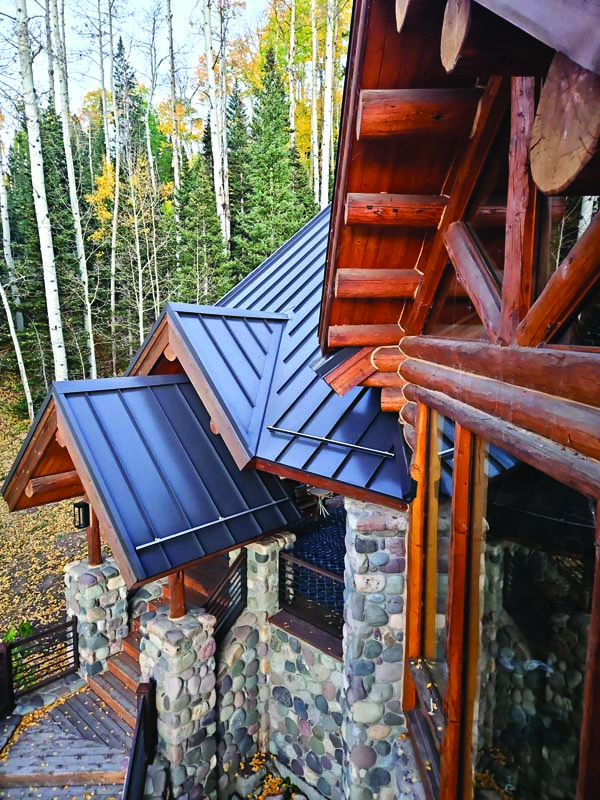
The most consequential changes in metal roofing are not necessarily the most futuristic. Across the industry, manufacturers are reworking familiar materials, attachment methods and accessories to solve persistent field problems: too many parts, too many trades involved in the process, difficult detailing, avoidable penetrations, and products that do not share the service life of the roof.
That shift matters to metal building contractors because the roof is increasingly expected to do more than keep water out. It may support solar generation, snow retention, rooftop equipment, and increasingly sophisticated drainage and ventilation details. At the same time, owners expect faster installation, less maintenance and a clearer sustainability story. More than ever before, metal roofs are developed as coordinated platforms rather than a collection of unrelated components.
Steel, Substrates and Coatings Designed for Longevity
Coating innovation does not always require an entirely new chemistry. Manufacturers like Sherwin-Williams are refining established resin and pigment systems to improve color retention, forming flexibility, abrasion resistance and performance under combined ultraviolet (UV), moisture and chemical exposure. Each color is its own chemical formulation, so the resin and pigment package must be tested together.
Those refinements are expanding the aesthetic range available to metal roofing. Junny Lee, marketing manager at Sherwin-Williams, reported that newer matte systems can achieve extremely low gloss without the UV penalty that once accompanied some dark, low-gloss finishes. Metallic and mica pigments are also moving into more mainstream building products, while infrared-reflective pigments can improve the solar reflectance of dark colors without making them appear lighter.
Melissa Dunson, vice president of sales and marketing at Central States Manufacturing, said there is also a demand for thinner and thinner coatings as customers seek to reduce materials and costs. Researchers keep working to make that happen.
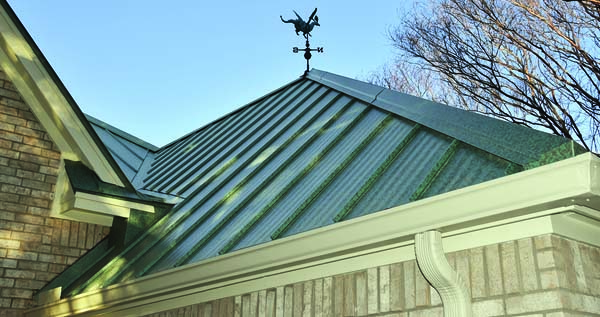
Some coating innovations are in the realm of sustainability, such as GreenCoat® color-coated steel, a material developed to combine forming performance with a reduced reliance on petroleum-based ingredients. According to Ray Haas of Mallet Supply, 70% of the petroleum traditionally used in the coating has been replaced with Swedish rapeseed oil, and the product is PFAS-free, an increasingly important consideration as regulators and building owners scrutinize forever chemicals.
Haas said the steel is relatively malleable with characteristics that allow it to accommodate folding and tight detailing without the coating cracking. That can be particularly valuable as more companies use folders to produce European-influenced roof and wall details, a trend Haas has been seeing, particularly on high-end and historic projects.
“The high-end market is moving toward European-style metal folding, so the details are better,” said Haas. In those applications, the ability to form tighter, more durable transitions can reduce dependence on exposed sealant joints that may not last as long as the metal surrounding them.
GreenCoat is “self-healing,” meaning coated galvanized steel can derive some protection at cut edges and small scratches from the sacrificial action of the metallic coating beneath the paint.
Haas also pointed to the interaction among the substrate, coating flexibility, and thermal cycling. Small variations and residual stresses introduced during forming can become more visible as a roof heats and cools. A softer, more formable steel may help distribute some of that stress, while textured finishes can make minor waviness less noticeable. It does not eliminate the need for proper coil handling, machine setup, panel design and installation practices, but it can improve both fabrication and appearance.
“The rapeseed system is very bio-based, with no forever chemicals, while still providing scratch resistance,” Haas said. The likely next step is not one universal coating, but more project-specific combinations of substrate, metallic protection, paint chemistry, texture and warranty terms selected for UV exposure, coastal distance, corrosion risk, hail and forming demands.
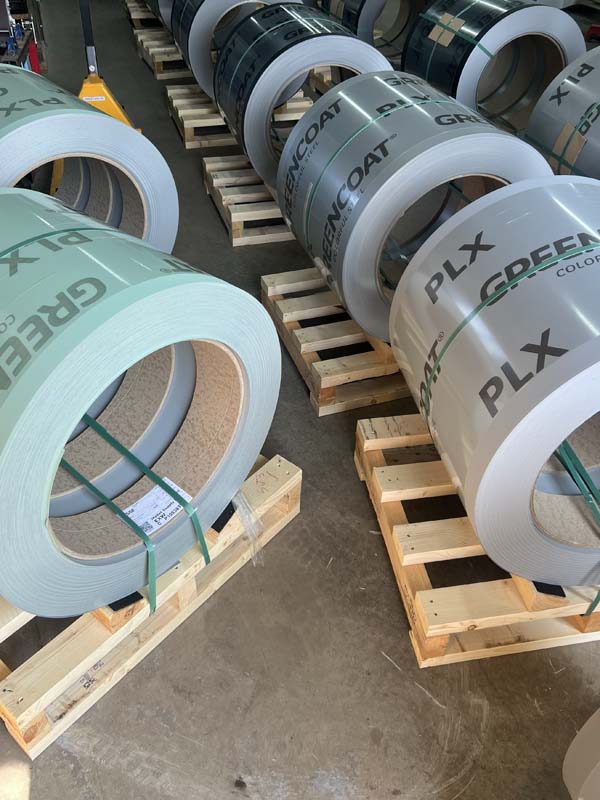
Photo courtesy of Mallet Supply.
Designing the Roof as a Solar Platform
In some cases, solar has accelerated the move from component-based thinking to system-based design. Traditionally, the roof and photovoltaic array were separate projects completed by different trades, which sometimes added scheduling complications, duplicated labor and uncertainty about attachment compatibility. Bryan Barton, regional manager, Metal Solutions, Cornerstone Building Brands, said newer approaches are bringing roof and photovoltaic array installation together.
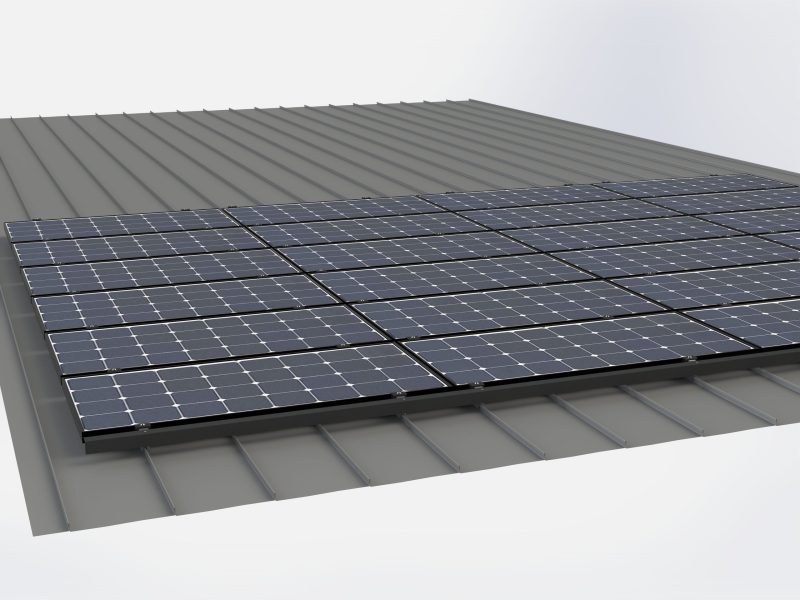
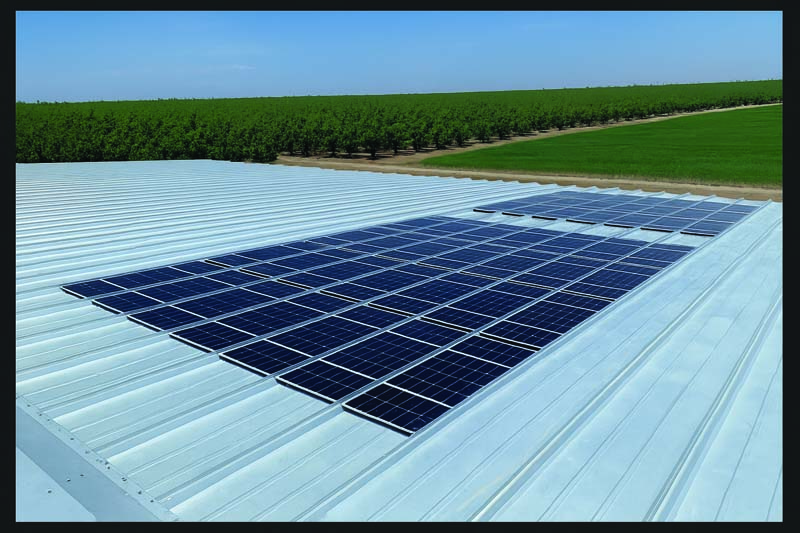
“Newer solar options, like SunSteel™ integrated panels, which arrive with solar panels pre-applied to MBCI Double-Lok™ metal roofing panels, turn solar and roofing into a single-trade, factory-assembled solution,” Barton said, “with fewer parts to coordinate on site, streamlined scheduling and a cleaner finish.”
This approach addresses several problems at once. Factory integration can establish the location of the solar components before panels reach the site, give designers a defined basis for loads and access paths, and reduce rooftop assembly. It can also help the roof and generating system read as one architectural surface rather than a roof with equipment added on top.
Even when solar will be installed later, Barton advises treating the roof as a future mounting platform. The structure must be designed for the anticipated loads, while seam geometry, panel gauge, clip system, roof slope, and uninterrupted panel areas should be selected with future attachments in mind. Penetrations, drainage routes, snow-retention devices, service walkways, and shade and fire-access requirements should be coordinated before the usable roof area is committed.
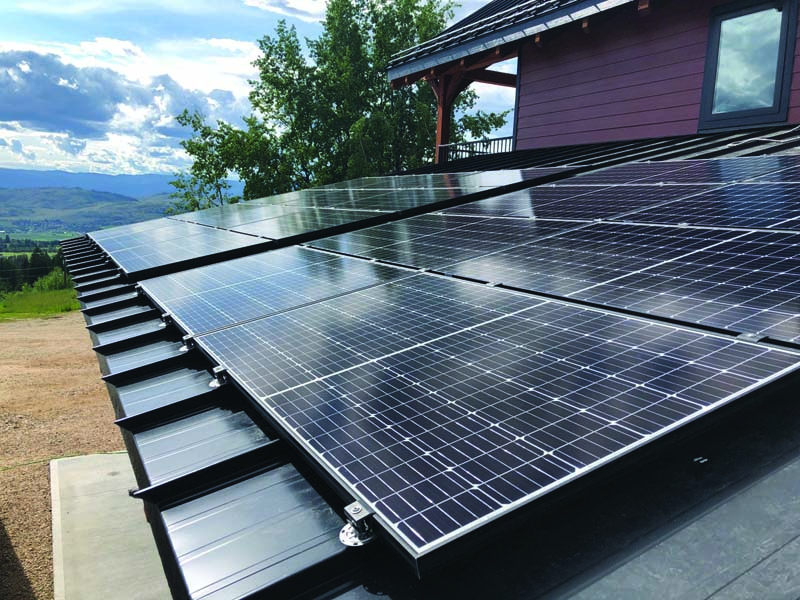
Standing seam roofing offers a particular advantage because engineered clamps can grip compatible seams without drilling through the panels. Rail-less and direct-attach systems go a step further by using compact brackets or seam-mounted clamps instead of long aluminum rails. This can reduce material, array weight, parts handling, and the time required to level and splice rails. Integrated wire-management channels or clips can keep conductors secured beneath modules and away from the roof surface.
“By removing the continuous rails and using compact brackets or seam-mounted clamps that connect directly to the roof, a large portion of traditional racking material is no longer needed,” Barton said. He cautioned that contractors still need a complete documentation package confirming compatibility among the panels, clamps, solar equipment and structure. Wind-uplift resistance, fire classification, electrical requirements and warranty conditions cannot be assumed simply because individual components have approvals.
Attachments Become Lighter, Faster and More Engineered
Rob Haddock, founder and CEO of S-5!, said the attachment category continues to evolve through many small revisions as well as larger system changes. The ColorGard 2.0 snow-retention system, for example, was redesigned to reduce assembly and installation time. The development team studied how installers handled the components and redesigned the assembly around that field experience.
“We listened to customers and came up with a better way to assemble it,” Haddock said. The objective was to make an engineered product easier and faster to install without shortening its expected service life.
Snow retention is also moving toward more accessible engineering for exposed-fastener roofs, a market that includes many agricultural, residential, and light-commercial buildings. These projects can be highly cost-sensitive, and the calculations needed to address snow loads are sometimes ignored or oversimplified. Haddock noted that a pre-engineered, lighter-duty option such as SnoGard EF fills the gap between an un-engineered, improvised solution and a complex project-specific system.
Digital design support is becoming part of the system as well with more advanced layout and calculation tools that can translate changing wind speeds, snow loads, code editions and fire-access requirements into a component list and placement plan. The innovation is not merely the calculator itself. It is the connection of tested hardware, current engineering criteria and a more usable interface, which makes correct design easier to carry into the field.
The same systems approach is reshaping solar attachment. Standing seams and panel ribs already provide regular geometry across a metal roof. Direct-attach hardware uses that geometry rather than adding a separate grid of rails. Rail-less mounting can substantially reduce rooftop material and installation time, although the final savings depend on the roof, array, and labor conditions.
“The rails are already there in the seams or ribs, so use those,” Haddock said.
Purpose-Built Accessories Replace Field Improvisation
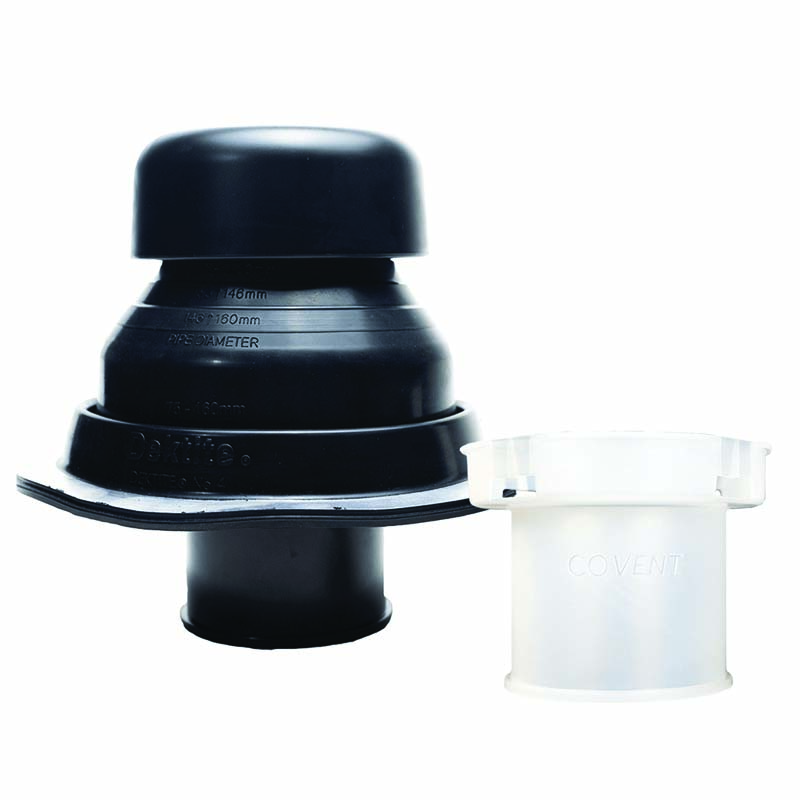
The CoVent EF43, manufactured by TS Innovations LLC and sold through Levi’s Building Components, was developed to resolve a recurring problem on corrugated exposed-fastener roofs. Exhaust fans are sometimes best vented through the roof, but products designed for shingle roofing do not necessarily fit corrugated metal panels cleanly. Installers often adapt a shingle vent or support a PVC pipe, then flash it with a separate boot.
“With the rising popularity of reroofing with exposed-fastener corrugated panels, there was not a simple, effective product for metal,” said Tim Martin, a Levi’s Building Components representative and partner in TS Innovations LLC.
The patented CoVent combines a PVC vent body, an internal backdraft flap, an integrated roof boot and an adapter for 3- and 4-inch flexible exhaust ducts. The installer cuts the opening, pulls the duct through the roof, secures it to the vent with the supplied zip tie, fastens the assembly through the designated holes, and seals the boot according to its manufacturer’s instructions. By designing the vent around the panel and an accepted penetration-flashing method, the product simplifies the task with reliable, repeatable detailing.
“The advantage of the CoVent EF43 is quality of components and ease of installation,” Martin said.
The Next Wave: Coordinated, Verified, and Easier to Install
Innovations in metal roofing vary widely, from ease of installation to improved performance to sustainability. The next wave is likely to continue down these same paths.
Forming method, exposure to the specific environment, and sustainability will be ever more important in selecting coil.
Roof panels may arrive with solar-generation components, attachment locations, and service paths already resolved. Snow retention, solar, rooftop equipment, and penetrations may be laid out in one unified plan checked against structural loads, drainage, warranties, and code requirements before fabrication.
Future coating innovation may add more active response to damage, including microencapsulated agents that flow into a scratch according to Dunson of Central States Manufacturing. Meanwhile, Junny Lee of Sherwin-Williams pointed to research on coatings that could reflect heat when that is beneficial and absorb it under different conditions.
Haddock of S-5! had a vision for direct-attach mounts that captures an important direction for metal construction. Future accessories will likely take advantage of the roof’s existing structural and geometric features instead of overlaying another support system.
Martin of Levi’s Building Components said researchers are now working on other ventilation solutions for corrugated metal roofs, suggesting a broader opportunity for accessories designed specifically for metal profiles rather than adapted from other roofing systems.
As Haas of Mallet Supply pointed out, sustainable products can be developed that work as well or better than existing products. With more building owners concerned with sustainability and green products, this likely foreshadows more such innovative developments.
Wonderful new products are in the works; innovation appears to be in overdrive. Before adopting any new innovations, however, contractors should ensure that the component has been tested as part of a complete assembly. Adhering to a tested assembly is the best way to ensure product performance.
Resources
• Central States Manufacturing, www.centralstatesco.com
• Levi’s Building Components, www.levisbuildingcomponents.com
• Mallet Supply, www.malletsupply.com
• Metal Solutions, Cornerstone Building Brands, www.cornerstonebuildingbrands.com/customer-solutions/metal-solutions
• S-5!, www.s-5.com
• Sherwin-Williams, https://industrial.sherwin-williams.com/latam/br/en/coil-extrusion.html