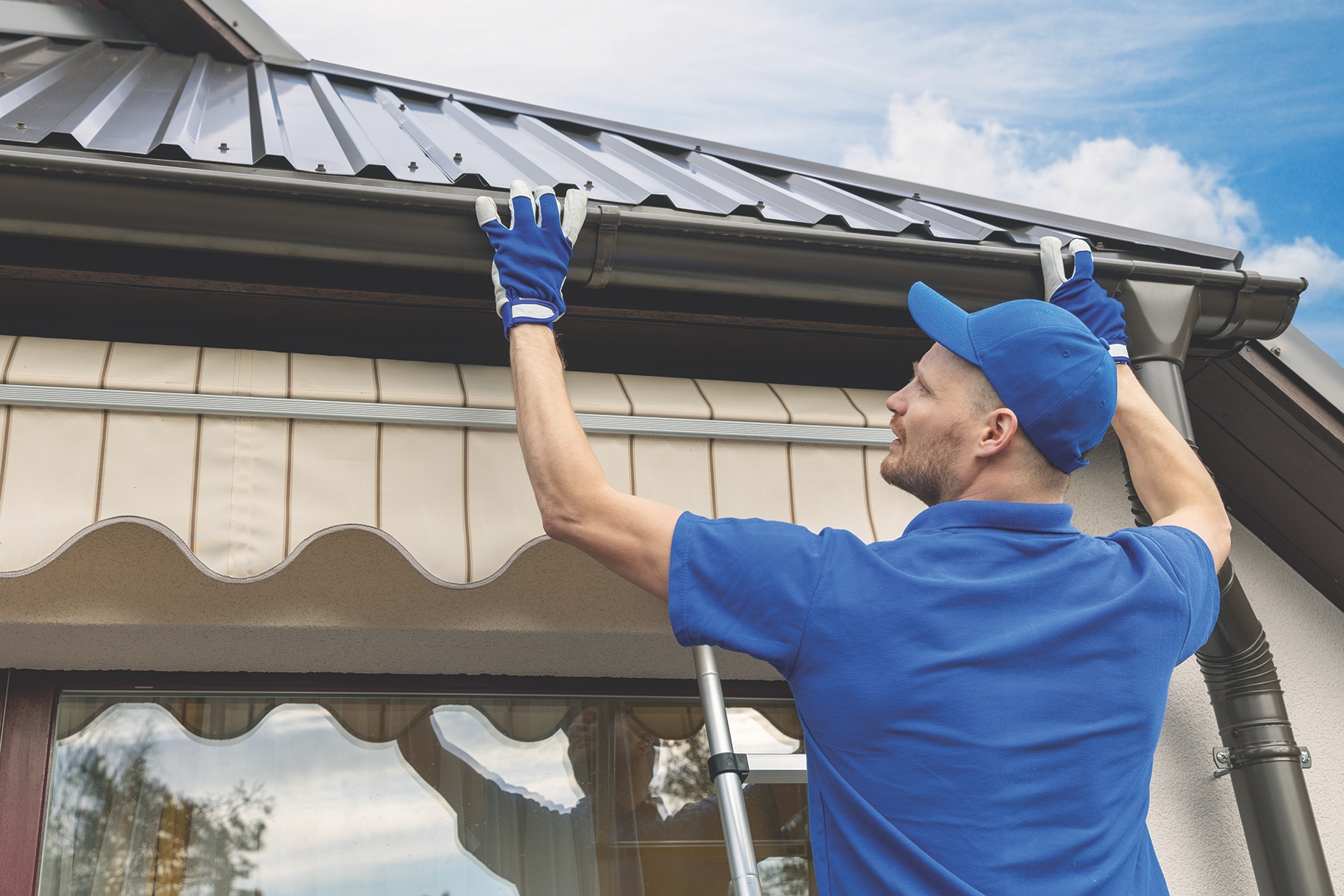
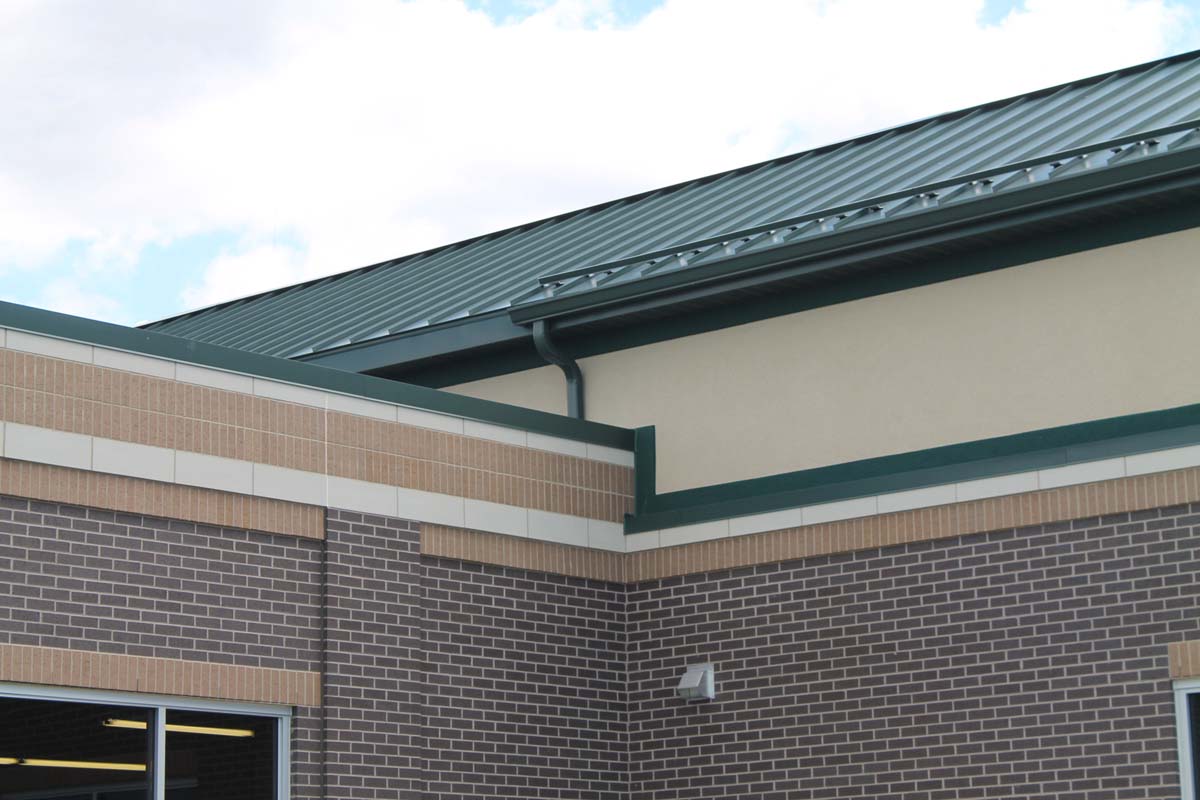
Knowledge helps you make the best choices, including gathering all the information you can about the roof when you take on the assignment of installing gutters on a home or commercial building.
A glance at the roof should help you understand some of what you need to know. Is it a large roof? Is it steep? Is there a valley or more than one that gathers larger amounts of rainwater to a particular area? Also, what kind of roof is it?
Some roofing materials — like a standing seam metal roof or an EPDM roof — will shed water at a higher rate of speed. Those same roofing materials will also shed snow. How does that affect the gutters?
“Everything depends on the square footage and the pitch,” says Adam Schouten, President of Advanced Architectural Sheet Metal & Supply in Shelby, Michigan. “That’s what it comes down to. A lot of people think they need a bigger gutter because they have a bigger roof or a higher pitch, but what they may need is more or larger downspouts. The gutters are just channeling the water until to a downspout.”
Jim Ealer, Vice President of Sales & Marketing at Midwest Enterprises, St. Clair, Missouri, says homeowners like to highlight the metal roof as an attractive feature, so roofs are steeper, which increases the rate of speed water is coming off the roof.
“If you’re looking at a 6:12 or 7:12 pitch, bigger gutters will definitely be a benefit,” Ealer says. “With metal roofing, rainwater runs off substantially faster than it does on an asphalt shingle roof. When it comes to picking gutters with standing seam metal roofing, we almost always suggest going up to a 6-inch gutter system. In some areas, where you get a lot of rain like in Florida, it’s not unheard of to use a 7-inch gutter. You won’t see a whole lot of trucks out there running 7-inch gutters, but it’s a good idea for some jobs.
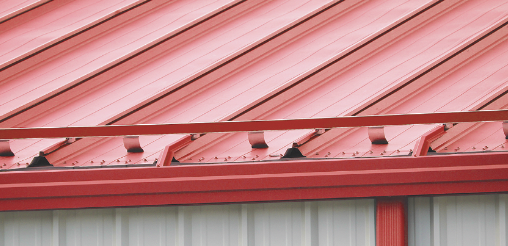
“And if you’re in a northern climate, you must have some sort of snow guards to prevent heavy snow and ice from sliding off the roof and tearing off the gutters.”
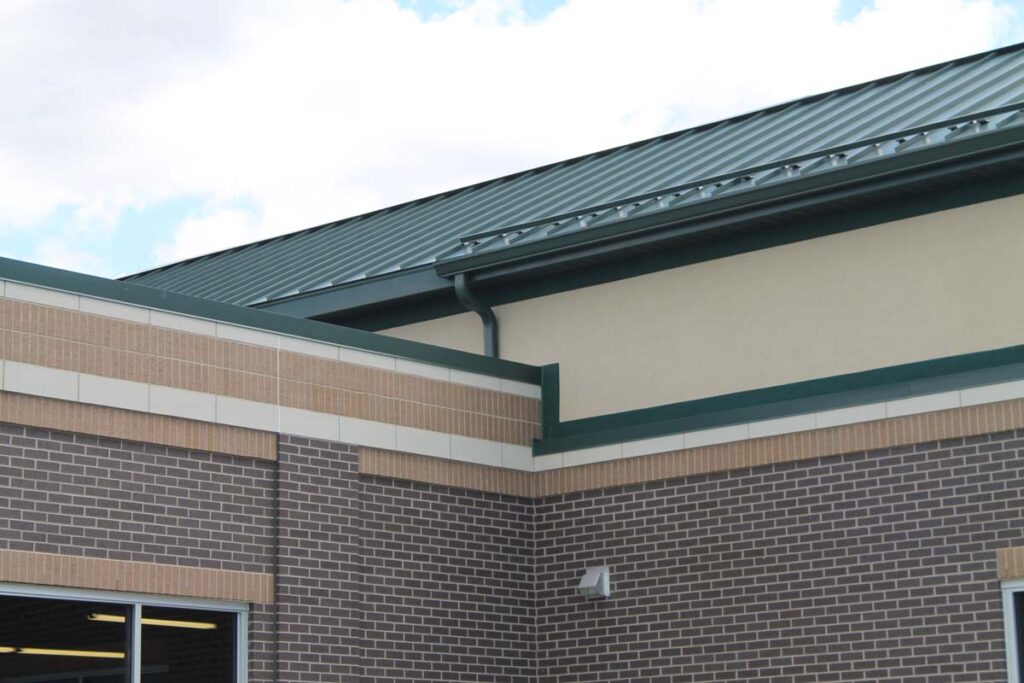
There are several considerations for snow where you’re installing gutters. Melting snow will slide off a standing seam metal or EPDM roof but will stay in place on asphalt shingle or stone-coated metal roofing, gradually melting. Snow sliding off the roof can tear off gutters – and the steeper the roof pitch, the faster the snow will be moving. A properly installed snow retention system will hold snow in place above the eaves and gutters, allowing snow to gradually melt. The problem is some people absolutely do not want snow retention for whatever reason.
To prevent gutters from being torn off by sliding snow and ice, Schouten says they can be installed lower on the fascia to allow snow to slide over the gutters. Then you’re left with the issue of potentially heavy snow and ice falling to the ground below. If you have a walkway or a door or plants below, you may have to install a snow retention system of some kind. However, lower-mounted gutters may prove to be too low during rain.
“Some people use a heat tape to continuously melt any snow before it accumulates to a dangerous depth and weight,” Schouten says.
Advanced Architectural manufactures mostly steel gutters for commercial projects as well as residential.
“Steel gutters are a little stronger and they don’t expand and contract as much as aluminum gutters,” Schouten says. “The finish on steel gutters is the same as the aluminum gutters running out of the back of the truck. For a lot of our customers concerned about the strength of the gutters, going with steel is a no-brainer. Our steel comes with a more durable and longer-lasting PVDF coating. That’s what the architects are specifying.”
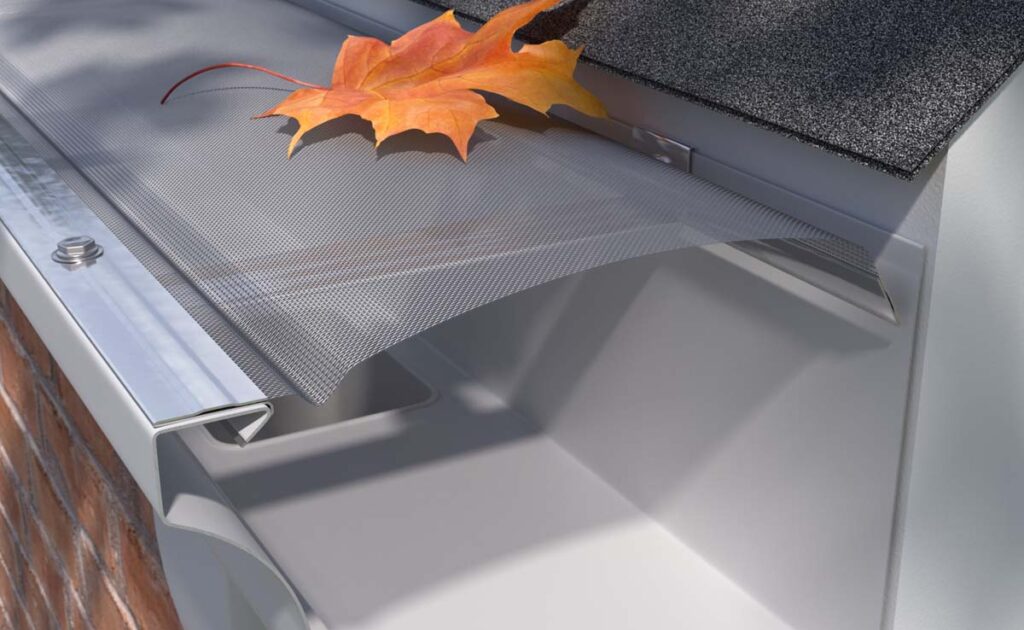
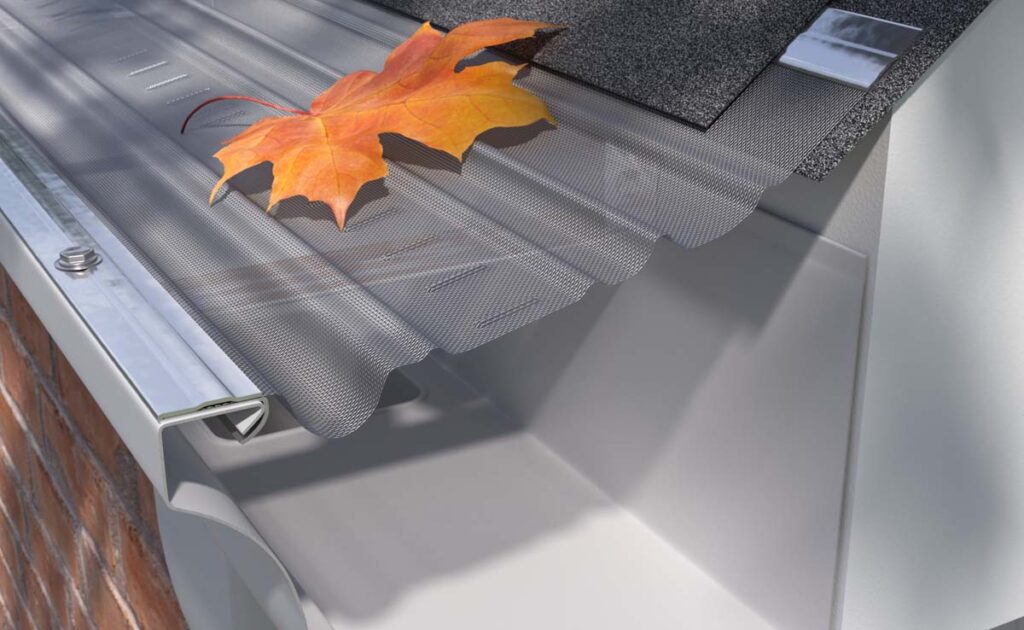
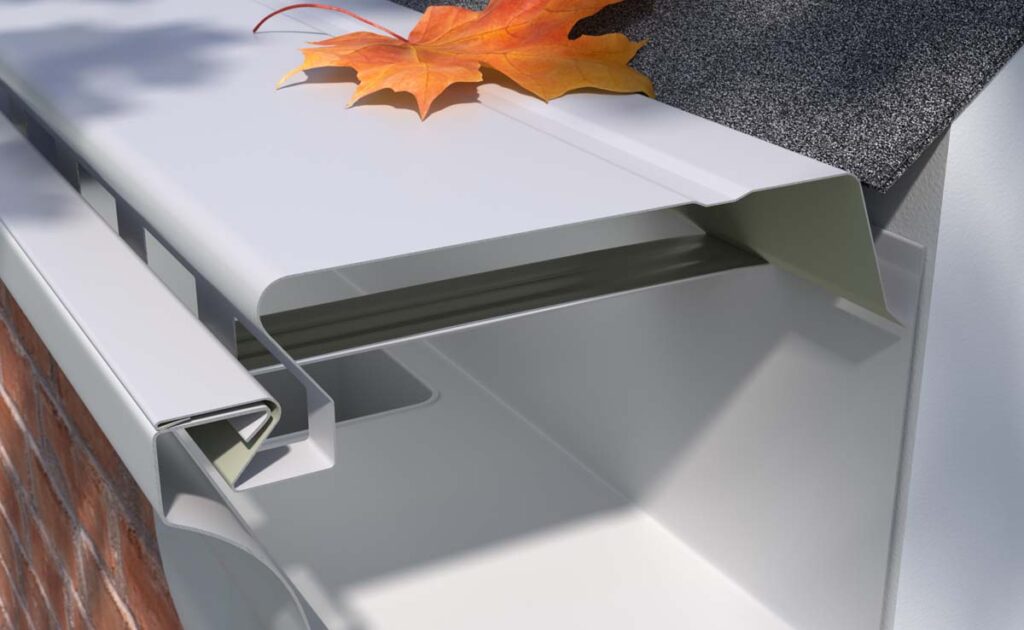
Ealer says Midwest Enterprises has more than 25 gutter protection systems to help with a variety of challenges. Some catch sliding snow and ice, while others allow sliding snow and ice to slide over the gutter reducing the chances of any damage.
“A recessed gutter guard that sits about a ½-inch below the top of the gutter is the best for stopping slides,” Ealer says. “It acts like a catch for snow and ice.”
Pine needles and metal roofing create the biggest challenge for gutters, Ealer says, recommending a mesh gutter screen for those conditions.
“If you install bigger gutters, it’s critical to use bigger and enough outlets,” Ealer says. “For a residential install, downspouts should handle water from no more than 40 feet of roof. If you can go every 30 feet, obviously, that’s better.”
Hangers should be no more than 24 inches apart to ensure the gutters stay in place. “Twenty inches is even better,” Ealer says.
Before recommending a gutter, learn as much as you can about the roofing. That knowledge will make decisions easier and become the safest and most durable gutter you can install.