Originally Published as: Fasteners That Fit: Choose the Right Thing
Fasteners are a small part of the components that go into any roofing project; however, ensuring that you have the right fastener is paramount. If you make a mistake it can mean that the roof doesn’t last long, fasteners have to be replaced before other components, or it may simply mean that the roof is not as aesthetically pleasing as it could be. Any of these outcomes are going to make your customer unhappy.
Considerations
When deciding on a fastener for a project, you must take several things into consideration, including what the substrate is, its thickness, the thickness of the components being fastened to the substrate, and the materials being attached together—whether metal to wood, metal to metal, or another combination. Finally, the conditions the fasteners will be exposed to, such as high winds, rain, snow, and salt spray, must also be taken into account.
Head Styles
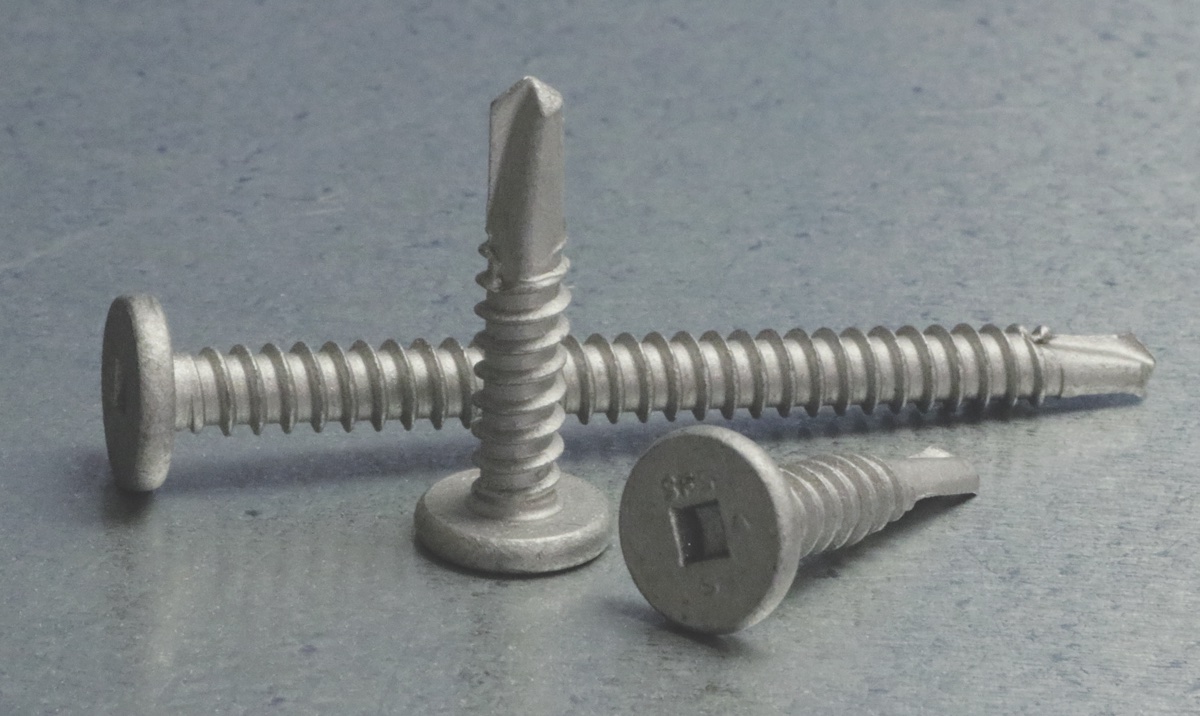
Every head style has its place. If you are working with a hidden fastener profile, a pancake style works well, as a higher profile head may show through the metal as a bump—an unappealing result that defeats the purpose of a concealed fastener system. Wafer heads fall into a similar category and are often used in clipless standing seam systems or applications where clearance is limited. Some manufacturers offer low-profile or half-moon designs to further reduce visibility while still providing adequate bearing surface.
For exposed fastener applications, hex washer heads are common because they offer stability during installation and accommodate an integral sealing washer. The hex shape allows for better engagement with the driver, which helps keep the tool aligned and reduces the chance of cam-out or slippage during installation. While aesthetics may play a role in head selection, functionality should always come first, especially in exterior applications where fasteners are exposed to weather.
Application: Metal to Wood vs. Metal to Metal
An important consideration when choosing fasteners is what materials are being joined together. In metal-to-wood applications, the fastener only needs to drill through the metal panel; the threads then engage the wood substrate. Fasteners designed for wood typically have wider, more aggressive threads to grip wood fibers effectively.
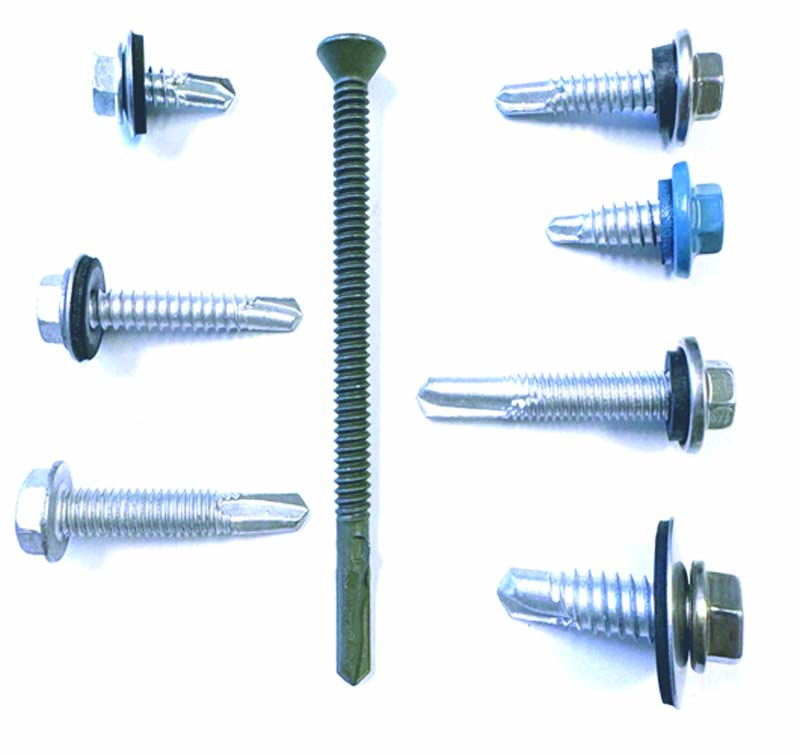
Metal-to-metal fastening introduces additional considerations. The fastener must drill through both the panel and the structural steel beneath it, which means drill point design becomes critical. If the drill point is too short for the combined thickness of the materials, heat can build up, the point can burn off, and the fastener may fail to penetrate fully. Self-drilling fasteners are designed to cut through steel like a drill bit, but the drill point length must match the thickness of the substrate.
Drill Points and Thread Design
Drill points are designated by number, with higher numbers indicating longer points and slightly larger diameters intended for thicker steel. A standard drill point may work well in light-gauge steel, but thicker purlins or structural members require a longer drill point to ease the tapping and avoid damaging the fastener. Using a drill point that is too aggressive for thin steel can also cause problems by creating an oversized hole, reducing holding strength.
Thread patterns are also substrate-dependent. Wood applications benefit from fewer threads per inch and a larger major diameter to maximize holding power in wood fibers. Metal-to-metal applications typically use finer threads that engage steel more effectively and reduce resistance during installation. Matching thread design to the substrate helps prevent stripping and ensures proper pull-out values.
Fastener Length and Substrate Thickness
Fastener length is determined by the total thickness of the materials being fastened, plus the amount of penetration required into the substrate. A common mistake is selecting a fastener that is just long enough to get through the materials, without allowing adequate engagement in the substrate. For steel applications, manufacturers publish recommendations based on substrate thickness, and those guidelines should be followed closely.
In wood applications, sufficient penetration is needed to develop holding strength, but excessive length rarely causes problems. In metal applications insufficient length or improper drill point selection can lead to incomplete penetration and premature failure.
Washers and Sealing Performance
In through-fastened roofing systems, sealing washers play a critical role in preventing water intrusion. Modern fasteners often use EPDM washers, which can offer better resistance to UV exposure and extreme temperatures than neoprene washers. The washer should compress slightly during installation to form a seal, but overdriving can squash or distort the washer, leading to leaks that may not appear until months later.
Washer quality matters. The Durometer scale, bonding to the metal backing, and resistance to tearing all affect long-term performance. Visual cues such as split washers, paint scraped from the panel, or washers that have spun out from under the head often indicate overdriving or improper tooling.
Tooling and Installation Practices
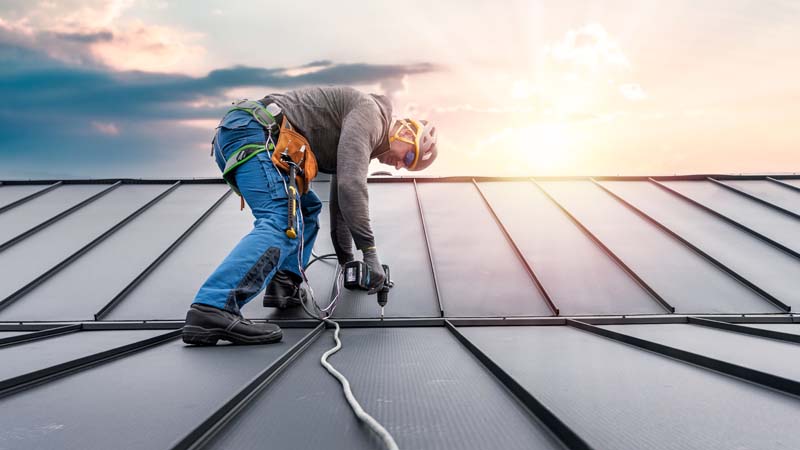
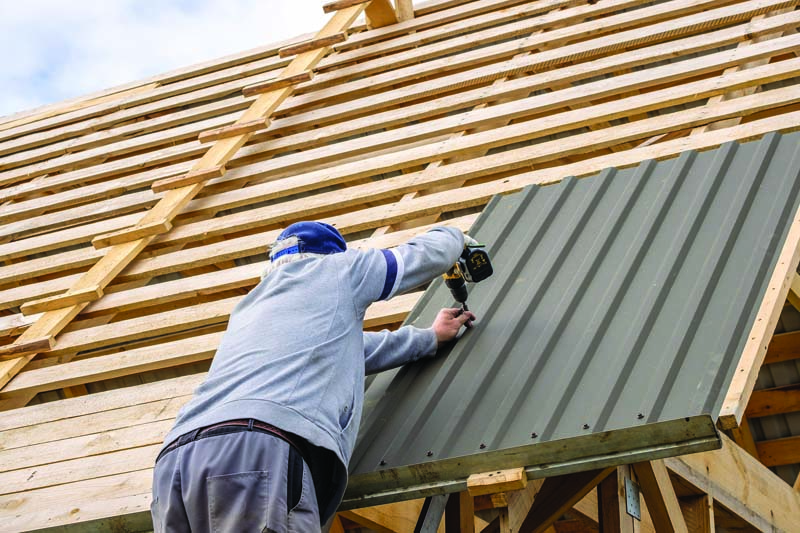
Many fastener failures are caused not by the fastener itself, but by how it is installed. Battery-operated drivers are convenient and fast, but they often rely entirely on the installer’s feel. Without a clutch or depth-sensing nosepiece, it is easy to overdrive fasteners, especially when working quickly.
Drivers equipped with adjustable clutches or depth-sensing mechanisms help ensure consistent installation and proper washer compression. Keeping the tool aligned with the fastener is also important; driving at an angle increases the risk of cam-out, stripped heads, and damaged washers. Impact drivers, while fast, can easily over-torque fasteners and should be used with caution in roofing applications.
Thermal Movement and Panel Length
Thermal expansion and contraction become more significant as panel length increases. Longer panels move more, which places additional stress on fasteners. In some cases, larger diameter fasteners or increased fastener spacing may be specified to accommodate this movement. Architects and engineers often account for thermal movement in their designs, but installers still need to follow specifications carefully.
Standing seam systems manage thermal movement differently. Clips allow the panel to move independently of the fastener, reducing stress on both the panel and the attachment point. This is one reason standing seam systems are often preferred for long panel runs or environments with wide temperature swings.
Coatings, Caps, and Corrosion Resistance
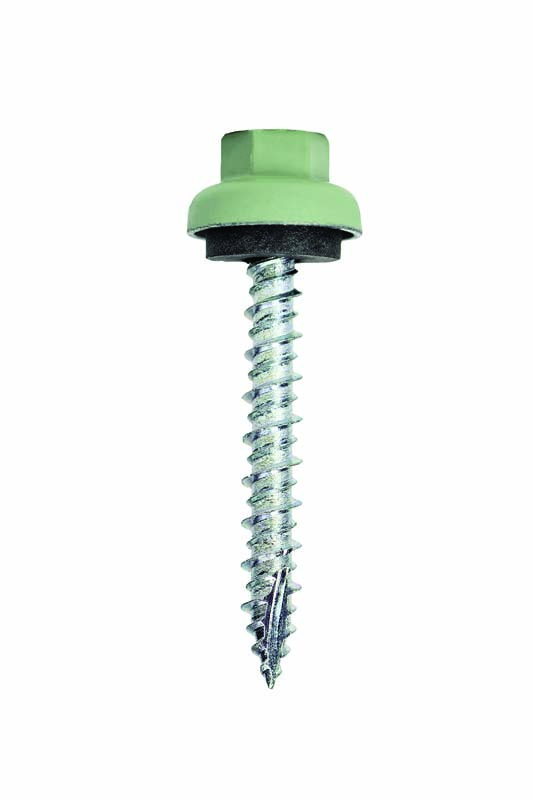
Most fasteners are manufactured from carbon steel that is hardened and then protected with coatings. Zinc coatings are common, but thickness matters. Thin zinc plating may be suitable for interior applications, while exterior applications require thicker coatings or additional protective layers.
Zinc-aluminum alloy caps and molded heads provide long-term corrosion protection and are increasingly used on projects where fastener life is expected to match panel warranties of 40 years or more. In corrosive environments—such as coastal areas, agricultural buildings, or industrial facilities—stainless steel or long-life capped fasteners may be necessary. Dissimilar metals should be avoided whenever possible, as galvanic reactions can accelerate corrosion.
Nails in Roofing
While screws are used predominantly in many metal roofing applications, nails are used in certain roofing assemblies and under specific code-driven conditions. In these cases, nail selection is often dictated by architectural specifications or local building codes, particularly in high-wind or seismic regions where shear resistance is critical.
Roofing nail performance is governed by a few core factors: penetration, head size, shank design, and corrosion resistance. Adequate penetration into the roof deck is essential to resist uplift forces. In most roofing applications, nails are expected to penetrate the substrate by at least 1½ inches to achieve required holding values. Nails that are too short may pass inspection visually but fail under wind load, while additional length rarely creates problems.
Shank design directly affects withdrawal resistance. Smooth shank nails are easy to drive but offer the least resistance to pull-out. Spiral shank nails provide improved holding power, while ring shank nails offer the highest withdrawal resistance and are commonly specified for roofing in wind-prone regions. Ring shank nails mechanically lock into the roof deck, making them far less likely to back out over time due to wind movement or vibration.
Head size is another critical consideration. Larger heads distribute load more effectively across the roofing material and reduce the risk of pull-through. Undersized heads may install quickly, but they are more susceptible to uplift failure, particularly at roof edges and corners where wind pressures are highest. Roofing codes and regional standards often specify minimum head sizes, and following those requirements is essential for long-term performance.
Corrosion resistance is especially important in roofing applications, where fasteners are exposed to moisture, temperature extremes, and, in some environments, salt or agricultural contaminants. Nails used in pressure-treated roof decks must be hot-dipped galvanized or otherwise approved for corrosive contact, and they should meet applicable ASTM standards. In coastal or highly corrosive environments, stainless steel nails may be required to prevent premature rusting and staining.
Installation practices play a significant role in nail performance. Overdriving can damage roofing materials and reduce holding strength, while underdriving can prevent proper seating and compromise uplift resistance. Bent nails should be removed and replaced rather than left in place. Many nail-related roofing failures are not the result of the nail itself, but of improper installation or mismatched materials.
Matching Fastener Life to the Building
Fasteners represent a small percentage of the overall building cost, but they account for a disproportionate number of roofing failures and warranty claims. Choosing a fastener with a service life that matches the roof panel is critical. A 40-year warranted roof panel paired with a carbon steel fastener with no warranty is a mismatch that may lead to future corrosion problems.
Educating building owners about long-life fasteners can reduce callbacks, improve performance, and ultimately protect the reputation of the installer. While cost is always a consideration, fasteners are not the place to cut corners.
Avoiding Common Mistakes
The most common fastener problems occur due to improper fastener selection or installation error. Overdriving, using the wrong drill point, selecting a fastener not suited to the substrate, or ignoring environmental conditions can all shorten roof life. In many cases the fastener itself performs as designed—the problem is how or where it is used. Taking the time to understand the application, follow manufacturer recommendations, and use proper tools that include clutches or depth-setting nosepieces pays dividends over the life of the roof.
Fasteners may be small components, but they play an outsized role in the performance, appearance, and longevity of the entire system.
Resources
- Beck America, Inc. — https://www.beck-fastening.com/en
- Direct Metals, Inc. — https://directmetalsinc.com/
- Levis Building Components — https://www.levisbuildingcomponents.com/
- Maze Nails – https://mazenails.com/
- Triangle Fastener Corporation — https://trianglefastener.com/