
Originally Published as: Metal Roofing Marketing: Educating, Not Just Advertising
James Charles is the co-owner and CEO of E-Impact Marketing, an internet marketing company based in Lancaster, Pennsylvania, that specializes in serving small- to medium-sized businesses. A former Pennsylvania-based roofer, he transitioned into web design and digital marketing in 2019 and has since helped trades-focused companies grow through effective online strategies.
It used to be that if someone wanted a metal roofing quote, they picked up the phone and called you for one. These days, customers often research their options across Google, YouTube, Reddit, ChatGPT, and countless other touchpoints before they ever decide to call.
Today’s buyers most often start with online research, and for high-cost projects like metal roofing, a lot of it. Standing out at the beginning when future customers are searching for things like “metal roofing” and “roofing cost” can be difficult. But if you create your content carefully and focus on educating your customers, instead of selling them your service, you can be the brand that shapes their opinions and, when they’re finally ready to make a decision, the brand they choose.
Teach First. Sell Later.
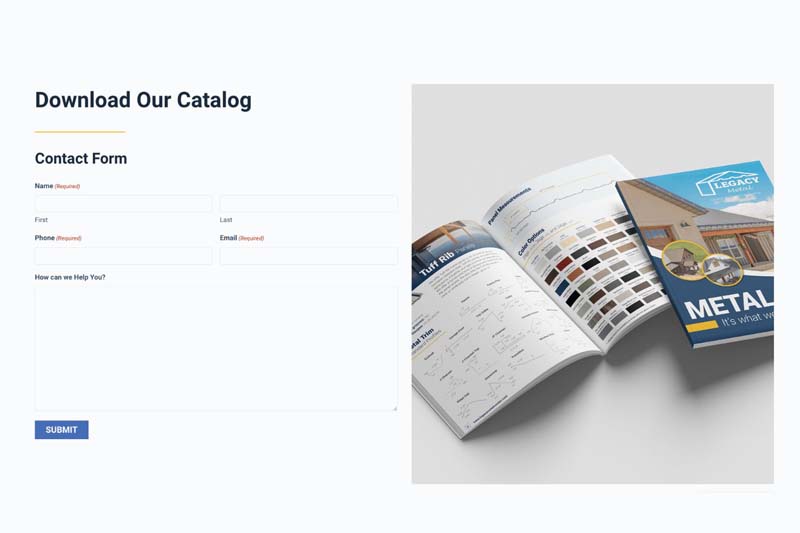
Early in the research process, your customers are asking questions all over the place. They’re asking AI tools, search engines, and asking questions on social platforms like YouTube and TikTok. As they do this research, the companies that supply them quality answers get brand visibility on each of those platforms. If a customer happens to click through to a company’s page, then those companies can potentially capture that customer’s information through downloadable educational guides.
Attracting visitors is only the first benefit. As customers research, educational content can be a key part of validating your company’s expertise and can play a role in building trust and goodwill with potential customers. Even after a customer has requested a quote from you, educational content helps provide them with additional information in a way that could help you separate yourself from your competitors.
Educational marketing doesn’t just generate leads; it also creates better, more informed leads. These pre-qualified leads don’t require as much time on a sales call because your blog, YouTube channel, and Instagram have already answered a lot of their questions.
At the end of the day, educational content shows that you and your brand know what you’re talking about. It helps to reassure the customer that they can trust you with their project and spend their money with you.
Know What’s Working
To track how educational content converts, monitor organic impressions and organic clicks. Organic refers to the impressions and clicks you receive that you aren’t paying for. You can also take a look at your website’s analytics. On a piece of educational content, you can see how many people entered your website on that page and how long they stayed on that page. Those are both good indicators of whether people are finding your information useful. You can also look at how many of those visitors submit a form or click a button to call you on that page.
What’s more difficult about big or high-priced projects is that early researchers are not usually ready to reach out to you. If someone is starting by researching different kinds of metal roofing, they’re still likely a few steps away from requesting a quote and talking to your team. But if they get their information from your brand, once they’re at the stage where they want a quote, then they’re already familiar with your brand name, and that increases the chances they’re going to call you.

AI Is Changing Metrics
Search is changing. AI Overviews and AI chat tools are reducing website clicks across nearly every industry because people can often find answers without ever leaving the search results. That means clicks alone no longer tell the whole story.
In addition to monitoring impressions and traffic, check whether AI tools cite your website as a source or mention your brand when answering relevant questions. The more comprehensive and trustworthy the content on your website is, the more likely it is to appear in those responses.
What do Metal Roofing Customers Search?
The best way to create a content plan is to start with the questions you receive from your customers on a typical sales call. If you can generalize the information you normally share with customers, that is a great starting point for the types of content you know you should be creating on your website, social media, and YouTube.
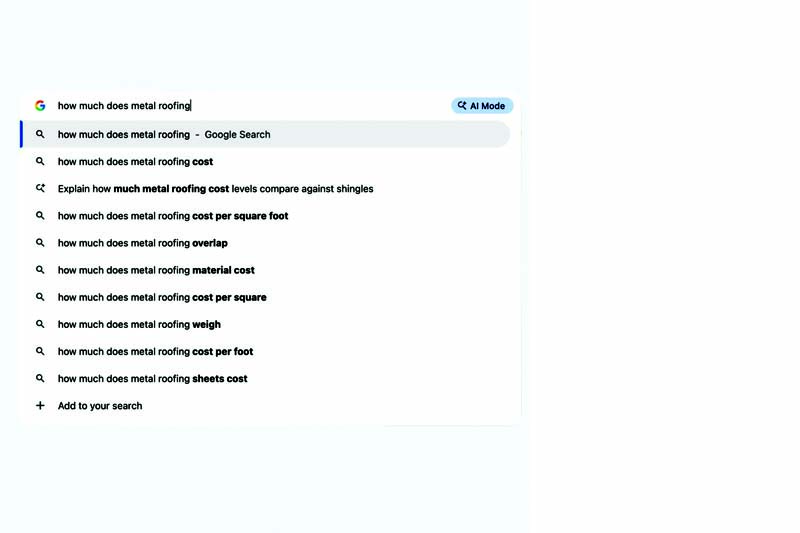
Another way to figure out the kinds of questions your customers are asking is to research search data. If you run Google Ads, the Google Ads keyword planner provides a list of the most popular search terms for any group of keywords, so you can literally see what questions people ask about metal roofing. If you partner with a marketing agency, they likely use a third-party SEO tool that can generate lists of the most popular questions about a topic. You can make your own list if you go to Google, start typing a question, and see what autofills. That’s a great way to see what people are searching.
To turn those lists of questions into a content plan, all you have to do is answer each question as clearly as possible. For example, if one of the questions you’ve identified is something like “How long does a metal roof typically last?” Then you should answer that directly on your website, like, “Metal Roofs typically last x to y years.”
Whenever possible, tailor those answers to the location you serve. A customer searching for roofing information in Ohio will have different concerns than someone in Florida. Your local examples and recommendations make your content more relevant.
You can answer these questions in any format. If it’s an article or a full-length video, you can get into all the nuances of a question. If it’s an FAQ of a short video, then just the specific, direct, short answer is great. The key is to provide the clearest answer in the format that best fits the question.
10 Questions Every Metal Roofing Website Should Answer
One of the best ways to attract qualified leads is to answer the questions customers are already asking. Based on current search trends, these are some of the most common topics homeowners research before contacting a roofing company.
1. How much does a metal roof cost?
a. Cost per square foot
b. Material costs
c. Factors that affect pricing
2. How is a metal roof installed?
a. Installation process
b. DIY considerations
3. How long does a metal roof last?
a. Expected lifespan
b. Factors that impact longevity
c. Warranty information
4. How do you maintain a metal roof?
a. Cleaning recommendations
b. Painting or refinishing
c. Waterproofing and routine maintenance
5. Can you install a metal roof over shingles?
a. When reroofing is possible
b. Building code considerations
c. Pros and cons
6. Can solar panels be installed on a metal roof?
a. Compatibility
b. Mounting options
c. Benefits of pairing metal roofing with solar
7. Metal roof vs. shingles: Which is better?
a. Cost comparison
b. Durability & Maintenance
c. Long-term value
8. Do metal roofs attract lightning?
a. Common myths
b. Safety considerations
c. Lightning protection
9. What are the different types of metal roofing?
a. Standing seam
b. Ag panels
c. Exposed fastener vs. concealed fastener systems
10. Are metal roofs noisy when it rains?
a. What actually causes roof noise
b. Insulation and attic factors
c. Separating myth from reality
Education Along the Buying Journey
You can create content to follow your customer along their research and purchase journey. Customers often ask cost questions early. Then, as they continue their research, they have more questions about panel types, panel profiles, ventilation, and snow guards. As you answer those questions with your content, you guide them slowly to a purchase as you build their trust in you and your brand.
Something to consider is where customers receive your content. It’s great if they’re finding you on social media and through search engines, but you don’t have a ton of control over whether that happens. When possible, give interested customers a reason to share their contact information so you can communicate with them directly. That could mean requesting a quote, signing up for updates, downloading a guide, or taking another action on your website. Once you have that connection, you can continue providing useful information through channels you have more control over, like email.
One Answer. Many Forms.
Creating educational content doesn’t mean starting from scratch every time. Begin by answering a customer’s question as clearly as possible. From there, you can expand that answer into a more detailed article, break it into FAQs, turn key points into short videos, or share them as social media posts.
For example, a simple question like “How much does a metal roof cost?” could become a comprehensive guide covering factors like roof profile, gauge, building type, and location. That same guide can then be repurposed into shorter content for your website, YouTube Shorts, TikTok, Instagram Reels, or social media graphics.
As your products, industry, or competitors change, revisit your most important educational content and update it when needed. Keeping your best resources accurate and current helps customers find reliable information and reinforces your expertise.
First Steps
If you’re an established metal roofing company, chances are your sales team already answers dozens of customer questions every week. That’s your content strategy.
Start by writing down the questions customers ask most often. Then answer each one the same way you would if they were sitting across the table from you. Those conversations can become blog articles, FAQ pages, videos, social media posts, and downloadable guides.
You don’t need to publish everything at once. One helpful piece of content each month is better than trying to create twenty pieces really quickly. Over time, those answers become a library of resources that work for your business around the clock.
Educational content isn’t about giving away your expertise for free. It’s about demonstrating your expertise before a customer ever picks up the phone. And when they finally do, they won’t just know your name, they’ll already know why they want to work with you.