Originally Published as: Residential Metal Roofing Is Booming: Experts Share 5 Essential Tips To Help Businesses thrive
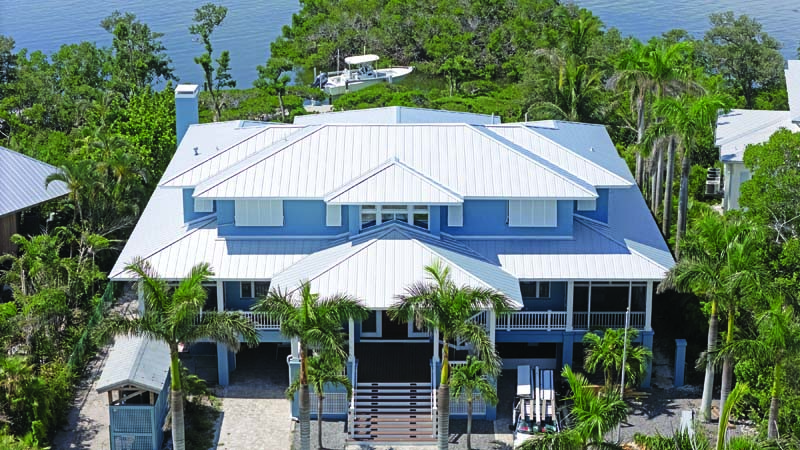
In comparison to other roofing material types, prospects for residential metal roofing as a fast-growing, profitable business opportunity are bright. That’s because of metal roofing’s inherent advantages and benefits. As a long-lasting, reliable, better performing and sustainable choice, more homeowners than ever before are interested in installing a metal roof on their home.
In short, it’s a fantastic time to get into the residential roofing market in the U.S. and Canada. But how do you set yourself up for success? Here are the top five strategies experts at the Metal Roofing Alliance (MRA) suggest that will help you not only survive, but thrive in today’s residential metal roofing business:

1) Partner with a quality metal roofing manufacturer.
To help you succeed long term, it’s essential to partner with a reputable manufacturer that stands for quality, which is defined in the details, such as using the right metal substrate, gauge and appropriate coatings. Doing so is the key to reliability, longevity and ultimately, satisfied customers, reducing call-backs and warranty issues while helping you increase job site efficiency. Partner with a manufacturer that will stand behind their products, offers quality installation resources and has a track record of success.
Manufacturer and contractor members of leading trade organizations like the Metal Roofing Alliance stand behind this philosophy. They represent industry leaders who know that delivering on the promise of quality directly impacts the bottom line, and ultimately the reputation and future of the industry.
2) Prioritize training and building skills.
While it’s true the time and training necessary to become skilled in the metal roofing trade is slightly higher, the payoff is clear: the demand for metal roofing is tracking to outpace the need not only for installers, but other related careers in the field, for the foreseeable future. And unlike commoditized products such as asphalt, residential metal roofing jobs are more profitable, with customers less likely to be “value-shopping” and more willing to pay for quality and a job done right.
According to MRA members, the trade should understand that the installation process for a quality metal roofing job is more specialized and requires a higher skill set than installing conventional shingles, but there are plenty of good ways to receive training and education.
As Philippe LaPlante, MRA board member and Vice-President of Sales and Marketing for Ideal Roofing puts it, “Many manufacturers offer free seminars. For example, at Ideal Roofing, we offer a training course at our manufacturing plants. We also have an installation rep who will visit jobsites to train anyone interested in metal roofing.”
Additionally, classes, information and training are available through organizations such as the Metal Construction Association (MCA). For installers who stay in the industry and reach a level of mastery, Todd Miller, MRA board president and president of Isaiah Industries suggests checking out NRCA’s ProCertification program.
“At minimum, find a manufacturer who will not only provide initial training on their systems but be there as an ongoing resource to answer your questions and provide support. Try to tour some manufacturing facilities so you understand the industry better,” he said.
3) Use technology to your advantage.
Technology is advancing rapidly, and the residential metal roofing industry is benefiting from it. There are plenty of software solutions on the market that help eliminate project waste, offer precise installation guidance and accurate estimating to help you save time, money and give you the ability to deliver on customer expectations. There also are AI tools that help customers visualize how a new metal roof will improve the look and performance of their homes, and can help you problem-solve or assist with providing accurate customer information, answering questions and setting expectations.
4) Perfect your in-home sales process.
The right technology is important to take the guesswork out of the bidding, installation and customer support process—while helping reduce mistakes and call-backs—but it doesn’t replace the need for good customer service practices. As Miller says, “It does not take many mistakes out there to give the entire industry a black eye. Metal roofing can be profitable but we all must take it seriously. Spend time listening to property owners and addressing their concerns. That will help set you above your competition.”
The path to success also includes fine-tuning in-home sales (while you are at the table with the homeowner), as well as focusing on how to make the decision-making process as easy as possible for prospective customers. Consider offering financing options by partnering with a third party financial provider that may be able to assist with providing real-time estimating capabilities. Be sure to provide references that speak to your experience and work, and ensure a high level of customer service.
It’s important to keep in mind that being responsive is also a characteristic of successful contractors. From a manufacturer’s perspective, it is not uncommon to hear homeowner complaints about not receiving something as simple as a return phone call from contractors. That’s a missed opportunity and may cause customers to turn to alternative options even if they aren’t as good.
5) Build out your team and utilize industry resources.
Miller suggests, “My advice to contractors is to first get a good CPA, attorney, and insurance agent to start your company on the right foot. Then find a product / manufacturer to align yourself with and take advantage of all the training they offer for marketing, sales, and installation. Learn from those who are already successful and then begin to put your own spin on things for your own individual success.”
Leaning on professional organizations such as the MRA for assistance in driving awareness, providing information homeowners need to make well-informed decisions, and lending third party validation can help those in the metal roofing business strengthen their reputations. These types of groups help pool resources and drive awareness, information, and channel demand for residential metal roofing in ways that individual companies alone may not be able to afford.
For more information about how to take advantage of the many opportunities that today’s residential metal roofing market offers, visit the Metal Roofing Alliance at www.metalroofing.com.